OPENAI BRINGS CODEX AGENT TO CHATGPT MOBILE APPS FOR 4M WEEKLY USERS
New companion layer allows engineers to approve commands, review diffs, and redirect live terminal workflows directly from iOS and Android devices.
🚀 Mobile Coding Agent Deployment Matrix
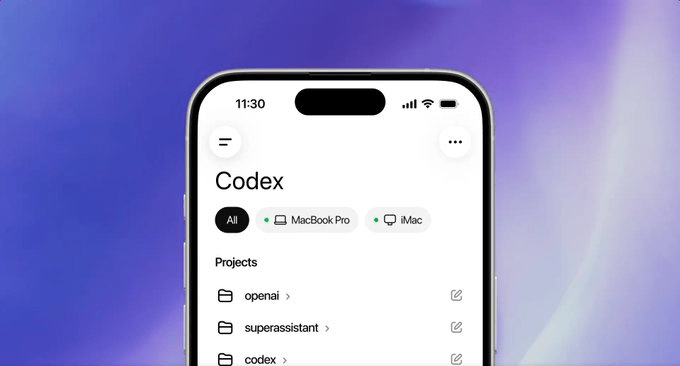
- The Launch: OpenAI has rolled out a mobile preview of its autonomous coding agent, Codex, on iOS and Android across all user tiers.
- Active State Sync: The mobile application mirrors live coding states running on a developer’s desktop, devbox, or remote server environment.
- Human-in-the-Loop: Designed to prevent stalls during long workflows by letting users review terminal outputs, diffs, and approve critical commands on the go.
- Secure Infrastructure: Codebases, environment variables, local tools, and security credentials remain strictly on the host execution machine.
Also Read | GUNMAN DEAD AFTER OPENING FIRE AT WHITE HOUSE CHECKPOINT; SECRET SERVICE UNHARMED
OpenAI has officially launched a preview integration of its autonomous coding agent, Codex, into the ChatGPT mobile ecosystem. The feature targets a rapidly growing user segment that now exceeds 4 million active weekly developers. This infrastructure update transforms the mobile application into a persistent companion layer, allowing engineers to maintain continuity over asynchronous, resource-heavy development pipelines during commutes, meetings, or brief breaks away from their main workstations.
Rather than functioning as a standard, isolated text prompt interface or a basic remote desktop mirror, the mobile integration establishes a secure, dual-stream sync with the active development environment. Heavy processing tasks, file indexing, and local terminal execution remain localized on the developer’s primary machine, while the smartphone acts as a portable control plane to track and direct the agent’s progress.
| Operational Interface (Mobile App) | Local/Remote Host Layer (Desktop/Devbox/SSH) |
|---|---|
| • Real-time progress monitoring via streaming terminal outputs. • Interactive review of code diffs, test results, and visual screenshots. • Multi-model switching and manual prompt redirection mid-task. • One-tap command execution approvals and architecture fork selections. | • Secure storage of sensitive source files and repository structures. • Localization of access tokens, environmental credentials, and SSH keys. • Local execution of testing frameworks and headless browser simulations. • Direct hardware utilization for indexing and compilation. |
Also Read | GUNMAN DEAD AFTER OPENING FIRE AT WHITE HOUSE CHECKPOINT; SECRET SERVICE UNHARMED
Optimizing the ‘Human-in-the-Loop’ Protocol
The primary engineering intent behind this mobile architecture is eliminating development stalls during complex, multi-step agent actions. Large-scale codebase refactoring or deep dependency updates frequently run into architectural forks where the agent requires human intent verification before executing destructive writes. Look, letting an AI agent autonomously rewrite your routing logic while you’re grabbing coffee is terrifying—this companion update keeps you in the driver’s seat without pinning you to your desk monitor.
For automated bug investigations, the agent can autonomously spin up local test suites, inspect system logs, and attempt reproduction cycles inside isolated headless browser instances. When the debugging sequence reaches a point where structural choices must be evaluated or system permissions escalations are triggered, the mobile device serves a push notification. The developer can inspect the contextual trade-offs, swipe through the terminal diff history, and authorize the next step instantly.
💬 OpenAI Enterprise Infrastructure Briefing
Rollout Timelines and Cross-Platform Matrix
The Codex mobile workspace is currently rolling out in preview format across both iOS and Android platforms, accessible to all subscription levels, including Free and Go plans. Activating the portable sync requires updating both the mobile ChatGPT container and the corresponding desktop Codex application layer on macOS. Support for connecting to native Windows-based host environments is currently in active development, with an enterprise release slated for later this quarter.
For collaborative engineering departments, this mobile synchronization model aligns directly with modern distributed operations. Because the secure relay layer manages device handshake state-tracking, developers on call can smoothly pass session management authorities across authenticated devices without forcing an active agent to drop its memory cache or terminate running terminal instances mid-execution.