

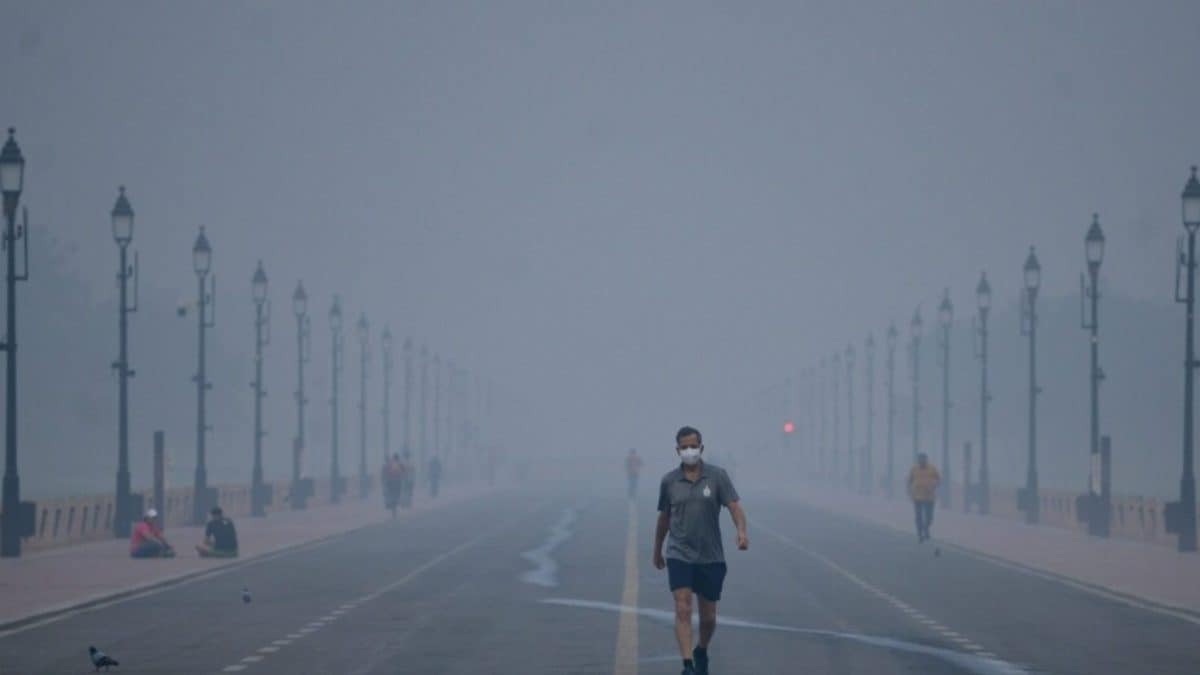
The national capital is currently navigating a complex meteorological transition. On Wednesday, February 11, 2026, Delhi’s Air Quality Index (AQI) climbed to 297, teetering on the edge of the ‘Very Poor’ category. Despite the arrival of a Western Disturbance (WD), the impact on the plains remains minimal, leaving wind speed as the city’s primary defense against accumulating smog.
According to the India Meteorological Department (IMD), three distinct weather systems are moving across the Himalayan region, but their ability to bring much-needed rain to Delhi is virtually non-existent.
Also Read | Imran Khan and Bushra Bibi Sentenced to 17 Years in Jail
The “Feeble” Triple Threat: Western Disturbances Explained
Meteorologists have identified a sequence of three weak Western Disturbances that will influence North India this week:
-
The First (Feb 10–11): Currently active, this system has brought cloud cover but no precipitation to the plains.
-
The Second (Feb 13): Expected this Friday, it will likely follow the same pattern—increasing cloudiness without significant rain.
-
The Third (Feb 16–17): Forecast for early next week, potentially keeping temperatures from dipping sharply.
Because these systems are “feeble,” they are failing to wash away particulate matter through rain, a process known as wet deposition.
Wind Speed vs. Pollutants: The Afternoon Relief
The only saving grace for Delhi residents this week is the surface wind speed.
-
The Pattern: Calm winds during the night and early morning allow PM2.5 to settle near the ground. However, as the day progresses, northwesterly winds pick up.
-
The Velocity: Speeds of 15–20 km/hr are forecast during the afternoon. These gusts act as a “broom,” aiding in the dispersion of pollutants and preventing the AQI from crossing the 400 (Severe) mark.
Also Read | Imran Khan and Bushra Bibi Sentenced to 17 Years in Jail
Forecast Through Friday: Why the “Poor” Tag Persists
The Air Quality Early Warning System (EWS) for Delhi indicates that the AQI will likely oscillate within the 200–300 (Poor) range until at least Friday, February 13, 2026.
-
Temperature Impact: The unseasonal warmth—with maximums reaching 28.6°C—is actually helping. Warmer air rises more easily, lifting pollutants away from the breathing zone compared to the stagnant “cold lid” seen in January.
-
Secondary Pollutants: While PM2.5 remains the primary concern, rising temperatures are beginning to trigger a slight increase in Ozone (O3) levels during peak sunlight hours.
Hotspots Watch: Where Air Quality is Nearing ‘Severe’
While the city average remains ‘Poor’, several industrial and high-traffic zones are recording much higher concentrations:
-
Wazirpur: Recorded the highest AQI today at 375.
-
Mundka: Currently at 374, firmly in the ‘Very Poor’ bracket.
-
Anand Vihar: Frequently spiking above 340 due to inter-state bus movement.
Also Read | Imran Khan and Bushra Bibi Sentenced to 17 Years in Jail
[DELHI WEATHER & AQI TRACKER: FEB 11–13, 2026]
| Date | Max Temp (°C) | Min Temp (°C) | Predicted AQI | Sky Condition |
| Feb 11 (Wed) | 25.0°C | 13.2°C | 297 (Poor) | Clear / Mist |
| Feb 12 (Thu) | 24.0°C | 11.0°C | 260–290 | Mainly Clear |
| Feb 13 (Fri) | 24.0°C | 10.0°C | 250–280 | Partially Cloudy |
Next Steps
If you are a morning runner or have respiratory sensitivities, you should postpone outdoor activities until after 11:00 AM, when surface winds are strong enough to clear the morning smog. Furthermore, with the Bharat Bandh scheduled for tomorrow (Feb 12), a potential reduction in vehicular traffic might offer a slight, temporary dip in local nitrogen dioxide (NO2) levels.
Also Read | Imran Khan and Bushra Bibi Sentenced to 17 Years in Jail
End…

