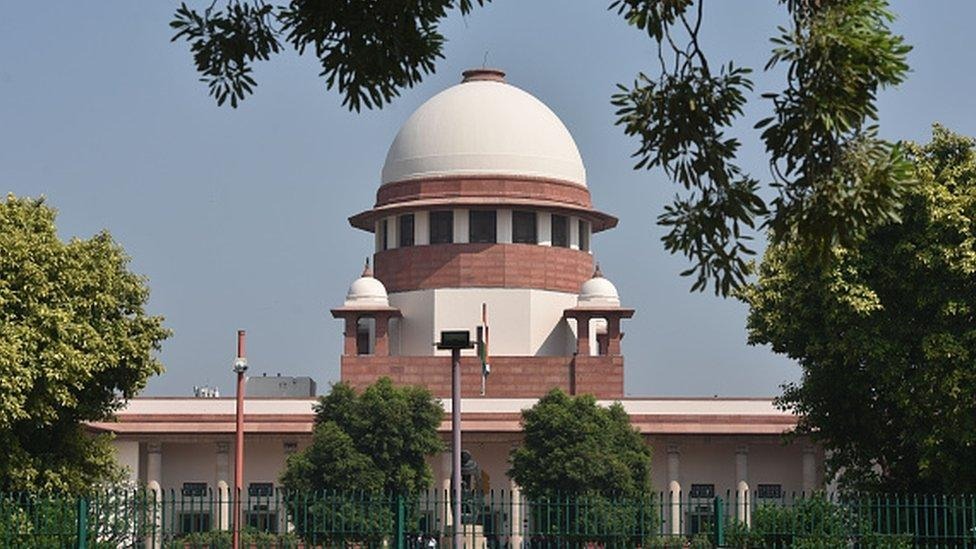
For the last four decades, Writ Petition 13029/1985 was the engine room of environmental law in India. On Thursday, March 12, 2026, the Supreme Court of India officially turned off that engine. By disposing of the landmark petition filed by environmental lawyer MC Mehta, the court signaled a transition from a decades-long “litigant-driven” case to a modern, court-directed institutional framework.
MC Mehta, now 80, reflected on the journey with a mix of pride and caution. His simple formulation—that billions of dollars cannot “manufacture” the clean air we have a right to—remains the guiding principle for a generation of activists who followed in his footsteps.
Also Read | Imran Khan and Bushra Bibi Sentenced to 17 Years in Jail
40 Years of Impact: From Leaded Petrol to CNG
The Mehta petition was the vehicle for the most sustained judicial intervention in urban air quality globally.
-
The CNG Revolution: It forced Delhi to become the first city in the world to run its entire public transport system on Compressed Natural Gas.
-
Fuel Standards: It was the catalyst for phasing out leaded petrol and enforcing stricter Euro-equivalent emission norms.
-
Institutional Births: The case led to the creation of the Environment Pollution (Prevention and Control) Authority and the imposition of the Environment Compensation Charge on heavy trucks.
The Man Behind the Mission: Who is MC Mehta?
Born in Jammu & Kashmir in 1946, Mehta’s impact spans the geography of India.
-
Beyond Delhi: His litigation protected the Taj Mahal from toxic industrial emissions (the 1996 Taj Trapezium ruling) and initiated the cleanup of the Ganga (1985).
-
Awards: His work earned him the Goldman Environmental Prize, the UN Global 500 Award, and the Ramon Magsaysay Award.
Suo Motu: The New Path for NCR Air Quality
The closing of the petition does not mean the end of judicial oversight.
-
Suo Motu Framework: The CJI-led bench directed that air pollution issues in the NCR will now be handled under a fresh framework initiated by the court itself.
-
Shift in Responsibility: This move is intended to streamline proceedings and allow the court to act on current data and modern regulations rather than a 1985-dated filing.
Also Read | Imran Khan and Bushra Bibi Sentenced to 17 Years in Jail
Limitations & Lessons: Why the Air is Still Grey
Despite the historic victories, experts like Anumita RoyChowdhury (CSE) note that the improvements of the early 2000s have been “slowly overtaken.”
-
Rise of Private Vehicles: The benefits of the Metro and CNG have been diluted by the exponential rise in diesel and petrol cars.
-
Institutional Lag: Critics point out that while compensation charges were collected, the infrastructure to keep polluting vehicles entirely out of the city remains incomplete after a decade.
Reality Check
The disposal of the MC Mehta case is a symbolic milestone. Still, the air quality in Delhi remains among the worst in the world for several months a year. Therefore, while the CNG conversion was a global first, it proved that technical fixes alone cannot solve a systemic urban planning crisis. In fact, the winding up of the case places the burden squarely on the current generation to ensure that past gains aren’t just memories in a legal archive.
The Loopholes
The court says the vigilance will continue under a “suo motu” framework. In fact, this is an “Administrative Loophole”—without a dedicated petitioner like Mehta to constantly “push” and “remind” the court, the suo motu case risks becoming a routine file that only surfaces during the winter smog. Therefore, the “momentum” Mehta worries about is at risk of being lost to institutional fatigue. Still, the “ECC Loophole” remains; hundreds of crores collected as environmental charges are often unspent or diverted, a reality the court must address in its new framework.
Also Read | Imran Khan and Bushra Bibi Sentenced to 17 Years in Jail
What This Means for You
If you live in Delhi-NCR, do not expect immediate changes in air quality policy. First, realize that the existing regulations (GRAP, construction bans, truck taxes) remain in force. Then, if you are a citizen activist, understand that the era of “individual-led” litigation is evolving into institutional monitoring; you should now direct your grievances toward the Commission for Air Quality Management (CAQM).
Finally, understand that clean air is still your “non-negotiable” right. You should continue to use air quality apps and wear masks during peak pollution periods, as the court’s disposal of the case is a procedural end, not a physical one. Before you assume the battle is over, remember that the next hearing for the new suo motu case will likely take place before the 2026 stubble-burning season begins.
What’s Next
Expect the Supreme Court to appoint new “Amicus Curiae” for the suo motu framework within the next 30 days. Then, look for a report on the utilization of Environmental Compensation Charges collected over the last decade. Finally, expect MC Mehta to continue his work on other pending environmental cases, proving that at 80, his “Friday draft” is as sharp as ever.
Also Read | Imran Khan and Bushra Bibi Sentenced to 17 Years in Jail
End…..