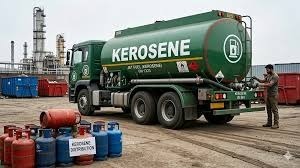
In a stark illustration of how global conflict can derail a decade of environmental progress, India has been forced to look backward to secure its kitchens. On Thursday, March 12, 2026, Petroleum Minister Hardeep Singh Puri confirmed that the government is reintroducing kerosene and coal into the national energy mix.
The move is a tactical retreat from the Ujjwala Yojana and the “Kerosene-Free City” campaigns that began in 2012. With the Strait of Hormuz closed for the 13th consecutive day—effectively trapping 55% of India’s cooking gas supply—the priority has shifted from “clean air” to “fed citizens.”
Also Read | Imran Khan and Bushra Bibi Sentenced to 17 Years in Jail
The Hormuz Blockade: 13 Days of Energy Limbo
The Strait of Hormuz is the narrow chokepoint between Iran and Oman. Currently, it is effectively closed to commercial shipping due to the military escalation between Iran, Israel, and the US.
-
The Impact: India relies on this route for 55% of its LPG and 30% of its LNG.
-
Domestic Boost: To compensate, refineries have been ordered to maximize LPG yields, successfully increasing domestic production by 28% in the last week.
Priority Hierarchy: Homes Over Hotels
Under the Natural Gas Control Order, the government has established a strict “pecking order” for fuel.
-
Tier 1 (100% Supply): Residential kitchens, hospitals, educational institutions, and CNG for public transport.
-
Tier 2 (Managed Reductions): Fertilizer plants (urea production) and essential manufacturing.
-
Tier 3 (Restricted): Hotels, restaurants, and private industries, which are now being pushed toward alternative fuels.
The rural “Cool-Down”: 45-Day Booking Rule
To manage the “panic-booking” that has flooded distributor systems, the government has implemented strict ordering windows.
-
Rural Areas: You can now only book a refill every 45 days (up from the previous 21-day norm).
-
Urban Areas: The gap is currently set at 25 days.
-
Authentication: The Delivery Authentication Code (DAC) system is being scaled to 90% of all users to ensure cylinders aren’t being diverted to the black market.
Also Read | Imran Khan and Bushra Bibi Sentenced to 17 Years in Jail
Alternative Fuels: Biomass, RDF, and Coal
For the hospitality sector, the “LPG-only” dream is on hold. The Ministry of Environment has advised state boards to permit the use of:
-
Coal & Kerosene: For commercial kitchens for a one-month window.
-
RDF Pellets: Refuse-Derived Fuel made from processed waste, offered as a slightly cleaner alternative to raw coal.
-
Biomass: Encouraging the use of agricultural residues to free up LPG for households.
Reality Check
The reintroduction of kerosene and coal is a necessary evil. Still, it represents a significant health and environmental setback, especially in rural areas where the move to LPG had significantly reduced respiratory issues. Therefore, while the “2.5-day delivery cycle” is being maintained for domestic users, the “cost” is a smog-filled sky in industrial and restaurant hubs. In fact, if the Hormuz blockade lasts beyond another two weeks, the 48,000 kl kerosene allocation will likely need to be doubled.
The Loopholes
The government says there is “no shortage.” In fact, this is a “Demand Distortion Loophole”—while the physical gas might be in the system, the bottleneck is at the bottling plants and the delivery trucks, which are struggling with higher fuel costs and frantic booking volumes. Therefore, you might have a “valid booking” but still face a delay. Still, the “Export Loophole” remains; by barring units like Reliance from using LPG as feedstock for their export-oriented petrochemicals, the government is effectively “cannibalizing” industrial profits to keep the common man’s stove burning.
Also Read | Imran Khan and Bushra Bibi Sentenced to 17 Years in Jail
What This Means for You
If you are a domestic consumer, do not try to “game” the booking system. First, realize that the 25/45-day rule is hardcoded into the OMCs’ software; you cannot book early even if you offer a premium. Then, if you are a restaurant owner, understand that you have a legal 30-day window to use coal or biomass without facing environmental penalties from your local Pollution Control Board.
Finally, understand that the PDS system is your backup. You should check your local ration shop (PDS) for the additional kerosene allocation if your LPG refill is delayed. Before you panic-buy, remember that diversified cargoes from the US and Russia are already on the water, though they will take 20–30 days to reach Indian ports via the Cape of Good Hope.
What’s Next
Expect long queues at PDS shops as the 48,000 kl of kerosene begins distribution. Then, look for price hikes in the hospitality sector, as switching to coal and biomass requires new equipment and labor. Finally, expect Hardeep Singh Puri to provide a fresh update in Parliament by next Thursday to see if the “2.5-day delivery” claim is holding up in rural districts.
Also Read | Imran Khan and Bushra Bibi Sentenced to 17 Years in Jail
End….