

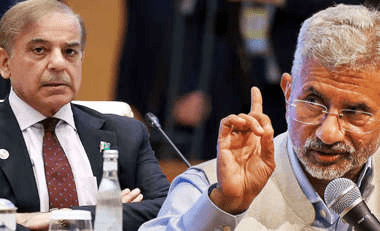
Now the diplomatic friction over the West Asia crisis has reached a boiling point within the Indian Parliament. On Wednesday, March 25, 2026, External Affairs Minister S. Jaishankar sharply countered Opposition charges of India’s “silence” during an all-party meeting. Therefore, reacting to reports of Islamabad acting as a bridge between Washington and Tehran, Jaishankar asserted that India is not a “dalaal” (broker) nation. Currently, the government is maintaining that India’s influence is exercised through direct leadership rather than opportunistic mediation. Thus, while Pakistan emerged as a potential host for negotiations, New Delhi remains focused on a principled end to the hostilities.
Also Read | Imran Khan and Bushra Bibi Sentenced to 17 Years in Jail
At a Glance:
-
The Remark: Jaishankar slams Pakistan as being “used” by the US since 1981.
-
The Context: Opposition leaders questioned why India isn’t mediating like Pakistan.
-
Modi’s Stance: PM Modi has directly told President Trump that the “war must end soon.”
-
Protocol Defense: Government clarifies that the Foreign Secretary visited the Iran embassy immediately after the strike on Ayatollah Khamenei.
-
Opposition Reaction: Congress and other parties demand a full parliamentary discussion under Rule 193.
In This Article:
-
Brokerage vs. Diplomacy: Jaishankar’s “Dalaal” Comment Explained
-
The “Silence” Charge: How the Centre is Responding
-
The Iran Protocol: Addressing the Late Response Allegations
-
Parliamentary Standoff: Opposition Demands Formal Debate
-
Frequently Asked Questions (FAQs)
Also Read | Imran Khan and Bushra Bibi Sentenced to 17 Years in Jail
Brokerage vs. Diplomacy: Jaishankar’s “Dalaal” Comment Explained
Now the government is drawing a sharp line between being a mediator and being a “broker.” During the high-level briefing, several Opposition leaders suggested that India was becoming a “mute spectator” while Pakistan took center stage in US-Iran negotiations. Therefore, Jaishankar’s response was aimed at devaluing Pakistan’s diplomatic standing.
First, he noted that there is “nothing new” about Islamabad’s involvement, suggesting they have been a tool for US interests for decades. Next, he emphasized that India does not seek to be a middleman for hire. Thus, the minister’s “dalaal” remark served to frame India as a sovereign power that speaks directly to world leaders rather than acting as a transactional host.
The “Silence” Charge: How the Centre is Responding
Now the Centre is working to dismantle the narrative that New Delhi has been inactive. Because the West Asia conflict is hurting global energy and inflation, the Opposition has pushed for a more vocal condemnation of the violence.
First, the government revealed that Prime Minister Modi has been in direct contact with US President Donald Trump. Next, officials asserted that India is “commenting and responding” to every fast-evolving development. Thus, the strategy appears to be one of “quiet but firm” diplomacy. Currently, the Cabinet Committee on Security—including Rajnath Singh and Amit Shah—is overseeing the impact of the war on India’s national interests.
Also Read | Imran Khan and Bushra Bibi Sentenced to 17 Years in Jail
The Iran Protocol: Addressing the Late Response Allegations
Now the government is also defending its handling of the fallout from the US-Israel strike on Iran’s Supreme Leader. Critics had alleged that India’s response to the death of Ayatollah Ali Khamenei was delayed or weak. Therefore, Foreign Secretary Vikram Misri provided a detailed timeline to the leaders present.
First, the government pointed out that the Foreign Secretary visited the Iranian embassy immediately after it opened to sign the condolence book. Next, they maintained that all international protocols were followed with the highest level of diplomatic decorum. Thus, the Centre rejected the claim that India’s relationship with Tehran has cooled due to the conflict.
Parliamentary Standoff: Opposition Demands Formal Debate
Now, despite the government’s presentation, the political divide remains wide. Opposition leaders, including Tariq Anwar of the Congress, termed the briefing “unsatisfactory.” Therefore, the focus now shifts to a potential showdown in the upcoming sessions of the Lok Sabha and Rajya Sabha.
First, the Opposition is demanding a dedicated debate under Rule 193 to scrutinize India’s West Asia policy. Next, leaders like Sasmit Patra (BJD) and Dharmendra Yadav (SP) have called for more transparency regarding the economic risks of the war. Thus, while the government projects confidence in its “non-dalaal” stance, it will soon face a rigorous test of its foreign policy on the floor of the House.
Also Read | Imran Khan and Bushra Bibi Sentenced to 17 Years in Jail
Frequently Asked Questions (FAQs)
What did S. Jaishankar mean by “not a dalaal nation”? He was contrasting India’s direct, high-level diplomacy with Pakistan’s role as a mediator, which he characterized as being “used” as a broker for external powers.
Has India spoken to the US about the Iran war? Yes. The government confirmed that PM Modi has explicitly conveyed to President Trump that the war must end soon as it is damaging global interests.
Why is the Opposition unhappy with India’s response? Opposition leaders believe India is being a “mute spectator” and should play a more active role in stopping the conflict, similar to how other nations are mediating.
What was India’s response to the death of Ayatollah Khamenei? The government stated that the Foreign Secretary followed immediate protocol by visiting the Iranian embassy and signing the condolence book to show India’s respect.
Which ministers attended the all-party meeting? The meeting was attended by Rajnath Singh, Amit Shah, S. Jaishankar, Nirmala Sitharaman, JP Nadda, and Kiren Rijiju.
Also Read | Imran Khan and Bushra Bibi Sentenced to 17 Years in Jail
End….

