

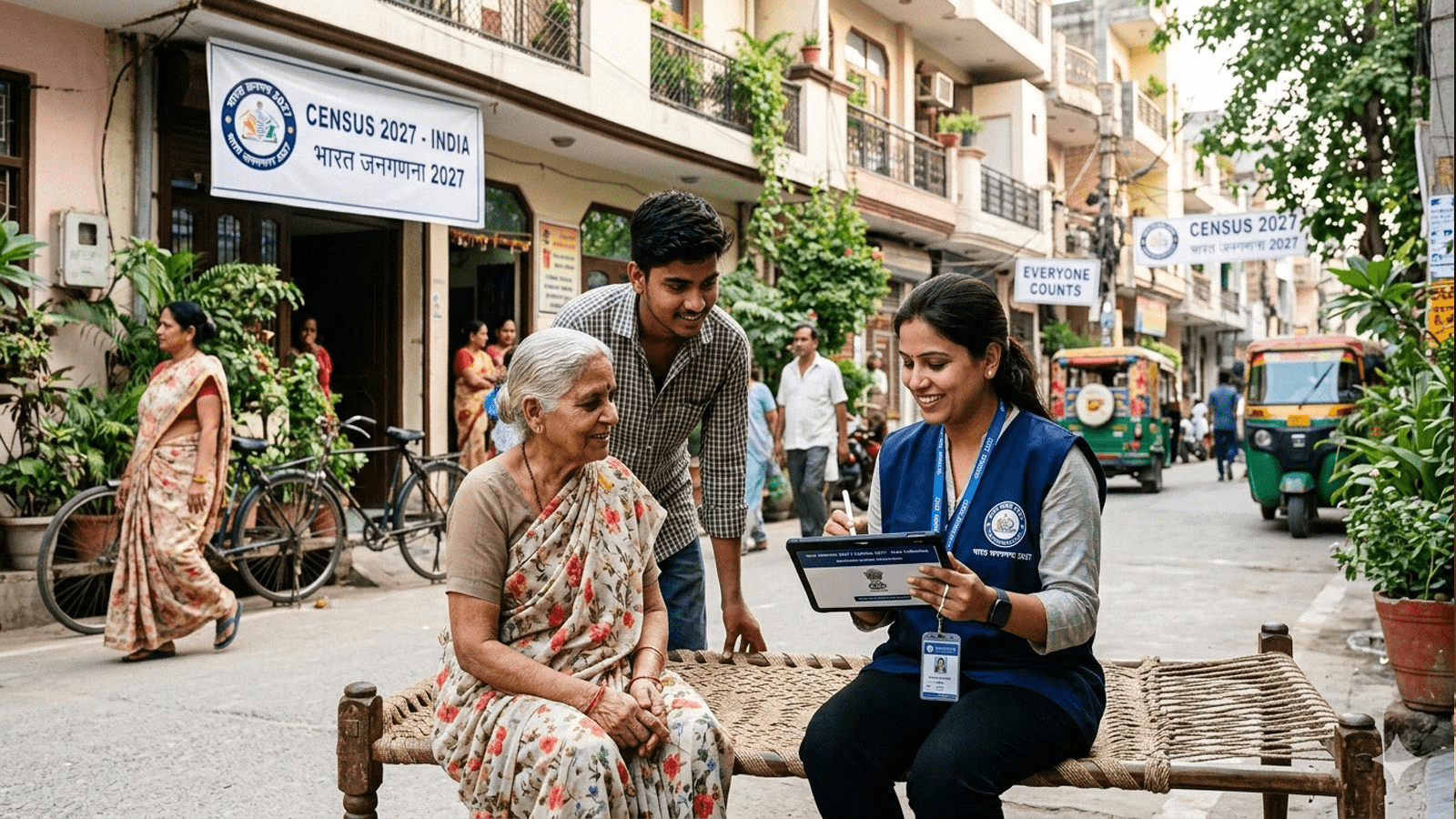
India officially kicked off the first phase of Census 2027 today, April 1, 2026. This marks a historic transition as the country’s 16th Census becomes the first to be conducted primarily through digital tools, including a dedicated mobile application and a self-enumeration portal available in 16 languages.
The ₹11,718.24 crore exercise will mobilize over 3 million officials to map the living conditions and assets of over 1.4 billion people.
Also Read | Imran Khan and Bushra Bibi Sentenced to 17 Years in Jail
Phase I: House Listing and Housing Census
Starting today, the focus is on “where and how” Indians live. Enumerators will not use paper; instead, they will record data directly into smartphones.
-
Key Data Points: Construction materials of houses, number of residents, ownership status, and access to basic amenities (water, sanitation, electricity).
-
Asset Mapping: Information on internet access, mobile phone ownership, vehicles, and types of cooking fuel will be recorded.
-
Self-Enumeration: Residents can now skip the long interview by logging into a portal with their mobile number, filling out details, and sharing a Unique ID with the enumerator during their visit.
The Staggered Rollout Schedule (2026)
Also Read | Imran Khan and Bushra Bibi Sentenced to 17 Years in Jail
| Region Group | Self-Enumeration Window | House Listing Phase |
| Group A: (Delhi, Karnataka, Odisha, Goa, etc.) | April 1 – April 15 | April 16 – May 15 |
| Group B: (Haryana, MP, Andhra, Chandigarh, etc.) | April 16 – April 30 | May 1 – May 30 |
| Snow-Bound Areas: (Ladakh, parts of J&K, UK) | N/A | Starts September 2026 |
Looking Ahead: Phase II and the “Caste” Count
While Phase I deals with infrastructure, the Population Enumeration (Phase II) is scheduled for February 2027. This second phase will include the highly anticipated Enumeration of Castes, a data point that has been a central theme in recent political discourse. The final “reference moment” for the entire country is set for midnight on March 1, 2027.
Investigative Insight: The “Digital Divide” Challenge
While the shift to a digital census promises real-time monitoring and faster data processing, the “Self-Enumeration” feature faces a major hurdle: the digital literacy gap. In states like Odisha and Bihar, where rural smartphone penetration varies significantly, the burden will still fall heavily on the 3 million field enumerators.
Furthermore, the decision to record “Internet Access” as a core metric for the first time is a strategic move. By 2027, the government plans to use this data to fine-tune the Direct Benefit Transfer (DBT) systems, identifying “offline” pockets that require physical banking and ration infrastructure. However, with Census 2021 delayed by five years due to the pandemic, the current 2026-27 exercise is working on “stale” 2011 baseline data, meaning the initial house-listing phase may encounter millions of “new” households that didn’t exist on government maps a decade ago.
Also Read | Imran Khan and Bushra Bibi Sentenced to 17 Years in Jail
End….

