

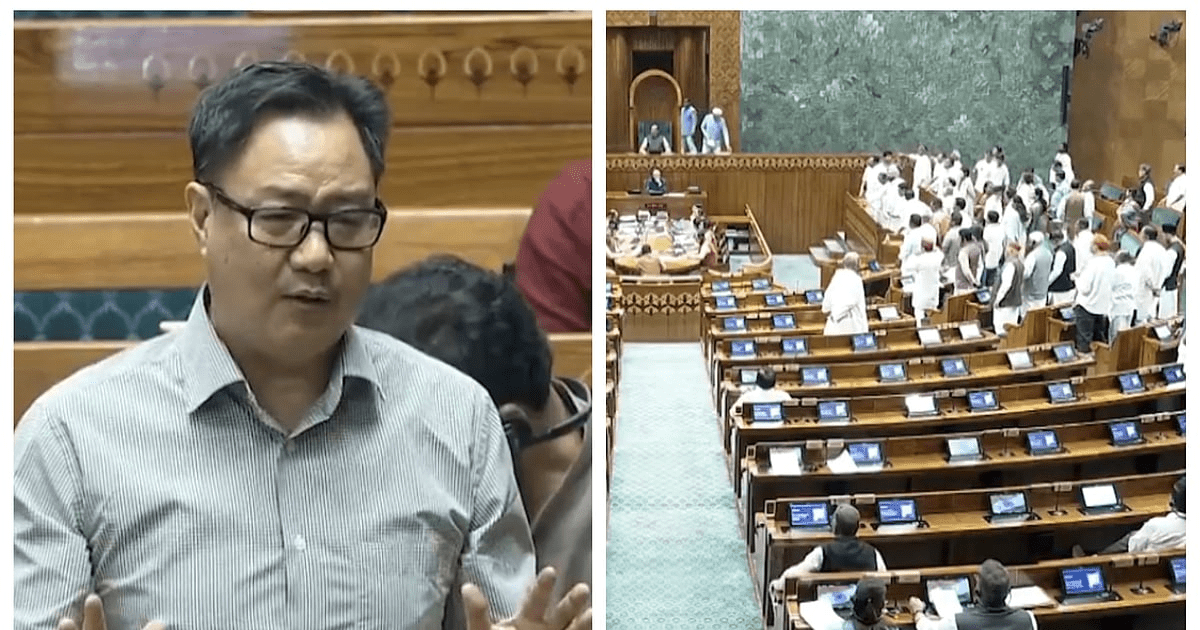
In a significant tactical retreat, the Narendra Modi government deferred the passage of the Foreign Contribution (Regulation) Amendment Bill, 2026 in the Lok Sabha on Wednesday, April 1, 2026. The move is widely interpreted as a strategic attempt to avoid alienating the influential Christian community in Kerala, where assembly elections are scheduled for April 9.
While the government maintains the Bill is vital for “national security,” the decision to pause suggests a high-stakes balancing act between regulatory tightening and electoral survival.
Also Read | Imran Khan and Bushra Bibi Sentenced to 17 Years in Jail
Why the FCRA Bill is Controversial
The 2026 Amendment seeks to introduce the most stringent controls on foreign funding since the Act’s inception.
-
Asset Takeover: The Bill proposes a “Designated Authority” with the power to seize, manage, and even dispose of the assets (including buildings and land) of NGOs or religious institutions whose FCRA licenses are cancelled or not renewed.
-
Management of Places of Worship: Under Clause 16A(7), if the asset is a place of worship, the government can appoint a person to manage it, raising fears of executive interference in religious affairs.
-
The “Secret” Data Row: CPM MP John Brittas alleged that since 2024, the government has blocked eight rounds of parliamentary questions regarding FCRA license cancellations, citing “National Secrecy” under Rule 47(2)(XXII).
The Kerala Factor: A 20% Electorate
With the April 9 polls fast approaching, the BJP has been actively courting Kerala’s Christian community, which makes up roughly 18–20% of the state’s population.
-
Church Resistance: The Catholic Bishops’ Conference of India (CBCI) and the Syro-Malabar Church have described the Bill as a threat to the “operational survival” of minority institutions.
-
BJP Damage Control: State BJP President Rajeev Chandrasekhar reportedly intervened with the Prime Minister and Home Minister to halt the Bill after meeting with Church leaders who flagged the “draconian” nature of asset takeover provisions.
-
Political Unity: In a rare show of consensus, both the ruling LDF and the opposition UDF in Kerala have united against the Bill, labeling it an “attack on pluralism.”
Also Read | Imran Khan and Bushra Bibi Sentenced to 17 Years in Jail
Key Legislative Provisions vs. Opposition Concerns
| Feature | Government Justification | Opposition/NGO Concern |
| Designated Authority | Fixes legal gaps in managing “defunct” assets. | Creates a mechanism for state takeover of private institutions. |
| License Renewal | Ensures only “compliant” entities receive funds. | Used as a “Sword of Damocles” to intimidate dissenters. |
| Asset Disposal | Transfers funds to government for “public purpose.” | Potential weaponization against minority-run schools and hospitals. |
Investigative Insight: The “Election Eve” Retreat
The deferral of the FCRA Bill on the penultimate day of the budget session is a textbook example of Realpolitik. By introducing the Bill, the government signaled its intent to its core base to “crack down” on foreign influence. However, by deferring it, they have neutralized a potent campaign weapon for the LDF and UDF in Kerala’s Christian heartlands like Pala and Kanjirappally.
Crucially, the government has not withdrawn the Bill. As noted by Robinson Rodrigues of the CBCI, the “struggle continues” because the legislation remains on the table for the monsoon session. The strategic silence on FCRA data, as flagged by John Brittas, further suggests that once the May 4 results are out, the government may return with even tighter controls, particularly if their electoral gamble in Kerala pays off.
Also Read | Imran Khan and Bushra Bibi Sentenced to 17 Years in Jail
End….

