

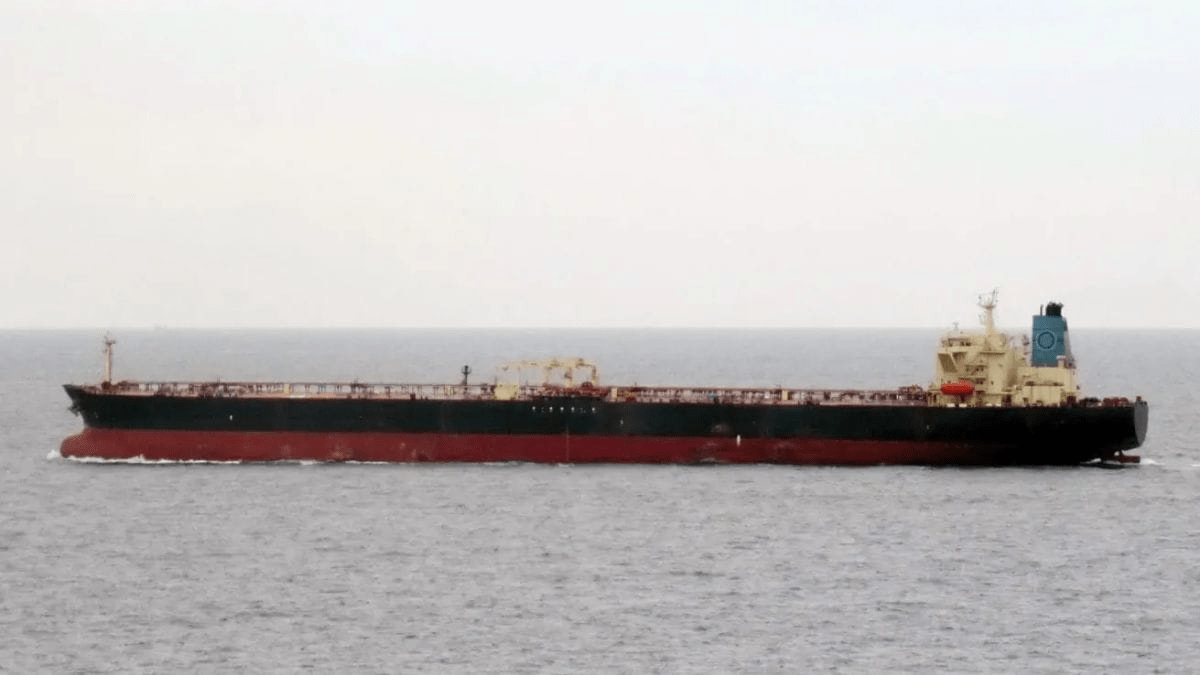
In a significant blow to India’s hopes for cheaper energy relief, the Eswatini-flagged tanker Ping Shun, carrying approximately 600,000 barrels of Iranian crude, has abruptly changed course. After signaling its destination as the Vadinar terminal in Gujarat for over a week, the vessel is now headed toward Dongying, China, as confirmed by Kpler-owned MarineTraffic on Friday, April 3, 2026.
The vessel, operated by the Chinese firm Nycity Shipmanagement Co. Ltd, would have been the first Iranian oil delivery to India in nearly seven years.
Also Read | Imran Khan and Bushra Bibi Sentenced to 17 Years in Jail
The Documentation “Wall” at Vadinar
Port officials at Vadinar reported a total lack of communication from the vessel’s agents, leading to the eventual bypass of the Indian coast.
-
Missing Clearances: “None of the agents at the terminal received any mandatory documentation related to Ping Shun,” a port official stated. Indian ports require strict international maritime protocols, insurance filings, and booking clearances before offloading.
-
The Insurance Hurdle: Analysts suggest that despite the US sanctions waiver, finding a firm willing to insure a sanctioned vessel for docking in India remains a massive structural hurdle.
-
Dark Fleet Tactics: Maritime experts note that “Dark Fleet” tankers frequently change destinations to avoid detection or to pivot toward buyers (like China) with pre-established, sanction-proof payment channels.
The Trump “Waiver” and Market Realities
The journey was made possible by President Donald Trump’s March 21 announcement, which granted a 30-day window for the sale of Iranian oil already “on the water” to cool global prices during Operation Epic Fury.
Also Read | Imran Khan and Bushra Bibi Sentenced to 17 Years in Jail
| Feature | The Ping Shun Profile |
| Cargo Size | ~600,000 Barrels of Crude |
| Loading Point | Kharg Island, Iran (March 4) |
| Operator | Nycity Shipmanagement Co. Ltd (China) |
| Status | US-Sanctioned (Blacklisted in 2025) |
| Original ETA India | April 4, 2026 |
Impact on Indian Refiners
The loss of this cargo is a setback for Indian refiners like Nayara Energy and IOCL, who are currently grappling with:
Also Read | Imran Khan and Bushra Bibi Sentenced to 17 Years in Jail
-
Hormuz Chokehold: With the Strait of Hormuz effectively closed, India is struggling to find alternative prompt-delivery barrels.
-
Inventory Squeeze: Domestic fuel prices have hit record highs, with XP100 petrol at ₹160.
-
The “Sea Bird” Precedent: Another vessel, the Sea Bird, has been idling at Mangalore since late March, unable to discharge Iranian LPG due to similar administrative friction.
Investigative Insight: The “Yuan” Advantage
The Ping Shun’s pivot to Dongying reveals a hard truth about India’s energy diplomacy: China is ready, India is hesitant. While the US issued a “sanctions window,” Indian state-backed buyers remained wary of the long-term legal fallout, especially regarding the S-400 deal friction with Washington. China, however, has a “plug-and-play” system for Iranian oil, utilizing the Yuan-based payment system and private “teapot” refineries in Dongying that operate outside the Western financial grid.
By failing to secure the Ping Shun, India has lost a vital test case. This suggests that unless the Ministry of Petroleum establishes a dedicated “War-Time Clearing House” for sanctioned oil—similar to the one Russia is currently offering for its own crude—India will continue to lose out on “distressed” oil cargoes to China, even when the US technically allows the trade.
Also Read | Imran Khan and Bushra Bibi Sentenced to 17 Years in Jail
End….

