

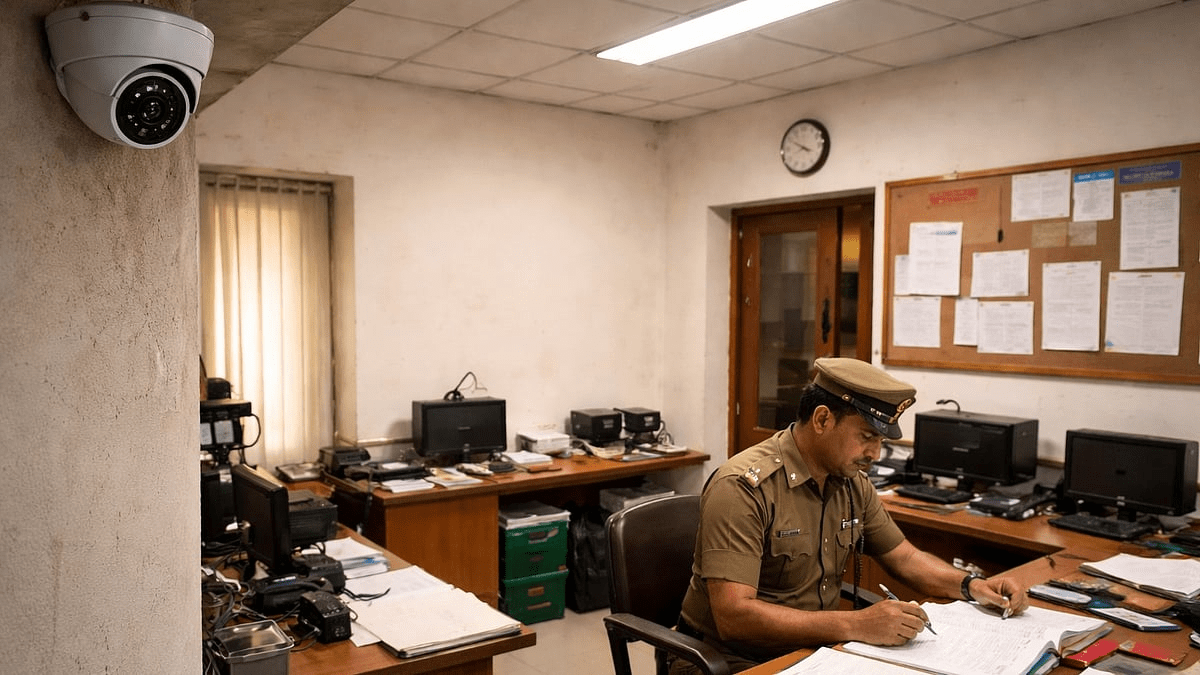
Now the Supreme Court issued a stern warning Tuesday afternoon. Justices gave the Union government exactly two weeks to resolve CCTV issues. Therefore, every police station in India must soon have working cameras. This move aims to prevent custodial torture across the country. Meanwhile, the court expressed deep anger over recent government delays. The bench made it clear that time is running out.
Also Read | Imran Khan and Bushra Bibi Sentenced to 17 Years in Jail
The Two-Week Ultimatum
Now the clock is ticking for the Union government. First, the Supreme Court demanded a solution within 14 days. Therefore, the Ministry of Home Affairs must act quickly. Attorney General R. Venkataramani provided a personal assurance to the bench. Thus, the court decided to give one final chance.
Meanwhile, the judges reviewed the progress of the national project. They found the current pace unacceptable. Therefore, they refused to grant a longer extension. Most states still lack full coverage in interrogation rooms.
Finally, this deadline is not just a suggestion. It is a formal judicial order. So the government must report back by late April.
Ending Custodial Torture: The Core Goal
So why is this specific project so important? The reason is simple: transparency saves lives. First, CCTVs act as a silent witness inside police stations. Therefore, officers are less likely to use illegal force.
Now let’s look at the data. Cases of custodial violence often lack physical evidence. Thus, victims struggle to find justice in court. But with 24/7 video recording, the truth becomes clear.
Meanwhile, the court wants cameras in every corner. This includes entry points, cells, and corridors. Therefore, no “blind spots” should exist within the station. This is the only way to ensure total safety.
Court Slams ‘Undersecretary’ Rank Diplomacy
Now the hearing took a sharp turn into protocol. Justice Vikram Nath expressed strong disapproval of the Centre’s tactics. First, the government sent a junior officer to high-level meetings. Therefore, the court felt the matter was being disrespected.
“It was improper to depute an undersecretary-rank officer,” Justice Nath said. Thus, the bench highlighted a lack of seriousness. They noted that senior advocates and court-appointed experts were present.
Meanwhile, the court expects senior decision-makers at the table. Sending a junior staffer suggests the project is a low priority. Therefore, the judges demanded a change in the government’s approach.
Also Read | Imran Khan and Bushra Bibi Sentenced to 17 Years in Jail
The History of the CCTV Mandate
So how did we get to this point? This legal battle has lasted for years. First, the landmark directions came in September last year. Therefore, the government has had months to comply.
Now the Supreme Court police station CCTV case is reaching its peak. Every state and Union Territory must follow these rules. Thus, the Centre must coordinate with local governments.
Meanwhile, the original order was very specific. It required night-vision cameras and audio recording. Therefore, simple webcams are not enough. The technology must be high-grade and tamper-proof.
Why the Home Secretary Was Summoned
Now let’s discuss the role of the Home Secretary. Previously, the court ordered his personal appearance. Therefore, he was legally required to stand before the judges. This usually happens only in cases of extreme delay.
So why did the court change its mind? Attorney General Venkataramani stepped in with a firm promise. He assured the court that the Ministry would fix the issues. Thus, the bench dispensed with the Secretary’s appearance for now.
Meanwhile, this “pardon” is only temporary. If the two-week deadline fails, the Secretary may face summons again. Therefore, the pressure remains on the highest level of bureaucracy.
Technical Hurdles in Installation
Now the government claims several issues are slowing them down. First, storage is a massive problem. The court wants six months of footage saved. Therefore, police stations need massive digital servers.
Next, internet connectivity is an issue in rural areas. Many stations lack the bandwidth for high-def streaming. Thus, the technical rollout is uneven across different states.
Finally, maintenance is a major concern. Cameras often “break” during sensitive incidents. Therefore, the court wants a system that alerts officials if a camera goes offline.
Also Read | Imran Khan and Bushra Bibi Sentenced to 17 Years in Jail
The Role of the Amicus Curiae
So who is helping the court manage this? Senior advocate Sidharth Dave serves as the amicus curiae. This means he is a “friend of the court.” Therefore, he provides unbiased expert advice.
First, Dave coordinates with different states to track progress. He identifies which regions are lagging behind. Thus, he acts as a bridge between the judiciary and the executive.
Meanwhile, the court trusts his reports over government claims. Therefore, his presence at meetings is vital. This is why the court was so angry about the undersecretary-rank officer. They felt it wasted the amicus’s valuable time.
What Happens if the Centre Fails?
Now what are the stakes for the next 14 days? If the Centre fails, the court will take “exception.” Therefore, we could see heavy fines or contempt proceedings.
First, the court can halt other police funding. They have the power to freeze certain administrative budgets. Thus, the government has a financial incentive to comply.
Next, the judges can order an independent audit. They might hire a private firm to inspect stations. Therefore, the government cannot hide the truth for long.
Finally, this is about the rule of law. If the Centre ignores the Supreme Court, it weakens the whole system. So everyone is watching this deadline closely.
Common Questions Answered
What is the new deadline for CCTV installation? Now the government has exactly two weeks from Tuesday. Therefore, they must finish by late April 2026.
Why does the Supreme Court want CCTVs in police stations? First, to prevent custodial torture. Second, to ensure transparency during interrogations.
Who criticized the Home Ministry’s ranking system? Justice Vikram Nath and Justice Sandeep Mehta. They felt an undersecretary was too junior for this task.
What kind of cameras are required? The court demands night-vision and audio capabilities. Thus, the footage must be clear in all conditions.
How long must the footage be stored? Usually, the requirement is to keep data for at least six months. Therefore, storage is a key hurdle.
Is the Home Secretary still required to appear? Not for now. The court waived his appearance after the AG’s assurance. Still, this can change if the deadline is missed.
Also Read | Imran Khan and Bushra Bibi Sentenced to 17 Years in Jail
End….

