

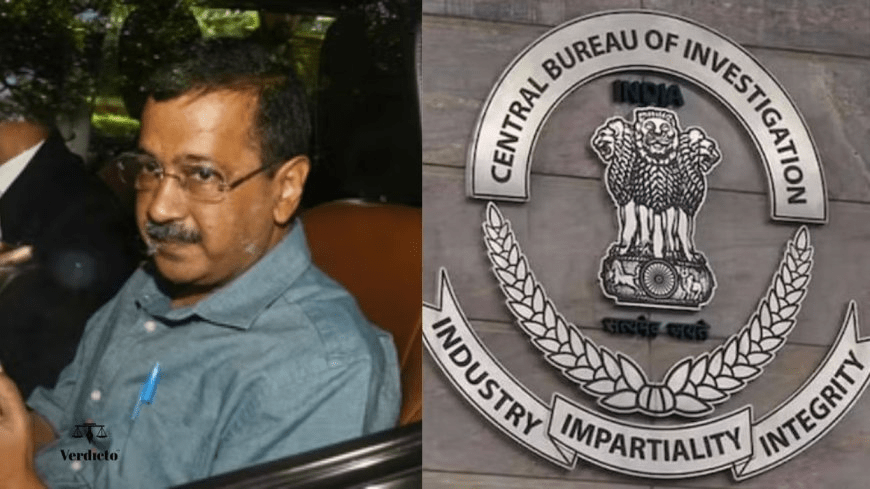
Now the high-stakes legal battle over the capital’s former liquor rules has reached a new boiling point. The Central Bureau of Investigation (CBI) filed a blistering 39-page affidavit Wednesday. First, they officially opposed the plea from Arvind Kejriwal and Manish Sisodia to remove Justice Swarana Kanta Sharma from the bench. Therefore, this Delhi excise policy case CBI update highlights a major clash over judicial impartiality. The agency argues that the plea is a clear attempt to “scandalize” the court. Meanwhile, the next hearing is scheduled for April 13.
The ABAP Seminar: Basis of the Bias Allegation
Now let’s look at why Arvind Kejriwal wants a different judge. The plea suggests that Justice Sharma has ties to the Akhil Bharatiya Adhivakta Parishad (ABAP). First, the petitioners noted her attendance at events organized by this legal wing. Therefore, they alleged a “likelihood” of ideological association with the RSS.
Next, they argued this creates a “reasonable apprehension” that the proceedings won’t be neutral. Thus, they believe a fair hearing is impossible under the current bench.
Meanwhile, the CBI has dismissed these claims as pure conjecture. Therefore, they argue that professional attendance at a legal seminar is common for many judges. So the definition of “bias” is now the center of this legal storm.
Also Read | Imran Khan and Bushra Bibi Sentenced to 17 Years in Jail
CBI’s 39-Page Rebuttal: Scandalizing the Court
So how did the agency respond to these heavy accusations? Their affidavit was incredibly blunt. First, the CBI stated that making such “unscrupulous” claims lowers the authority of the court. Therefore, they believe the move constitutes Contempt of Court.
Next, they argued that the seminar topics were strictly legal and not political. Thus, no ideological bias was demonstrated.
Meanwhile, the agency warned that accepting such pleas would be dangerous. If attending an ABAP function is grounds for recusal, many High Court and Supreme Court judges would be disqualified. Therefore, the CBI is fighting to protect the independence of the entire judiciary.
The Threat of ‘Forum Shopping’ in 2026
Now the CBI is using a very specific term: “forum shopping.” First, they claim the accused are trying to pick their own judge. Therefore, the recusal plea is seen as a tactical move to find a more “favorable” bench.
Next, the agency argued that past decisions are not a basis for bias. Thus, just because a judge previously ruled against someone doesn’t mean they are prejudiced.
Meanwhile, they warned that allowing this would effectively enable litigants to “bench select.” Therefore, it would seriously undermine the credibility of the legal system. So the CBI wants this application dismissed to prevent a dangerous precedent.
Favorable vs. Unfavorable: Proving Neutrality
So has Justice Sharma been one-sided in her past orders? The CBI points to the actual record to prove otherwise. First, they noted that she has passed “favorable” orders for some of the accused. Therefore, she has provided relief to people like Arun Ramachandran Pillai.
Next, the agency accused Kejriwal’s team of “selective” storytelling. Thus, they claim the petitioners suppressed the favorable orders and only focused on the negative ones.
Meanwhile, the passing of both types of orders shows a lack of bias. Therefore, the CBI believes the application should be dismissed based on this selective presentation of facts. So the agency is using the judge’s own record as her best defense.
Also Read | Imran Khan and Bushra Bibi Sentenced to 17 Years in Jail
The History of the February Discharge Order
Now we must recall how we got to the High Court in the first place. On February 27, a trial court discharged Kejriwal, Sisodia, and 21 others. First, the judge concluded that the CBI did not have a “prima facie” case. Therefore, the accused walked free temporarily.
Next, the CBI quickly approached the High Court to challenge this verdict. Thus, they argued the trial court ignored vital evidence gathered during the probe.
Meanwhile, on March 9, Justice Sharma stayed parts of that trial court order. Therefore, the legal victory for the AAP leaders was put on hold. This specific stay is likely what triggered the current push for her recusal.
Chief Justice Upadhyaya’s Previous Rejection
So was this the first time Kejriwal tried to move the case? Actually, no. First, they filed a transfer application before High Court Chief Justice DK Upadhyaya. Therefore, they asked him to send the CBI’s appeal to a different judge.
Next, the Chief Justice rejected that request on March 13. Thus, the administrative route for a bench change failed.
Meanwhile, having failed at a transfer, the petitioners moved for a formal recusal. Therefore, this is their second attempt to get a new judge. So the CBI views this as a persistent effort to avoid Justice Sharma’s scrutiny.
Legal Implications for Future Political Cases
Now this Delhi excise policy case CBI update has implications far beyond the AAP. First, it tests the limits of “ideological bias” claims in Indian law. Therefore, the ruling on April 13 will be studied by every political defense team in the country.
Next, it addresses the rights of “Politically Exposed Persons” (PEPs) in court. Thus, it asks if politicians should have different standards for challenging judges.
Meanwhile, the independence of the judiciary is the core value at stake. Therefore, the High Court must decide if a judge’s personal life can be used to disqualify them from public duty. So the eyes of the entire legal fraternity are on Delhi this weekend.
Also Read | Imran Khan and Bushra Bibi Sentenced to 17 Years in Jail
What to Expect During the April 13 Hearing
So what happens next? The High Court will hear the formal arguments on Monday, April 13. First, Kejriwal’s lawyers will try to provide “tangible material” of bias. Therefore, they must move beyond mere conjectures.
Next, the CBI will double down on their “Contempt of Court” and “scandalizing” arguments. Thus, the atmosphere in the courtroom will likely be quite tense.
Meanwhile, if the recusal is denied, Justice Sharma will continue to hear the CBI’s appeal. Therefore, the trial court’s discharge order will remain under intense scrutiny. So Monday’s decision will determine the pace of the entire excise case for 2026.
Common Questions Answered
Why does Arvind Kejriwal want the judge to recuse herself? Now he alleges she has an ideological association with the ABAP. Therefore, he fears she may not be impartial in the excise case.
What is the CBI’s main argument against this? First, they say attending a legal seminar is not grounds for bias. Thus, they believe the plea is an attempt to “scandalize” the court.
When is the next hearing for the excise case? Next, the recusal application will be heard on April 13, 2026. Therefore, a decision is expected shortly after.
Has Justice Sharma given any reliefs to the accused? So yes. The CBI pointed out that she has passed favorable orders for some accused, including Arun Pillai.
What is the trial court’s current status? Finally, the trial court had discharged the accused on February 27. But the CBI has stayed parts of that order in the High Court.
What is ‘forum shopping’? Actually, it refers to a litigant trying to move their case to a judge they think will be more favorable. Therefore, the CBI has accused Kejriwal of this practice.
Also Read | Imran Khan and Bushra Bibi Sentenced to 17 Years in Jail
End…..

