

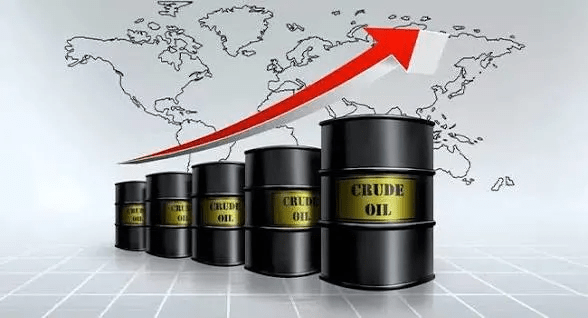
Now the global energy landscape is flashing a red alert for investors and policymakers alike. In a significant market shift, Brent crude crosses $100 per barrel this Thursday, April 23, 2026. This surge marks the fourth straight session of gains, fueled by a volatile cocktail of soaring demand and deteriorating geopolitical stability. Specifically, the market is reacting to the news of Iran capturing two container ships in the Persian Gulf, a move that has effectively frozen hopes for an immediate diplomatic breakthrough between Washington and Tehran.
Meanwhile, larger-than-expected draws in US gasoline and distillate inventories suggest that despite the high costs, global demand remains remarkably robust.
But for the broader financial markets, this triple-digit milestone is more than just a commodity story; it is a macro warning signal that has historically preceded equity downturns.
Also Read | Imran Khan and Bushra Bibi Sentenced to 17 Years in Jail
The Strait of Hormuz: A Chokepoint Under Pressure
Now we must analyze the physical bottleneck of the global energy trade. The Strait of Hormuz is a critical artery, and any disruption there has immediate implications for global oil flows. Therefore, the Brent crude crosses $100 milestone is a direct reflection of “security of supply” fears.
The Arterial Risk
First, recent developments include Iran’s capture of two container ships attempting to exit the Gulf. Then, these tactical maneuvers have raised concerns that the Strait could be used as a geopolitical lever. Thus, markets are pricing in a significant risk premium for every barrel originating from the Middle East. Next, the lack of alternative routes for this volume of oil makes the region’s stability non-negotiable for global price parity. Therefore, the “bottleneck effect” is currently the primary driver of the $100+ price tag.
Stalled Peace Talks: Why the Risk Premium is Rising
Now the diplomatic front is offering little comfort to traders. While there were initial reports of a possible second round of peace talks between Iran and the United States, meaningful progress has been non-existent. Therefore, the Brent crude crosses $100 rally is fueled by a lack of “diplomatic insurance.”
Elevated Risk Premiums
First, the uncertainty surrounding the talks keeps the market in a state of constant tension. Then, the capture of maritime assets suggests a “hardline” stance from Tehran. Thus, the possibility of a de-escalation seems more distant now than it did in early April. Next, until a framework for peace is established, the “war premium” will continue to inflate the cost of Brent and WTI alike. Therefore, the geopolitical stalemate is acting as a floor for high oil prices.
Demand-Side Drivers: US Fuel Consumption Surges
Now it is not just about the supply “scare.” On the demand side, strong consumption is providing a solid foundation for the rally. Therefore, even as Brent crude crosses $100, the market shows no signs of a demand destruction phase.
Inventory Draws
First, US gasoline and distillate inventories have shown larger-than-expected draws over the past week. Then, this data indicates that industrial and consumer demand in the world’s largest economy remains robust despite inflationary pressures. Thus, the market is facing a “double whammy” of tight supply and hungry consumers. Next, the fourth straight session of price increases suggests a trend that is gathering momentum. Therefore, the rally is fundamentally supported by consumption patterns, not just speculation.
Also Read | Imran Khan and Bushra Bibi Sentenced to 17 Years in Jail
The 90% Rally Rule: What High Oil Means for US Equities
Now we must look at the “Market Maths” provided by experts. Apurva Sheth of SAMCO Securities notes that a 90%+ 12-month rally in crude oil is an important macro warning signal. Therefore, the Brent crude crosses $100 event is a harbinger of potential stock market volatility.
Historical Precedents
First, Sheth pointed out that across the last 11 instances of such a rally since 1987, the S&P 500 has often delivered negative average forward returns. Then, the data shows that a 90% oil rally is historically followed by a 7–8% decline in the S&P 500 over the next year. Thus, the rapid pace of the price increase is as dangerous as the price level itself. Next, this historical correlation suggests that investors should be cautious with equity valuations in the coming quarters. Therefore, the “commodity story” is rapidly becoming a “equity crisis” story.
Oil as an Economic Tax: Compression of Corporate Margins
Now we must consider the mechanics of how high oil prices hurt the economy. Rising oil prices tend to act like a tax on both producers and consumers. Therefore, as Brent crude crosses $100, the “stress” on the global system is increasing.
Rising Input Costs
First, higher oil prices immediately raise transportation costs for almost every physical good. Then, manufacturing input costs—especially for plastics and chemicals—surge in tandem. Thus, this dual pressure raises inflation expectations and puts significant stress on the average consumer. Next, for corporations, these rising costs compress margins, which often weighs heavily on equity valuations. Therefore, the $100 mark is a psychological and financial threshold where the “cost of doing business” begins to outpace growth.
India’s Shield: Managing Volatility Above $100
Now, for a major energy importer like India, the stakes are exceptionally high. However, experts note that the immediate impact on retail fuel prices might remain limited in the short term. Therefore, the Brent crude crosses $100 milestone is being met with strategic policy interventions in New Delhi.
Fiscal Pressure
First, India has managed to shield its consumers from global volatility through pricing strategies and strategic reserves. Then, prolonged high oil prices could eventually feed into broader inflation and fiscal pressures. Thus, the government may face a “test of stability” if crude levels remain above $100 for an extended period. Next, the pace of the rally—nearly doubling in 12 months—makes it harder to subsidize or absorb the costs. Therefore, the Indian economy’s resilience is being monitored by global rating agencies.
Also Read | Imran Khan and Bushra Bibi Sentenced to 17 Years in Jail
Valuation Risks: The Mismatch Between Input Costs and Earnings
Now the key risk for the 2026 market lies in the mismatch between costs and earnings. When oil prices surge, input costs rise immediately, but corporate earnings often take longer to adjust. Therefore, the Brent crude crosses $100 event could lead to a “valuation squeeze.”
The Pace of the Rally
First, crude has nearly doubled over the past 12 months, largely driven by supply shocks. Then, if corporate earnings do not keep pace with these rising input costs, valuations tend to compress. Thus, the “earnings season” will be the true test of how well businesses are handling the energy spike. Next, the risk is not just the price level, but how quickly the economy is forced to adapt. Therefore, the energy market is now influencing interest rates and equity performance on a global scale.
Future Outlook: Will Tensions Ease by May 2026?
Now, looking ahead, the market remains in a state of “pricing in uncertainty.” If peace talks continue to stall and tensions in the Gulf persist, the current rally could be the floor rather than the ceiling. Therefore, the Brent crude crosses $100 event is likely the start of a new, high-cost energy era.
Watching the Headlines
First, traders will be focused on the next round of maritime developments in the Persian Gulf. Then, any “breakthrough” in US-Iran relations could trigger a sharp correction. Thus, the market is currently a “headline-driven” environment. Next, the upcoming May 2026 reports on global inflation will reveal the first true impact of this $100 crude. Therefore, investors should prepare for a volatile summer as the world navigates this latest energy shock.
Common Questions Answered
Why did Brent crude cross $100 today? Now it was driven by a combination of strong US fuel demand and escalating tensions in the Middle East, specifically Iran’s capture of container ships.
How does a 90% oil rally affect the S&P 500? First, historical data shows that such a rally is often followed by a 7–8% decline in the S&P 500 over the following year.
Will retail petrol prices in India go up immediately? Next, no. Experts believe immediate retail impact will be limited due to government policy interventions, though long-term inflationary risks exist.
What is the significance of the Strait of Hormuz? So it is the world’s most important energy chokepoint; any disruption there immediately impacts global oil flows and raises risk premiums.
What happens if peace talks fail? Finally, if peace talks remain stalled, oil prices are likely to remain elevated above $100 as the market continues to price in a “war premium.”
Also Read | Imran Khan and Bushra Bibi Sentenced to 17 Years in Jail
End…

