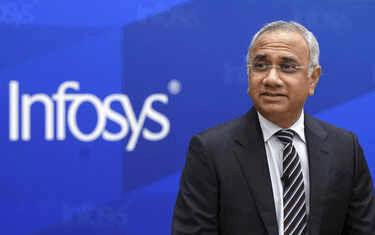
Now the global IT sector faces a massive AI shift. Many firms are cutting staff to save costs today. Therefore, Infosys CEO Salil Parekh has taken a bold stand. He confirmed that Infosys does not plan any layoffs. Meanwhile, the company will hire 20,000 fresh graduates this year. Thus, reskilling remains the core strategy for this tech giant.
Also Read | Imran Khan and Bushra Bibi Sentenced to 17 Years in Jail
The Stance: No AI Layoffs at Infosys
Now the fear of job losses is sweeping through the tech world. Several giants have already reduced their headcounts. Therefore, the latest update from Infosys CEO Salil Parekh is very significant.
First, Parekh spoke to Moneycontrol in a recent interview. He stated clearly that no layoffs occurred last year. Next, he emphasized that no such moves are coming up. Thus, the company is prioritizing job security during this transition.
Meanwhile, automation is becoming central to software delivery. Many thought this would lead to fewer employees. However, Infosys believes the human element remains vital. Therefore, they are moving away from the “restructuring” path seen elsewhere.
Finally, this news brings massive relief to thousands of employees. It positions Infosys as a stable employer in a volatile market. Thus, the brand image receives a strong boost today.
Why AI Expands the Scope of Work
Now we must understand why Parekh is so optimistic. He does not view AI as a job killer. Therefore, he describes it as a “structural shift” that adds value.
First, AI tools allow engineers to build more complex products. Next, these tools handle the repetitive parts of coding. Thus, humans can focus on high-level design and logic.
Meanwhile, the demand for technology is only growing. Companies globally need more software, not less. Therefore, AI simply makes the workforce more productive.
So will roles disappear?
First, some basic tasks might be automated. Next, new roles in AI evaluation and data ethics will emerge. Thus, the total number of jobs could actually increase.
Finally, Parekh noted that AI is “expanding the scope of work.” It opens doors to projects that were previously too expensive or slow. Therefore, the talent remains the primary engine of growth.
The Industry Contrast: TCS, HCL, and Others
Now the Infosys approach stands out for a reason. Most of its peers are taking a harder line. Therefore, we see a clear divide in the Indian IT sector.
The Restructuring Trend
First, companies like TCS and HCLTech have faced workforce shifts. Next, global firms like Oracle and Cognizant announced restructuring plans. Thus, they are cutting roles to match “automation-led efficiencies.”
Meanwhile, some firms have paused fresher hiring entirely. They want to see how much AI can replace entry-level work. Therefore, the industry feels a sense of contraction.
So why is Infosys different?
First, Parekh believes in long-term talent retention. Next, he argues that firing people destroys institutional knowledge. Thus, he prefers to retrain rather than replace.
Finally, this contrast highlights a major debate. Can human-centric firms beat automation-first firms? Therefore, the next few quarters will be a test of this theory.
Also Read | Imran Khan and Bushra Bibi Sentenced to 17 Years in Jail
Hiring Momentum: The 20,000 Fresher Plan
Now let’s talk about the next generation of engineers. Infosys is not slowing down its intake. Therefore, the company will onboard 20,000 graduates this year.
First, this number matches last year’s hiring levels. Next, it shows a commitment to the “bottom-heavy” pyramid model. Thus, freshers remain the backbone of the delivery team.
Meanwhile, many analysts wondered if freshers were still needed. If AI can write basic code, why hire juniors?
So Parekh has a clear answer.
First, freshers bring new perspectives on modern tools. Next, they are the most flexible when it comes to learning. Thus, they are the perfect candidates for the new AI-driven workflow.
Finally, this move stabilizes the talent pipeline. Therefore, Infosys won’t face a shortage when the market recovers.
The Reskilling Roadmap: Training for the Future
Now the focus is shifting to education within the office. Reskilling is the primary tool against AI layoffs. Therefore, every engineer is becoming a student again.
Dual Coding Training
First, Infosys wants its staff to know the “old way” and the “new way.” Engineers still learn traditional coding from scratch. Next, they are introduced to foundation models. Thus, they understand the logic behind the AI’s output.
Quality Control Focus
Meanwhile, the role of a “reviewer” is becoming huge. Employees are being trained to evaluate AI-generated code. Therefore, they must spot bugs that the machine missed. Thus, technical understanding is actually more important now.
So the goal is to create “hybrid” developers.
First, they must be subject matter experts. Next, they must be AI-fluent. Therefore, the value of each employee increases significantly.
Finally, this prevents “knowledge decay.” It ensures the workforce stays ahead of the technology.
AI as a Revenue Driver: The 5.5% Milestone
Now AI is not just a training exercise. It is already bringing in cold, hard cash. Therefore, the business impact is visible.
First, AI-related work contributes 5.5% to total revenue. Next, this segment is the fastest-growing part of the company. Thus, the pivot is already paying off.
Strategic Partnerships
Meanwhile, Infosys is partnering with the best in the world. They are working closely with OpenAI and Anthropic. Therefore, they have early access to the latest models.
Internal Innovation
So they developed “Topaz Fabric.” This internal platform supports AI development at a massive scale. Thus, they can deliver AI solutions to clients faster than before.
Finally, these tools are helping internal productivity too. Therefore, the firm becomes leaner without cutting people.
Also Read | Imran Khan and Bushra Bibi Sentenced to 17 Years in Jail
Subject Matter Expertise in the AI Era
Now the nature of a “tech job” is changing. Being a generalist is no longer enough. Therefore, Salil Parekh is pushing for deep specialization.
First, AI can handle general tasks easily. Next, it struggles with highly specific industry knowledge. Thus, subject matter experts (SMEs) are the safest from automation.
Meanwhile, deep individual knowledge is becoming a premium skill. Therefore, if you know banking or healthcare tech deeply, you are safe.
So what should employees do?
First, pick a niche and master it. Next, learn how AI can enhance that specific niche. Thus, you become indispensable to the project.
Finally, Parekh believes this shift is positive. It encourages people to grow their intellectual capital. Therefore, the quality of work will improve across the board.
Expert Analysis: A Sustainable Strategy?
Now we must ask if this “no layoff” promise can last. The tech world moves at light speed. Therefore, any strategy must be flexible.
The Risks
First, if competitors become much cheaper due to layoffs, Infosys might face price pressure. Next, if AI advances faster than humans can learn, a gap will form. Thus, the management must be very agile.
The Rewards
Meanwhile, the rewards of this strategy are high. Employee loyalty will be at an all-time peak. Therefore, attrition rates will likely drop. Thus, Infosys saves money on recruitment and training in the long run.
So the “bet” is on human potential.
First, they believe humans + AI > AI alone. Next, they believe a happy workforce is more productive. Therefore, they are playing the long game.
Finally, this strategy sets a new standard for corporate responsibility. Thus, other firms will be watching the results closely.
Common Questions (FAQ)
1. Is Infosys planning any AI layoffs in 2026? Now the answer is no. CEO Salil Parekh confirmed there are no plans for layoffs. Therefore, the firm is focusing on growth and reskilling.
2. How many freshers will Infosys hire this year? First, the company aims to onboard 20,000 fresh graduates. Next, this matches their hiring levels from the previous year. Thus, entry-level opportunities remain strong.
3. What is the impact of AI on current Infosys jobs? Meanwhile, AI is changing the nature of the work. It is expanding the scope rather than reducing it. Therefore, roles are evolving toward more specialized knowledge.
4. How is Infosys training its employees for AI? So they use a dual-training approach. Engineers learn traditional coding and AI-driven methods. Thus, they can work with or without foundation models.
5. What is Infosys Topaz Fabric? First, it is an internal AI platform. Next, it helps build and deliver AI solutions at scale. Therefore, it is a key part of their revenue growth.
6. Does AI already contribute to Infosys revenue? Finally, yes. AI currently contributes about 5.5% to the total revenue. Therefore, it is already a significant business driver.
Also Read | Imran Khan and Bushra Bibi Sentenced to 17 Years in Jail
End…