

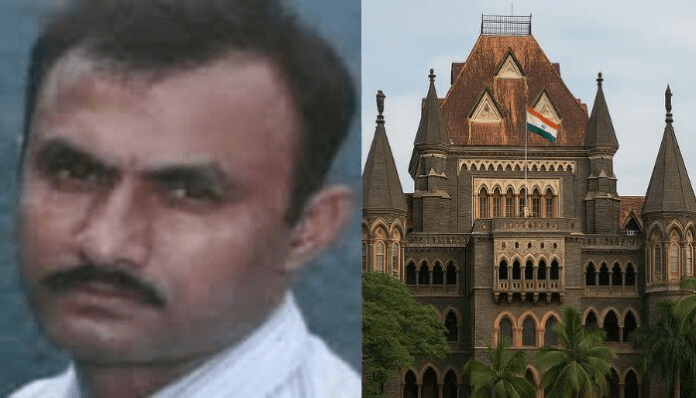
Now a long-standing legal battle has reached its final chapter in the corridors of the Bombay High Court. On Thursday, a division bench officially rejected the appeals challenging the acquittal of all 22 accused, including 21 police personnel, in the 2005 encounter killings of Sohrabuddin Shaikh, his wife Kauser Bi, and associate Tulsiram Prajapati. Therefore, the court has upheld the 2018 verdict of the special CBI judge, effectively closing the door on the family’s request for a fresh trial under Section 386(a) of the CrPC.
Also Read | Imran Khan and Bushra Bibi Sentenced to 17 Years in Jail
The High Court Verdict: Rejection of Section 386(a) Appeals
Now the Bombay High Court’s ruling brings a decisive end to the appeals that have been pending since 2019. The division bench led by Chief Justice Shree Chandrashekhar affirmed that the trial court’s decision did not warrant interference. Therefore, the request to nullify the 2018 verdict or order a fresh trial was categorically denied.
First, the court examined whether the special judge’s original evaluation of evidence was “clearly erroneous.” Next, the bench concluded that the legal standard for overturning an acquittal had not been met. Thus, the 21 police officers from Gujarat, Rajasthan, and Andhra Pradesh remain exonerated of all charges.
So the judgment, which was reserved in 2025, emphasizes the finality of the criminal justice process. Meanwhile, the legal community is dissecting the court’s reliance on established precedents regarding the “presumption of innocence.” Therefore, the ruling stands as a significant reinforcement of the trial court’s discretion.
The ‘Victim’ Argument: Why the Shaikh Brothers Challenged the Trial
Now the appeals were filed by Rubabuddin and Nayabuddin, acting in their capacity as victims who lost family members. They contended that the original trial was “fundamentally flawed” and undermined the very essence of justice. Therefore, they sought a complete re-evaluation of the evidence presented in the special CBI court.
First, the brothers argued that the special judge relied on “baseless assumptions” to reach the conclusion of acquittal. Next, they pointed out a key procedural failure: the prosecution did not summon the magistrates who had recorded statements from crucial witnesses. Thus, the appellants claimed the trial did not capture the full truth of the encounter.
So before bringing the matter to the High Court, Rubabuddin had actively petitioned the Ministry of Home Affairs and the CBI Director. Meanwhile, he urged the central government to take a stand against the verdict. Therefore, the brothers’ persistent legal pursuit was driven by a belief that the trial failed to address the alleged conspiracy.
Hostile Witnesses: The Collapse of the Prosecution’s Case
Now the primary hurdle for the prosecution throughout the decade-long trial was the instability of its witnesses. Out of roughly 210 witnesses examined, a staggering 92 turned hostile. Therefore, the foundation of the CBI’s narrative regarding the fake encounters was significantly weakened.
First, many of these witnesses were key to proving the alleged abduction from a luxury bus in 2005. Next, their refusal to stand by their original statements created a “severe lack of conclusive evidence.” Thus, the special judge noted in his 358-page judgment that the accused could not be convicted based on suspicion alone.
So while the judge expressed sympathy for the families, the legal reality remained unchanged. Meanwhile, the high number of hostile witnesses has been a point of contention for activists and legal experts alike. Therefore, the collapse of the witness testimony was the ultimate undoing of the murder and conspiracy charges.
Also Read | Imran Khan and Bushra Bibi Sentenced to 17 Years in Jail
CBI’s Stance: Why the Agency Refused to Challenge the Acquittal
Now the role of the Central Bureau of Investigation (CBI) during the High Court proceedings was under heavy scrutiny. During the hearings, the agency confirmed that it had accepted the 2018 verdict. Therefore, the CBI decided against filing its own appeal to challenge the exoneration of the 22 accused.
First, the CBI’s decision left the Shaikh brothers as the primary appellants in the case. Next, this stance was criticized by the victims’ legal team, who felt the central agency was abdicating its responsibility. Thus, the court had to decide the appeals based on the family’s standing rather than the state’s intervention.
So the agency’s “no-challenge” policy effectively left the trial court’s findings as the definitive record. Meanwhile, political debates have often surrounded the CBI’s handling of this high-profile case since its inception. Therefore, the agency’s withdrawal from further litigation was a turning point for the defense.
A Timeline of Events: From the 2005 Abduction to the 2012 Transfer
Now to understand the weight of this verdict, one must trace the case back over 20 years. The incident originated on November 23, 2005, when Sohrabuddin Shaikh, his wife Kauser Bi, and associate Tulsiram Prajapati were allegedly abducted. Therefore, the journey of this case across states has been a complex legal odyssey.
-
2005: Alleged abduction from a bus traveling from Hyderabad to Sangli.
-
2005-2006: Alleged fake encounters of Shaikh and Prajapati; murder of Kauser Bi.
-
2012: Supreme Court transfers the case from Gujarat to Mumbai at the CBI’s request.
-
2018: Special CBI Judge SJ Sharma acquits all 22 accused.
-
2019-2025: Appeals filed and reserved in the Bombay High Court.
-
2026: Final judgment upholds the acquittal.
So the transfer to Mumbai was intended to ensure a fair trial away from the local influences in Gujarat. Meanwhile, the case became a benchmark for high-security trials involving serving police officers. Therefore, the timeline reflects a generational shift in Indian legal proceedings.
The Trial Court’s Original Logic: Moral Suspicion vs. Legal Proof
Now the 2018 acquittal was not based on a belief that no crime occurred, but rather on a lack of legal proof. Special Judge SJ Sharma explicitly noted that the accused could not be convicted on a “moral or suspicion basis.” Therefore, the standard of “proof beyond reasonable doubt” was the guiding light for the court.
First, the judge noted that while there was sympathy for the deceased’s family, the prosecution failed to provide satisfactory proof of conspiracy. Next, without the support of the hostile witnesses, the link between the police personnel and the alleged murders could not be established. Thus, the court was legally bound to release the accused.
So the distinction between “what likely happened” and “what can be proven” was central to this case. Meanwhile, the judgment served as a reminder of the high burden placed on the prosecution in criminal law. Therefore, the special judge’s 358-page analysis became the bedrock for the High Court’s recent affirmation.
Also Read | Imran Khan and Bushra Bibi Sentenced to 17 Years in Jail
The Role of Section 386(a) of the CrPC in Fresh Trials
Now the Shaikh brothers’ appeal specifically invoked Section 386(a) of the Code of Criminal Procedure (CrPC), 1973. This section empowers an appellate court to reverse an order of acquittal and direct a fresh trial. Therefore, it is one of the most powerful tools available to “victims” in the Indian legal system.
First, the appellate court must find that the trial court’s original verdict was “perverse” or “impossible.” Next, it can order a new inquiry or direct that the accused be re-tried on the same evidence. Thus, the bar for invoking this section is exceptionally high to prevent “double jeopardy” and harassment.
So in this case, the Bombay High Court found no such perversity in the original judgment. Meanwhile, the legal threshold remains a safeguard for the finality of trial results. Therefore, the rejection of the appeal under this section confirms that the 2018 trial was legally sound.
FAQ: Understanding the Sohrabuddin Case Conclusion
1. What was the Sohrabuddin fake encounter case? Now, the case involved allegations that the Gujarat and Rajasthan police killed Sohrabuddin Shaikh and Tulsiram Prajapati in staged encounters in 2005-2006.
2. Why were the 22 accused acquitted? First, because the prosecution failed to prove the charges of murder and conspiracy. Next, the case was severely hampered by 92 witnesses turning hostile.
3. Who were the appellants in the Bombay High Court? So the appeals were filed by Rubabuddin and Nayabuddin Shaikh, the brothers of Sohrabuddin, seeking a fresh trial.
4. Did the CBI challenge the acquittal? Next, no. The CBI accepted the 2018 verdict and informed the High Court that it would not be challenging the acquittal.
5. What is Section 386(a) of the CrPC? Now, it is a legal provision that allows a High Court to reverse an acquittal and order a fresh trial if the original judgment is found to be flawed.
6. Is this the final verdict in the case? Finally, unless the appellants move to the Supreme Court of India, this ruling from the Bombay High Court stands as the final legal word on the matter.
Also Read | Imran Khan and Bushra Bibi Sentenced to 17 Years in Jail
End…

