

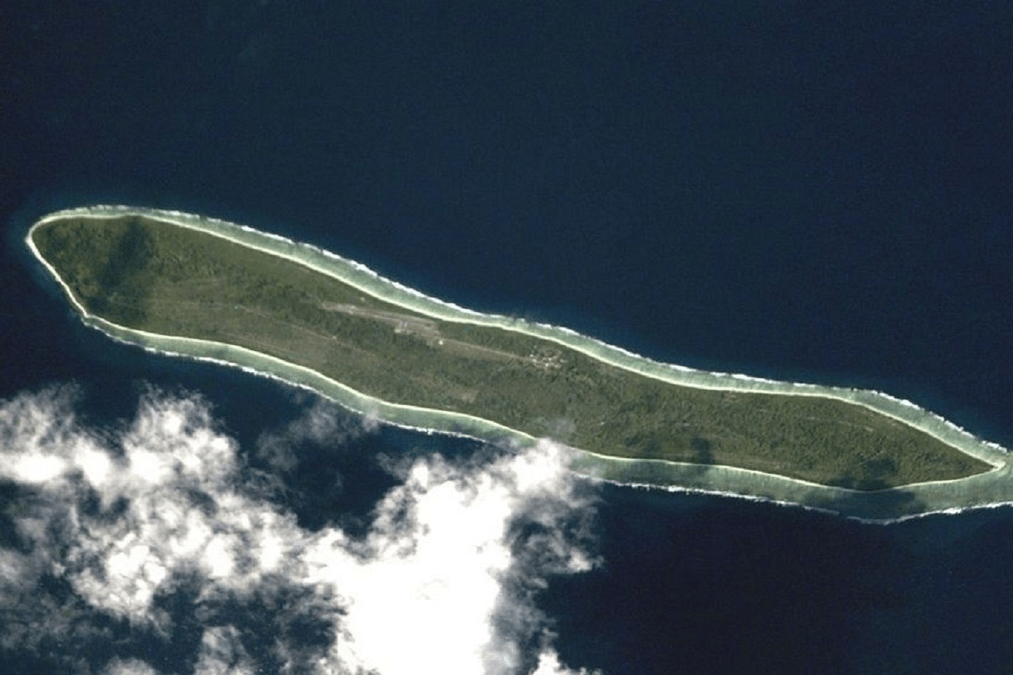
Now the center of gravity in the Indo-Pacific is shifting toward a remote island territory that was once mere specks on a map. As strategic competition in the Indian Ocean intensifies, the Agaléga Islands are no longer being seen as a quiet Mauritian outpost. Therefore, they have emerged as a cornerstone of India’s maritime planning—a strategic sentinel capable of monitoring one of the world’s most vital trade arteries. Meanwhile, as Beijing struggles to overcome its “Malacca Dilemma,” New Delhi is creating a new pressure point in the western Indian Ocean. Following years of infrastructure development, Agaléga is now ready to support long-range surveillance and naval operations that could redefine regional power dynamics in 2026.
Also Read | Imran Khan and Bushra Bibi Sentenced to 17 Years in Jail
The 3,000-Metre Runway: Launching India’s P-8I Neptune Power
Now the technical foundation of the Agaléga project is its massive 3,000-metre runway. This airstrip was reportedly developed with significant Indian assistance to accommodate heavy, long-range military aircraft. Therefore, the island can now serve as a forward operating base for India’s most advanced maritime assets.
First, the runway is large enough to support the Boeing P-8I Neptune, India’s premier aircraft for submarine tracking and anti-submarine warfare. Next, the addition of hangars measuring 180 feet in length ensures that these sophisticated machines can be maintained on-site. Thus, India has created a persistent “eye in the sky” over the western reaches of the ocean.
So the infrastructure is not limited to air power; a new deep-water jetty allows for naval vessels to dock and resupply. Meanwhile, these facilities allow for long-duration surveillance missions that were previously impossible from mainland India. Therefore, Agaléga has become a mechanical necessity for India’s extended maritime reach.
Monitoring the Mozambique Channel: A Global Trade Chokepoint
Now the strategic brilliance of Agaléga lies in its proximity to the Mozambique Channel. This sea route is a vital corridor through which a large volume of trade moves between Asia, Europe, and Africa. Reports suggest that nearly 30 percent of all international maritime trade passes through this channel. Therefore, whoever monitors this water lane holds the key to regional security.
First, the route has become even more critical as an alternative to the Red Sea during times of global conflict. Next, by establishing a presence here, India can provide security for commercial shipping and monitor suspicious naval activity. Thus, New Delhi is positioning itself as the primary security provider in the Western Indian Ocean.
So the oversight provided by Agaléga allows India to track ship movements in real-time. Meanwhile, the channel is also a primary route for energy shipments heading toward East Asia. Therefore, India’s presence here effectively places a “check” on the energy security of its regional rivals.
Countering China’s ₹50,000 Crore Investment in Mozambique
Now Beijing has invested heavily in African energy and mining, particularly in Mozambique. Chinese investments in natural gas and graphite sectors are estimated to be worth more than ₹50,000 crore. Therefore, these resources are essential for China’s massive electric vehicle (EV) industry and industrial supply chains.
First, Indian decision-makers believe that a stronger presence around Agaléga gives them better oversight of Chinese-linked commercial activity. Next, the ability to monitor these resource flows provides India with significant diplomatic and strategic leverage. Thus, Agaléga is a direct counter-move to China’s economic expansion in Africa.
So the western Indian Ocean is no longer a safe “backyard” for Chinese commercial interests. Meanwhile, India’s naval capabilities can now project power right at the doorstep of these Chinese investments. Therefore, the Agaléga game is a sophisticated effort to balance the “String of Pearls.”
Also Read | Imran Khan and Bushra Bibi Sentenced to 17 Years in Jail
The 2015 Agreement: How PM Modi Transformed Agaléga
Now the foundations of this project were laid over a decade ago. In 2015, Prime Minister Narendra Modi signed a landmark agreement with Mauritius during a state visit. Therefore, the project is a testament to India’s long-term strategic patience and commitment to its “SAGAR” (Security and Growth for All in the Region) vision.
First, the agreement focused on maritime connectivity and infrastructure cooperation. Next, over the years, the modest plan evolved into a comprehensive naval and air support facility. Thus, what started as a connectivity project has matured into a major military support location.
So the engagement with Mauritius has moved beyond just one island. Meanwhile, India is also redeveloping the Port Louis harbor through a special economic package. Therefore, the entire Mauritian archipelago is being integrated into India’s logistical and maritime security framework.
Deep Integration: Why an Indian Official is Mauritius’ National Security Adviser
Now the relationship between India and Mauritius is unique in the world of international diplomacy. It goes far beyond standard bilateral ties, extending deep into the host nation’s security architecture. Therefore, the “Agaléga game” is backed by a high level of institutional trust.
Key Security Linkages:
-
Leadership: The Mauritius National Security Adviser is an Indian official.
-
Coast Guard: The Mauritius National Coast Guard is headed by an Indian Navy officer.
-
Financial Support: A ₹5,500 crore economic package was extended in 2025.
-
Personnel: Indian technical teams manage several Mauritian maritime assets.
First, this integration ensures that the maritime policies of both nations are perfectly aligned. Next, it allows for seamless coordination during search and rescue operations or anti-piracy missions. Thus, Mauritius has effectively become a strategic partner in India’s maritime defense.
The Chagos Marine Region: India’s Expanding Role Near Diego Garcia
Now India’s maritime horizon is expanding even further. New Delhi is expected to play a larger developmental and monitoring role in the maritime zone around the Chagos Archipelago. This region is famously home to the Diego Garcia military base used by the US and UK. Therefore, India is becoming a pivotal player in the central Indian Ocean.
First, India’s involvement in Chagos helps fill the surveillance gaps in the wider maritime zone. Next, it complements the facilities at Agaléga to create a comprehensive “surveillance web.” Thus, India is securing its interests near some of the most sensitive military installations in the world.
So the cooperation with Western powers in this region is a mechanical necessity for global stability. Meanwhile, India’s “eyes” on Chagos provide an additional layer of protection for international trade routes. Therefore, the western and central Indian Ocean are now under more consistent oversight.
Also Read | Imran Khan and Bushra Bibi Sentenced to 17 Years in Jail
China’s Response: The April 2026 Mozambique Defence Pact
Now Beijing has not been a silent spectator to India’s moves. China’s concern over India’s expanding reach has pushed it to strengthen ties with Mozambique. In April 2026, the two countries signed a new defense agreement aimed at securing Chinese maritime and economic interests. Therefore, the region is witnessing a classic “action-reaction” cycle of superpower competition.
First, Chinese strategists are attempting to shore up their “pearls” in the face of India’s counter-strategy. Next, Beijing is increasing its naval presence in the western Indian Ocean to protect its ₹50,000 crore investments. Thus, the Mozambique Channel has become a primary theater for the 21st-century “Great Game.”
So the competition for influence in Africa is now a maritime reality. Meanwhile, India continues to deepen its “Neighborly” ties to ensure it maintains the upper hand. Therefore, Agaléga remains the most significant move in this ongoing strategic chess match.
FAQ: Understanding the Agaléga Island Strategic Shift
1. Where are the Agaléga Islands located? Now, they are located in the western Indian Ocean, north of Mauritius and strategically close to the Mozambique Channel.
2. Why did India help build a 3,000-metre runway there? First, to support long-range maritime surveillance aircraft like the P-8I Neptune. Next, it allows India to track submarines and monitor trade routes far from its mainland.
3. What is the Mozambique Channel, and why does it matter? So it is a vital sea route between Madagascar and East Africa. It carries roughly 30% of global maritime trade, making it a critical chokepoint.
4. Is Agaléga a military base for India? Next, while both governments describe the facilities as being for “maritime connectivity,” analysts view them as a major military support location for surveillance and naval logistics.
5. How has China responded to India’s moves in Agaléga? Now, China has strengthened its defense ties with Mozambique, signing a new security agreement in April 2026 to protect its extensive investments.
6. What is India’s “SAGAR” vision? Finally, it stands for “Security and Growth for All in the Region,” a policy aimed at deepening maritime cooperation with Indian Ocean neighbors like Mauritius.
Also Read | Imran Khan and Bushra Bibi Sentenced to 17 Years in Jail
End…

