

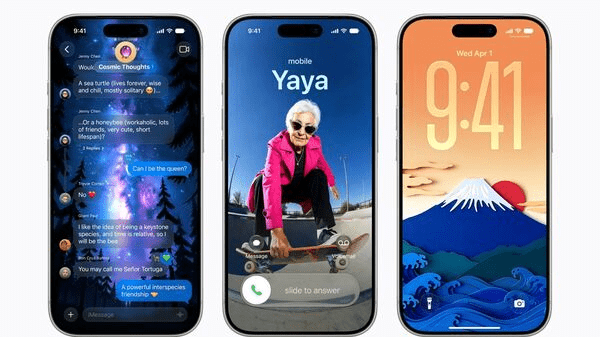
Senior VP Craig Federighi stands firm on non-negotiable user privacy, while the new Core AI framework opens the door for third-party foundation models.
The technological baseline defining premium consumer hardware has shifted fundamentally toward integrated software automation. During its highly anticipated Worldwide Developers Conference (WWDC) opening keynote at Apple Park, Apple unveiled the next evolution of its operational ecosystem. The expansive presentation highlighted a massive wave of iOS 27 Apple Intelligence features, designed to turn local multi-core silicon layers into a proactive, context-aware digital assistant network.
The most noticeable addition to the interface is the complete separation of Siri from traditional background voice lines. Siri AI now lives within a dedicated standalone application, complete with centralized conversational logging nodes that privately sync across your iPhone, iPad, Mac, Apple Watch, CarPlay, and Vision Pro setups via encrypted iCloud pipelines. However, due to complex regional safety compliance guidelines and local algorithmic restrictions, Apple confirmed that Siri AI will not be available in the European Union (EU) or China at launch.
Also Read | Imran Khan and Bushra Bibi Sentenced to 17 Years in Jail
The Architecture of Next-Gen Device Awareness
The modern system infrastructure relies on a centralized tool called the system orchestrator. This software engine links on-device processing with secure server environments through a private cloud compute network.
Rather than treating user apps as isolated storage silos, the orchestrator tracks real-time data across personal files, web pages, and layout screens. This background integration allows the system to execute advanced multi-step actions using plain, natural language commands.
The system’s built-in visual intelligence has also received a substantial upgrade. Moving closer to the functionality of Google Lens, the system can parse images, identify items on your screen, and deliver context-aware details.
Furthermore, users can customize how the assistant sounds—adjusting its speaking speed, adding expressive inflections, and matching localized regional accents to fit their personal preferences.
Key Workflow Enhancements Across the OS
The next-generation update injects advanced contextual capabilities straight into everyday productivity and security workflows, making devices significantly more responsive.
UI Refinements: Controlling Liquid Glass
The update also refines the controversial visual direction introduced in previous updates. Following user feedback regarding text readability and visual fatigue under the modern Liquid Glass theme, iOS 27 adds a dedicated customization slider directly into the display settings menu.
This interface addition grants users absolute control over the platform’s transparency levels. Traders and professionals can easily dial down the glass effects to favor flat, color-tinted themes that match high-productivity environments.
On the performance front, the operating system brings major speed optimizations to everyday tasks: native applications launch up to 30% faster, camera photo saves execute up to 70% quicker, and local AirDrop data transfers see an 80% speed increase due to smarter CPU scheduling rules that breathe new life into older devices down to the iPhone 11 series.
Photo Innovation: Image Playground and Reframe
The system’s creative suite has been heavily updated with advanced photo generation and editing features that operate under strict user data protections.
| Media Creation Vector Component | New Mechanical Capability | Core Privacy & Usage Restrictions |
| Image Playground App | Generates high-fidelity lock screens, custom posters, and iMessage styles. | Local photos and creative text prompts are never used to train public AI models. |
| Photorealistic Output | Generates realistic portraits and detailed scenes using multi-step text prompts. | Controlled by daily generation limits; limits can be expanded via premium iCloud+ tiers. |
| Reframe AI Tool | Automatically recalculates the original camera position to adjust image layouts. | Operates locally on the neural engine; leaves original raw file footprints intact. |
| Expand AI Tool | Intelligently adds content to a scene to modify the image’s aspect ratio. | Generates contextual matching pixels without creating blur artifacts. |
| Clean Up Tool | High-precision object removal that cleanly matches background textures. | Completely erases selected elements without affecting surrounding image details. |
Also Read | Imran Khan and Bushra Bibi Sentenced to 17 Years in Jail
macOS Golden Gate: Bringing Siri to the Core Workspace
The desktop experience receives a similar performance boost through the launch of macOS Golden Gate. Designed from the ground up to get the most out of Apple Silicon architectures, the new desktop system updates long-standing workspace layouts with edgeless sidebars, rounded window corners, and color-coded icon grids.
The desktop update integrates Siri directly into the core Spotlight search bar. Users can type questions into the interface, instruct the system to analyze local documents, and expand complex answers into independent windows for multitasking.
Additionally, a new Siri shortcut has been integrated into the standard right-click context menu across the Finder app. This placement allows developers and creators to select files and immediately type formatting or code summary instructions to the personal assistant.
The Developer Architecture: To support this expanded platform, Apple is introducing a new development framework called Core AI. This architecture provides developers with updated foundation model tools, customized image generation hooks, and official support for connecting third-party AI models straight into local apps.
“We believe privacy in AI is non-negotiable,” stated Craig Federighi, Senior Vice President of Software Engineering, during the core presentation. Federighi confirmed that all data sent to private cloud servers is used exclusively to fulfill the real-time request before being immediately erased, with the code remaining open to continuous verification by independent security experts.
With developer betas launching this week and the final software scheduled to ship this autumn alongside the iPhone 18 Pro series, Apple has laid out a clear roadmap for the future of on-device intelligence—one that pairs deep system integration with rigid user privacy controls.
FAQ Section
What are the standalone app upgrades coming to Siri AI?
In iOS 27, Siri AI moves out of the background into a dedicated standalone app that securely stores your private conversation logs across your devices. The upgraded assistant features context-aware processing, screen-reading visual intelligence, customizable accents, and adjustable speaking speeds.
Which older iPhone models will support the new iOS 27 features?
Apple confirmed that iOS 27 will support all iPhone models that successfully ran iOS 26, extending backwards to the iPhone 11 series. Older devices will benefit from optimized CPU scheduling that speeds up app launches by 30% and AirDrop speeds by 80%.
Why is the new Siri AI app unavailable in the EU and China at launch?
Apple has explicitly delayed the launch of its Siri AI app and certain advanced Apple Intelligence features in the European Union and China due to local regulatory hurdles, antitrust rules, and compliance frameworks governing generative AI data deployment.
Also Read | Imran Khan and Bushra Bibi Sentenced to 17 Years in Jail
End…

