

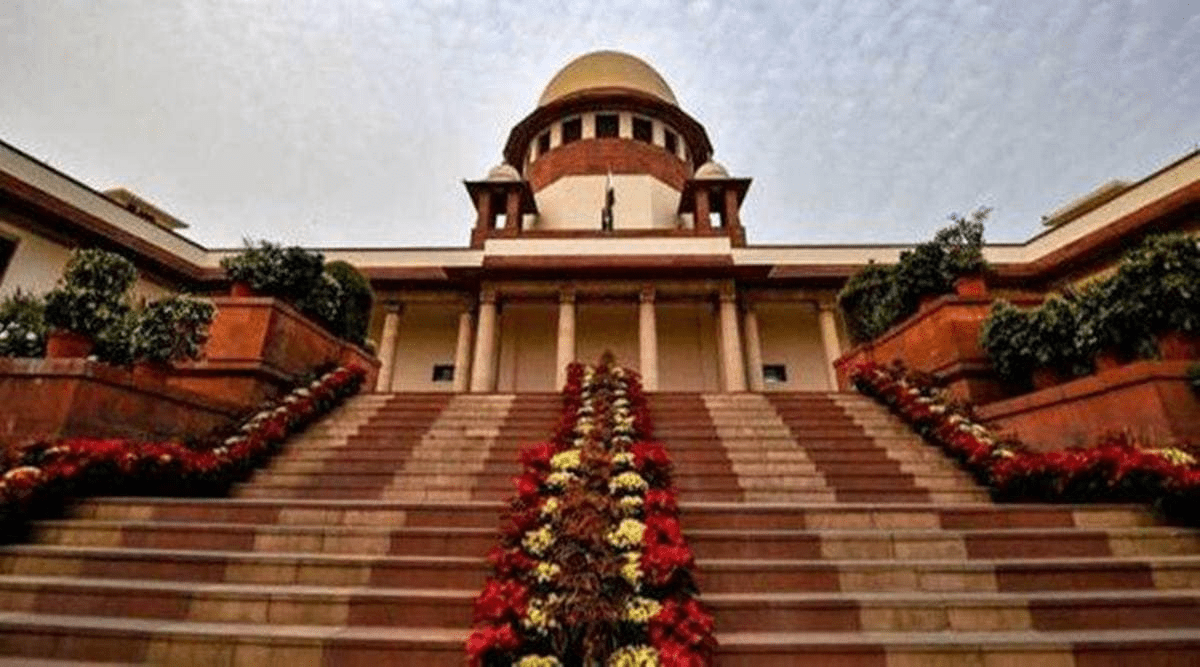
Justices Sanjay Karol and N. Kotiswar Singh break traditional legal norms, creating a separate insurance compensation category that automatically adjusts for inflation every three years.
The institutional framework protecting unpaid household workers in India has experienced a historic expansion. In a landmark judgment delivered from the apex bench on Thursday, June 11, 2026, the highest court of the country issued the definitive Supreme Court homemaker nation builder ruling. The verdict states that the invisible, un-papered labor of a household coordinator must be formally classified as an economic contribution to society, locking in a mandatory “stand-in” minimum notional value of ₹30,000 per month under the Motor Vehicles Act.
The historic decision officially changes how tribunals calculate financial dependencies during tragic personal injury and fatal accident claims. Prior to this intervention, insurance companies routinely classified non-earning partners as simple dependents, restricting final payout math to basic minimum wage structures due to a lack of formal income tax returns or corporate salary slips.
By declaring that the functioning of the entire economy relies heavily on the stability of the household, the bench has effectively elevated the legal status of the stay-at-home partner to an active contributor to the gross domestic product (GDP).
Also Read | Imran Khan and Bushra Bibi Sentenced to 17 Years in Jail
Dismantling Third-Generation Litigation and the Legacy Proof Gap
The benchmark ruling emerged from Shishu Pal @ Shish Ram & Ors v. Surjeet & Ors, a legal battle that spent two and a half decades moving through lower tribunals and the Punjab and Haryana High Court. The case dates back to November 2001, when a homemaker named Reshma tragically lost her life due to a reckless truck collision in Haryana.
Expressing deep concern over the trauma families face during prolonged court battles, the bench issued a strict policy directive ordering all High Courts across India to ensure that motor accident appeals are resolved within a maximum timeframe of four years.
Furthermore, the judges eliminated the need for families to provide paperwork for domestic duties, acknowledging that proving daily care through physical logs is impossible.
The New Structural Compensation Architecture
The apex court clarified that this new calculation method does not mean stay-at-home partners will receive a monthly state paycheck. Instead, it serves as a legally binding minimum baseline used by tribunals and insurance companies to protect a family’s financial security following a fatal highway accident.
Analyzing the Real Economic Value of Household Upkeep
To justify this substantial increase over previous legal models, the court reviewed data from the National Statistical Office’s (NSO) 2019 Time Use Survey. The study reveals that women aged 15 to 59 spend an average of over seven hours daily on uncontracted domestic tasks, compared to less than three hours by men.
| Identified Legal Claim Component | Old System Treatment Allocation | Modern Post-Verdict Tracking Line | Core Human Capital Benefit |
| Pecuniary Income Status | Evaluated at basic daily wage levels (₹15,000/month). | Fixed at a minimum of ₹30,000/month as a starting floor. | Guarantees substantial, dignified financial protection. |
| Evidentiary Documentation | Required proof of physical labor or financial loss. | Zero paperwork needed; contribution is presumed automatically. | Eliminates unnecessary legal hurdles for grieving families. |
| Workforce Integration | Combined career and home labor metrics were ignored. | Household care value is added directly on top of office salaries. | Properly values the multi-tasking realities of working parents. |
| Structural Damaged Heads | Limited to standard dependency claims. | Adds a unique, separate ₹6,00,000 category for loss of domestic care. | Recognizes the emotional and psychological gap left in the family. |
The court emphasized that a household coordinator’s work cannot be equated to a hired housekeeper working fixed shifts. A partner’s role provides a vital layer of support that protects human capital, preserves family well-being, and allows earning members to focus entirely on their professional outputs.
Consequently, the loss of this care requires independent financial recognition that goes beyond the standard formulas laid out in the court’s previous Pranay Sethi guidelines.
The judgment also addresses deep-seated societal assumptions by pointing out that men can also step into the role of a homemaker and deserve the same legal recognition if a tragedy occurs.
While everyday savers note that putting a precise price tag on familial affection can feel unusual, the financial security this verdict offers to vulnerable households during their most difficult moments is undeniable.
By turning centuries of invisible domestic work into a structured, legally protected asset, the Supreme Court has set a powerful new standard for financial dignity, ensuring that the builders of India’s homes are properly recognized as the true architects of the nation’s future.
FAQ Section
What is the primary directive of the Supreme Court homemaker nation builder ruling?
The landmark ruling mandates that in motor vehicle accident claims involving a homemaker, courts must factor in a minimum notional income of ₹30,000 per month under a dedicated category for “loss of domestic care.” This value serves as a standard minimum to ensure proper financial protection for surviving families.
Does this mean homemakers will receive a monthly salary from the government?
No. The ₹30,000 figure is a legal baseline used exclusively by Motor Accident Claims Tribunals, High Courts, and insurance firms to calculate fair financial compensation following a fatal accident or permanent disability, rather than a monthly state paycheck.
How does the ruling handle stay-at-home partners who also earn a salary?
If a homemaker was also part of the active workforce, the ₹30,000 loss of domestic care allowance is added directly on top of their proven professional salary. This adjustment recognizes that managing a home requires substantial effort that continues outside of standard office hours.
Also Read | Imran Khan and Bushra Bibi Sentenced to 17 Years in Jail
End…

