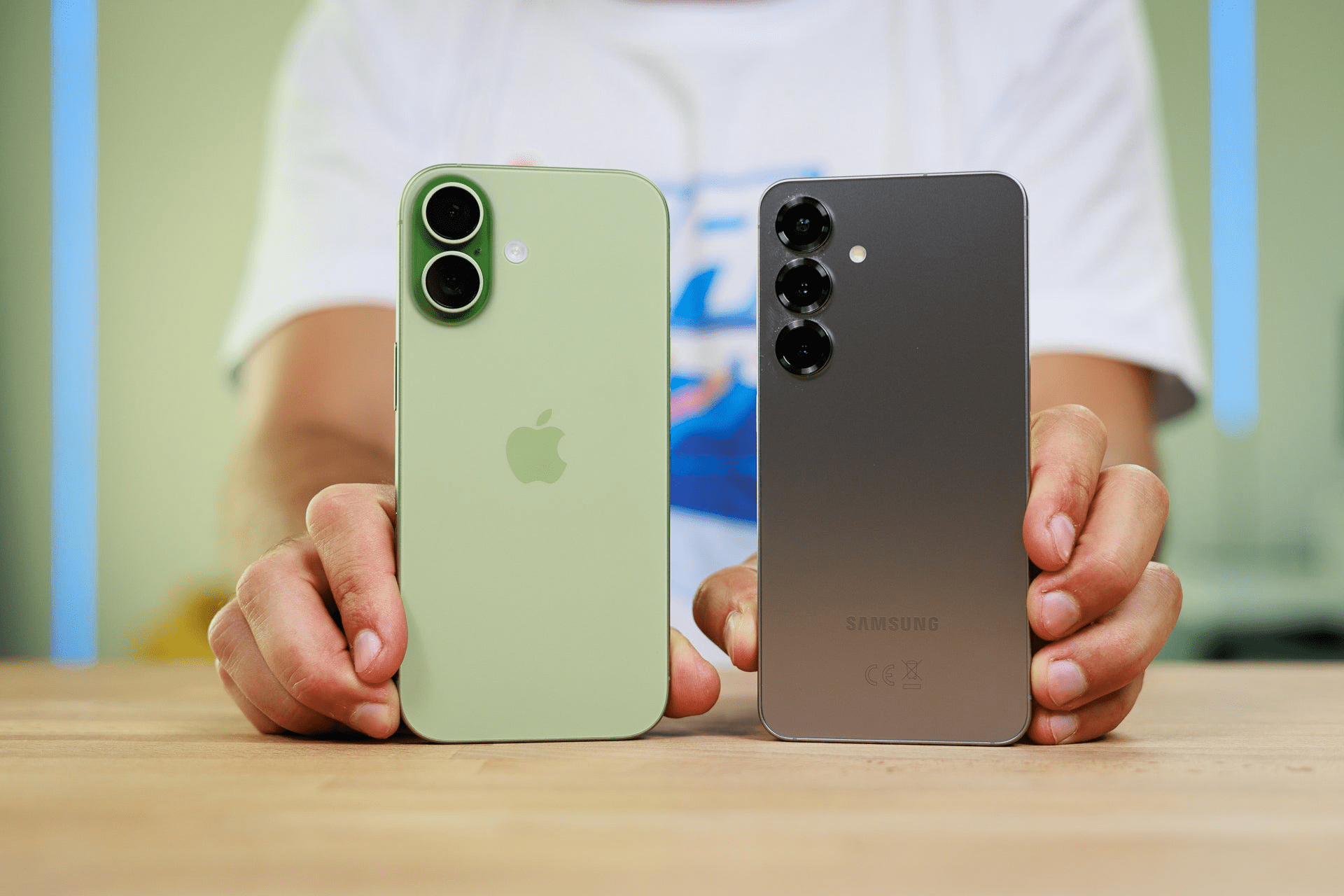
A comprehensive consumer review breaks down how Samsung’s ultra-slim 5.8mm form factor compares to Apple’s dense A19 computing architecture under Indian market real estate values.
The premium smartphone segment in India has reached a critical crossroad where raw specifications clash directly with structural optimization. In a comprehensive device review finalized on Friday, June 12, 2026, mobile hardware analysts mapped out the exact value propositions of the iPhone 17e vs Samsung Galaxy S25 Edge battle lines. Both companies are aggressively courting premium buyers who want top-tier performance without paying the steep ₹100,000+ asking prices of ultra-premium models.
The current face-off highlights two completely opposite philosophies in product design and user experience.
Apple’s fresh candidate, the iPhone 17e, focuses on long-term hardware durability and consistent performance within a standard, easy-to-hold frame.
Conversely, Samsung’s sleeker competitor, the Galaxy S25 Edge, relies on eye-catching physical engineering, pushing boundaries with an incredibly thin body and a massive pixel count to win over buyers looking for a modern design.
Also Read | Imran Khan and Bushra Bibi Sentenced to 17 Years in Jail
The Blueprint Face-off: Core Physical and Electronic Specs
To objectively assess how these devices stack up against each other, review the detailed technical data gathered from official retail units in India:
| Hardware Engineering Parameter | Apple iPhone 17e Core Metric | Samsung Galaxy S25 Edge Core Metric | Real-World Operational Impact |
| Current Indian Market Price | ₹64,900 Base (256GB) | ₹59,999 Base (256GB) | Samsung holds a clear ₹4,901 entry pricing advantage. |
| Display Matrix Profile | 6.1-inch Super Retina XDR OLED | 6.7-inch Dynamic AMOLED 2x | Samsung offers more real estate for media consumption. |
| Peak Panel Brightness | 1,200 Nits Scale | 2,600 Nits Scale | Samsung delivers superior legibility under direct sunlight. |
| System Processor Silicon | Apple A19 (3nm Node) | Snapdragon 8 Elite (3nm Node) | Both deliver incredible speeds for gaming and daily tasks. |
| Onboard Memory (RAM) | 8GB Unified | 12GB LPDDR5X | Samsung allows more heavy apps to stay cached in the background. |
| Primary Rear Camera Hub | 48MP Fusion (f/1.6, OIS) | 200MP Main (f/1.7, OIS) + 12MP UW | Samsung wins on resolution; Apple excels in video processing. |
| Video Capture Ceilings | 4K Dolby Vision at 60fps | 8K at 30fps / 4K at 120fps | Samsung excels in frame rates; Apple leads in color accuracy. |
| Physical Chassis Thickness | 7.8 mm (Classic Depth) | 5.8 mm (Ultra-Thin) | Samsung offers an incredibly slim feel at the expense of battery space. |
| Total Device Weight | 170 Grams | 163 Grams | Both remain comfortably lightweight in hand. |
| Biometric Access Array | Face ID (TrueDepth Camera) | Under-Display Ultrasonic Sensor | Apple offers hands-free unlocking; Samsung keeps the screen clean. |
| Core Operating System | iOS 26 Matrix | Android 15 (One UI 8 Evolution) | Apple emphasizes ecosystem bonds; Samsung focuses on personalization. |
| Official Software Support | ~6 Years (Estimated Lifecycle) | 7 Years of Full OS Upgrades | Samsung matches and slightly edges Apple’s long-term commitment. |
The Engineering Dilemma: Premium Style vs. Battery Life
The design choices behind the Galaxy S25 Edge show off impressive physical craftsmanship, but they also bring a significant technical compromise. By reducing the phone’s thickness to an unbelievable 5.8mm and wrapping it in a lightweight titanium frame with Gorilla Glass Victus 2, Samsung has built one of the thinnest, most eye-catching premium phones available today.
However, this ultra-slim design severely limits the space available for the battery. The S25 Edge is constrained to a modest 3,900mAh cell, which struggles to power its large 6.7-inch high-refresh-rate display.
As a result, real-world screen-on time frequently trails behind the competition, often wrapping up the day at just 11 to 12 hours of mixed use.
Apple takes a more traditional approach with the iPhone 17e, sticking to a functional 7.8mm thickness, an aluminum mid-frame, and a highly durable Ceramic Shield 2 front cover.
This extra space allows Apple to fit a larger 4,005mAh battery inside.
When paired with the tight efficiency of the A19 processor and iOS 26, the iPhone 17e can easily stretch through 26 hours of continuous video playback, outlasting its slimmer competitor during long travel days.
Also Read | Imran Khan and Bushra Bibi Sentenced to 17 Years in Jail
Imaging Showdown: 200MP Pixel Binning vs. 4K Dolby Vision
In terms of camera performance, the two brands lean on very different software and hardware setups to handle photos and video tracking.
While mobile photographers will appreciate the versatility of Samsung’s 8K recording and 120fps high-frame-rate options, everyday users may find Apple’s consistent shot-to-shot color balance more reliable for casual, quick snapshots.
Assessing Two-Year Depreciation and True Resale Values
For buyers in the Indian market, long-term trade-in and resale values are often just as important as the initial retail price.
Historically, iPhones maintain their market value much better than their Android counterparts, and this trend remains true for these mid-premium devices.
Because third-party trade-in platforms see sustained demand for older iOS devices, an iPhone 17e bought today for ₹64,900 will likely fetch a much higher price in two years than a Galaxy S25 Edge.
This strong value retention helps bridge the initial ₹4,901 pricing gap, making the iPhone a smarter financial choice for users who like to upgrade their hardware every two seasons.
Also Read | Imran Khan and Bushra Bibi Sentenced to 17 Years in Jail
The Final Verdict: Matching Features to Your Daily Routine
Ultimately, choosing between the iPhone 17e and the Samsung Galaxy S25 Edge comes down to what you prioritize most in your daily life.
Buy the Apple iPhone 17e if: You value long-term financial security through high resale value, need a reliable battery that easily lasts all day, prefer a compact phone, and want seamless integration into an existing Apple ecosystem.
Buy the Samsung Galaxy S25 Edge if: You want a sleek, incredibly thin design, prefer a larger and faster 120Hz display for watching videos, want more freedom to customize your software, and want to save nearly ₹5,000 on your initial purchase.
Both devices offer excellent performance for their price, giving buyers fantastic alternatives to ultra-premium flagships.
By looking past the marketing buzz, weighing the battery tradeoffs of ultra-thin designs, and picking the ecosystem that aligns with your daily routine, you can buy your next device with total confidence.
FAQ Section
Why is the iPhone 17e more expensive than the Samsung Galaxy S25 Edge in India?
The iPhone 17e starts at ₹64,900 for the 256GB model, while the Samsung Galaxy S25 Edge is priced slightly lower at ₹59,999 for the same storage capacity. Apple’s higher entry price reflects its stronger local brand premium, specialized Ceramic Shield 2 materials, and historically superior asset value retention in the Indian secondary market.
Does the ultra-thin design of the Galaxy S25 Edge affect its performance?
The ultra-thin 5.8mm chassis does not hurt processing power, as the Snapdragon 8 Elite chip and 12GB of RAM handle demanding apps and games with ease. However, the slim design severely limits battery space, restricting the phone to a smaller 3,900mAh capacity that delivers shorter real-world battery life compared to the thicker iPhone 17e.
Which phone is better for long-term use and future software updates?
Both phones offer exceptional long-term support. Samsung takes a slight lead on paper by promising 7 full years of Android OS and security patches for the S25 series. However, the iPhone 17e counters this with an estimated 6-year iOS support window and significantly better resale value, making it easier and more affordable to trade in and upgrade in the future.
Also Read | Imran Khan and Bushra Bibi Sentenced to 17 Years in Jail
End…