

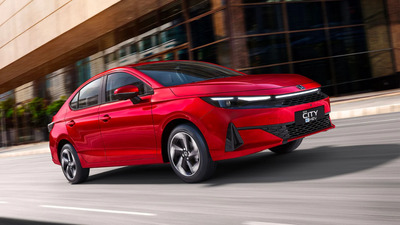
Automotive journalists put the updated premium sedan through intense Bangalore commuter traffic, tracking its 20 kmpl fuel delivery alongside its restrictive 306-liter battery boot compromise.
The commercial distribution frameworks, midsize sedan layouts, and powertrain packaging metrics that dictate India’s executive car market are navigating an evolutionary product cycle. Taking the updated flagship sedan onto the packed, stop-and-go commuter corridors of Bangalore, automotive analyst Lakshya Rana delivered a definitive 2026 Honda City facelift pros and cons scorecard. The updated vehicle looks to protect its 28-year-old subcontinental legacy by matching cosmetic bumper designs and expanded variant feature sets against tough, turbo-petrol competition.
The real-world track review lands at a highly competitive moment for the sedan segment.
While the vehicle has long been celebrated as the gold standard for cabin space and engine reliability, it faces pressure from rivals offering high-performance turbo engines and tech-heavy feature lists.
Evaluating the updated platform reveals a strategic design balance: Honda is betting heavily on strong hybrid engineering and structural refinement to win over long-distance commuters, choosing everyday efficiency over raw track speed.
Also Read | Imran Khan and Bushra Bibi Sentenced to 17 Years in Jail
The Engineering Balance: Categorizing the Critical Pros and Cons
The architectural evaluation of the updated model shows a clear split, pairing class-leading engineering refinements with a few surprising feature gaps.
1. The Core Mechanical Strengths (The Pros)
-
The High-Revving i-VTEC Foundation: The base 1.5-litre naturally aspirated petrol engine continues to be a favorite for driving enthusiasts, delivering a linear 121 hp and 145 Nm of torque through a slick 6-speed manual or a stepped 7-step CVT automatic.
-
The Masterful e:HEV Strong Hybrid Loop: The flagship hybrid model blends its electric motors seamlessly, making real-world fuel efficiency scores of over 20 km/l easily achievable in daily city traffic. This setup feels noticeably more refined than the three-cylinder strong-hybrid powertrains found in rivals like the Maruti Grand Vitara and Toyota Hyryder.
-
Composed Highway Ride Stability: Thanks to a stiffer suspension setup tuned to manage the extra weight of the rear-mounted lithium-ion battery pack, the hybrid version handles high-speed highway expansion joints smoothly, minimizing rear cabin bounce.
-
Robust Active Safety Shielding: The vehicle comes well-equipped with six standard airbags, Electronic Stability Program (ESP), a 360-degree parking camera array, a left-side Lane Watch camera, and the camera-based Honda Sensing driver assistance suite.
2. The Notable Product Limitations (The Cons)
-
The Turbo-Petrol Performance Gap: For drivers looking for aggressive mid-range acceleration, the City’s naturally aspirated power delivery feels mild compared to the punchy 1.5-litre turbocharged engines offered by the Volkswagen Virtus, Skoda Slavia, and Hyundai Verna.
-
The High Pricing and Trim Lock-Out: The elite hybrid variant carries a steep ₹21 Lakh ex-showroom price tag, primarily because Honda restricts the fuel-saving e:HEV powertrain exclusively to its absolute top-tier trim levels rather than offering it on mid-spec grades.
-
The Intrusive Boot Space Reduction: Because the high-voltage battery system sits directly beneath the rear deck, trunk capacity drops drastically from a massive 506 litres down to just 306 litres, making it a tight squeeze for bulkier family vacation luggage.
-
Outdated Factory Tire Specifications: While main segment competitors have upgraded to wider, high-grip 205/55 R16 rubber, Honda continues to equip the sedan with narrower 185/55 section tires, slightly limiting its cornering stability.
Slicing Through the Midsize Sedan Executive Specification Grid
The model’s positioning shows a distinct engineering focus, prioritizing long-term fuel savings over flashier cabin luxuries:
| Executive Sedan Competitor | Core Powertrain Configuration | Real-World City Fuel Delivery | Available Cargo Trunk Capacity | Notable Missing Comfort Features |
| 2026 Honda City e:HEV | 1.5L Four-Cylinder Strong Hybrid | 20.5 km/l (Verified) | 306 Liters (Restricted) | Powered front seats, premium branded audio, adjustable rear headrests. |
| Volkswagen Virtus GT | 1.5L Four-Cylinder Turbo Petrol | 12.4 km/l (Traffic Bound) | 521 Liters (Deep Out) | Strong hybrid system option, lane watch assistance camera nodes. |
| Hyundai Verna Turbo | 1.5L Four-Cylinder Turbo Petrol | 13.1 km/l (Traffic Bound) | 528 Liters (Deep Out) | Linear naturally aspirated feedback, high-profile sidewall tires. |
| Skoda Slavia Style | 1.0L Three-Cylinder Turbo Petrol | 14.2 km/l (Mixed Outlay) | 521 Liters (Deep Out) | Seamless electronic parking brakes, 360-degree camera arrays. |
Also Read | Imran Khan and Bushra Bibi Sentenced to 17 Years in Jail
The Tech Disconnect: Intrusive ADAS and Premium Feature Omissions
Beyond the physical powertrain layout, buyers looking to spend over ₹20 lakh may find themselves questioning several cabin equipment omissions.
The field notes from the Bangalore test highlight that the camera-based Honda Sensing ADAS system can feel overly sensitive on regional highways. Without a supporting radar sensor, the software can sometimes trigger abrupt braking interventions when passing close-quarters traffic or navigating poorly marked construction lanes.
Furthermore, at this price point, the lack of modern premium features—such as powered electronic front seats, rear window sunblinds, adjustable rear headrests, and a folding rear bench—stands out as a notable oversight inside an otherwise comfortable cabin.
Five Sequence Steps Buyers Must Execute to Test and Evaluate the Facelift
To ensure your luxury sedan investment aligns with your driving environment, handles family luggage needs comfortably, and delivers maximum resale value, follow this pre-purchase testing sequence:
Ultimately, choosing the right midsize sedan requires matching your purchase priorities directly to your regular driving routes. While regional authorities enforce strict administrative updates—such as the high-level SIT probe tracking direct-tax irregularities on breaking Ram Temple donation theft files this week—automotive buyers must focus on balancing powertrain efficiency against cabin utility.
If your daily routine involves long, high-mileage commutes where fuel efficiency and long-term mechanical reliability are paramount, the hybrid model delivers an incredibly polished experience.
Weighing the trunk capacity trade-offs early and scheduling a thorough highway test drive ensures your vehicle choice remains highly rewarding, keeping your daily travels smooth, efficient, and well-protected for years to come.
FAQ Section
What are the main highlights of the 2026 Honda City facelift pros and cons review?
The primary pros center on the e:HEV strong hybrid’s 20+ kmpl real-world mileage, its exceptional mechanical refinement over rivals, and its predictable long-term reliability. The main cons point to the reduced 306-litre trunk capacity, the steep ₹21 Lakh price point, and the lack of popular luxury features like powered front seats.
Why is the trunk capacity on the City hybrid significantly smaller than the standard petrol version?
The trunk space drops from a spacious 506 litres down to just 306 litres because the hybrid’s high-voltage lithium-ion battery pack and spare wheel housing sit directly beneath the trunk floor, cutting out a significant chunk of usable cargo room.
How does the car’s naturally aspirated engine hold up against newer turbo-petrol competitors?
The 1.5-litre naturally aspirated i-VTEC engine is smooth and loves to be revved, making it highly reliable and fun for everyday driving. However, it delivers a more relaxed acceleration curve compared to the punchy mid-range performance of the 1.5-litre turbo engines found in the Volkswagen Virtus, Skoda Slavia, and Hyundai Verna.
Also Read | Imran Khan and Bushra Bibi Sentenced to 17 Years in Jail
End….

