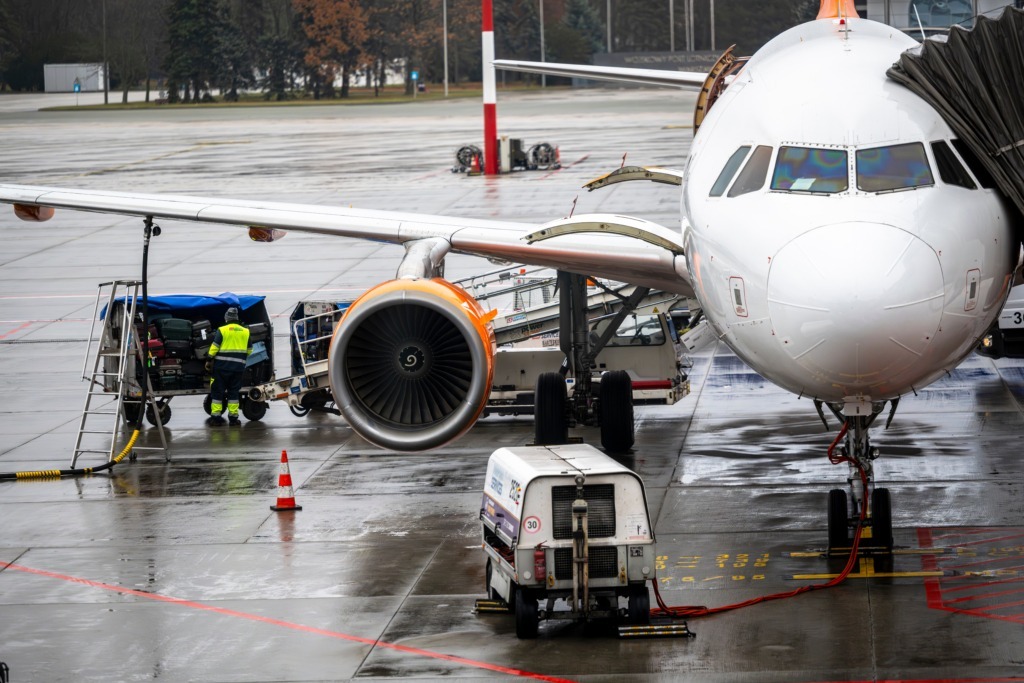
The aviation industry is entering a state of emergency as the “fuel floor” drops out from under it. On Tuesday, March 10, 2026, global carriers began the aggressive process of passing on unprecedented fuel costs to passengers. With jet fuel prices nearly doubling since the start of the US-Israel-Iran war, airlines are not only hiking ticket prices but also suspending their financial outlooks as the risk of widespread aircraft grounding looms.
While President Trump’s recent comments provided a temporary 24-hour “cool-off” for crude oil, the aviation sector remains paralyzed by high jet fuel premiums and the logistical nightmare of rerouting flights around vast swathes of closed Middle Eastern airspace.
Also Read | Imran Khan and Bushra Bibi Sentenced to 17 Years in Jail
Air New Zealand: The First Major Pricing Action
Air New Zealand is leading the charge in transparent fare adjustments, citing a “volatile and unprecedented” fuel market.
-
Domestic Routes: One-way economy fares raised by NZ$10 (US$5.92).
-
Short-Haul International: Increased by NZ$20.
-
Long-Haul International: Significant jump of NZ$90.
-
Financial Outlook: The carrier has suspended its 2026 guidance, stating that further pricing actions may be necessary if jet fuel remains above $150 per barrel.
Vietnam’s Emergency Measures: Tax Cuts and Supply Tensions
In Southeast Asia, the crisis is forcing government intervention to keep flag carriers airborne.
-
Tax Relief: Vietnam Airlines has requested the removal of the environmental tax on jet fuel to survive a 70% surge in operating costs.
-
Supply Guarantee: Vietnamese fuel suppliers have only guaranteed stock through March 31, 2026, with April procurement remaining highly uncertain due to the Strait of Hormuz blockade.
The Global Tourism Slump: Cancellations and Forecasts
The travel industry is seeing a wave of “voluntary and involuntary” cancellations.
-
HanaTour Service: South Korea’s largest travel agency has suspended all Middle East group tours for March 2026, waiving cancellation fees for hundreds of stranded customers.
-
Thailand’s Warning: The Ministry of Tourism expects to lose nearly 6,00,000 tourists and $1.29 billion in revenue if the conflict drags into its eighth week.
-
Hub Disruptions: Emirates, Qatar Airways, and Etihad—which handle one-third of Europe-to-Asia traffic—are seeing massive rerouting delays, increasing flight times by up to 3 hours on some routes.
Also Read | Imran Khan and Bushra Bibi Sentenced to 17 Years in Jail
Exam Disruptions: CBSE Postpones Middle East Boards
The conflict has moved from the tarmac to the classroom for thousands of Indian students.
-
Postponement: The CBSE has officially postponed Class 12 exams in Bahrain, Iran, Kuwait, Oman, Qatar, Saudi Arabia, and the UAE.
-
Current Status: Exams originally scheduled for March 9–11 have been pushed.
-
Next Review: A high-level review is set for late this week to decide the fate of exams scheduled from March 12 onwards.
Reality Check
Airlines are raising fares to survive. Still, the “Trump Dip” in oil prices (down to $90 from $119) offers a glimmer of hope that the $200 jet fuel peak was a temporary panic. Therefore, while tickets are more expensive today, the “sky-high” fares may stabilize if de-escalation holds. In fact, for most long-haul travelers, the increased flight time due to rerouting is becoming as big a deterrent as the ticket price itself.
The Loopholes
Airlines say they are raising fares due to “fuel costs.” In fact, this is a “Yield Management Loophole”—carriers often use fuel spikes as a justification to raise base fares beyond the actual cost of the fuel increase, especially on routes where competition has thinned due to airline groundings. Therefore, even if oil falls to $70 tomorrow, ticket prices rarely return to their pre-war levels immediately. Still, the “Hedging Loophole” remains; many European and Asian carriers have fuel hedges that protect them for 3–6 months, meaning some “fuel surcharges” are profit-boosters rather than survival-costs.
Also Read | Imran Khan and Bushra Bibi Sentenced to 17 Years in Jail
What This Means for You
If you have upcoming travel, book now or stay put. First, realize that “last-minute” fares are currently 40–60% higher than average due to the limited capacity on safe routes. Then, if you are a student in the Gulf, understand that the CBSE delay is for your safety; you should focus on mental well-being and wait for the official notification expected after the March 10–12 security review.
Finally, understand that cancellation policies are currently “flexible.” Most major airlines (Korean Air, Emirates, Cathay Pacific) are waiving change fees for Middle East-linked travel. Before you cancel a tour, check if your operator is offering a 100% refund, as companies like HanaTour have already set this precedent.
What’s Next
The International Air Transport Association (IATA) will release a global impact report by Friday. Then, look for Vietnam’s government decision on fuel tax cuts, which could trigger similar moves in other ASEAN nations. Finally, expect Air India and IndiGo to announce their own “War Surcharges” for long-haul flights by the end of this week.
Also Read | Imran Khan and Bushra Bibi Sentenced to 17 Years in Jail
End…..