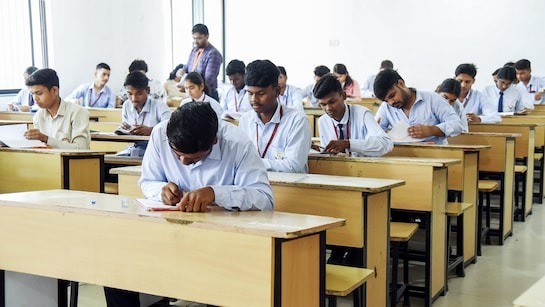
The CBSE Class 10 Hindi examination remains a crucial component of the board curriculum, evaluating a student’s ability to communicate with precision and depth. Unlike other subjects, Hindi requires a blend of grammatical accuracy and creative flair. Success in 2026 will depend on identifying recurring patterns in previous question papers and mastering the art of “answer presentation” rather than just content delivery.
Also Read | Imran Khan and Bushra Bibi Sentenced to 17 Years in Jail
Section A: Unseen Passages & Logical Reasoning
The Unseen Passage (अपठित बोध) section tests your logic under pressure.
Question Types: Expect Assertion–Reason, factual, and interpretative questions.
The Strategy: Read the questions before the passage to create a mental filter.
Presentation: Use concise language; avoid fluff. Ensure your reasoning directly matches the text provided.
Section B: Applied Grammar & Language Rules
Grammar in Hindi Course B is application-based. You aren’t just asked for definitions; you are asked to identify and transform.
Samas (समास): Focus on identifying the type and performing the Vigrah correctly.
Padbandh (पदबंध): Practice identifying Noun, Adjective, and Verb phrases.
Sentence Types: Master the transformation between Simple, Compound, and Complex sentences (Saral, Sanyukt, Mishra).
Also Read | Imran Khan and Bushra Bibi Sentenced to 17 Years in Jail
Section C: Literature (Sparsh & Sanchayan)
This section assesses your ability to empathize with characters and understand the social message of the authors.
Sparsh (Prose): Chapters like Bade Bhai Sahab (humor and character study) and Tatara-Vamiro Katha (sacrifice) are staples of the exam.
Sparsh (Poetry): Manushyata and Parvat Pradesh Mein Paavas often feature in extract-based questions. Explain the Bhav (emotion) rather than translating word-for-word.
Sanchayan: Long-form value-based questions usually come from Harihar Kaka and Topi Shukla. Focus on the social critiques presented in these stories.
Section D: Creative Writing Formats
This is the highest-scoring section if you follow the “Template” approach.
Formats: Formal Letters, Notices (Soochna), and Advertisements (Vigyapan) have fixed marking schemes for their layout.
Email & Short Story: Keep the language professional for emails and imaginative for stories based on the provided cues.
Word Limits: Staying within the limit is not just a suggestion; it’s a requirement to avoid losing marks for “Irrelevant Content.”
Also Read | Imran Khan and Bushra Bibi Sentenced to 17 Years in Jail
Reality Check
Most students lose marks in Hindi not because they don’t know the story, but because of spelling errors (Vartani) and poor time management. Still, the paper is designed to be scoring for those who use NCERT vocabulary. Therefore, while creative writing allows for freedom, using textbook-appropriate Hindi terms instead of casual slang will always yield higher marks. In fact, a neat paper with underlined keywords is often the difference between a 90 and a 95.
The Loopholes
The “Assertion-Reason” questions in unseen passages are a common trap. In fact, this is a “Logic Loophole”—both statements might be true individually, but the Reason might not be the correct explanation for the Assertion. Therefore, always ask “Why?” between the two statements to verify the link. Still, the “Poetry Loophole” remains; many students rewrite the poem’s lines in the answer. To score, you must interpret the metaphor and explain it in prose.
Also Read | Imran Khan and Bushra Bibi Sentenced to 17 Years in Jail
What This Means for You
If you are appearing for the exam on March 2, 2026, your focus today should be purely on revision of formats. First, realize that grammar is your “objective” scoring zone—don’t lose marks there. Then, if you are struggling with long answers, memorize the key character traits of Harihar Kaka and Wazir Ali (Kartus).
Finally, understand that presentation is paramount. You should use a black pen for headings and a blue pen for content. Before you hand in your paper, do a quick “spell-check” of common words like Kyonki, Shuddha, and Sahitya, which are frequently misspelled.
What’s Next
The CBSE will release Sample Question Papers (SQP) for the 2026 session by mid-2025. Then, look for the Marking Scheme to understand exactly how “steps” are rewarded in creative writing. Finally, expect a more “Competency-Based” approach in the 2026 paper, meaning you will see more questions asking for your personal opinion on a character’s choices.
Also Read | Imran Khan and Bushra Bibi Sentenced to 17 Years in Jail
End…