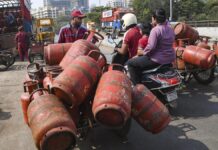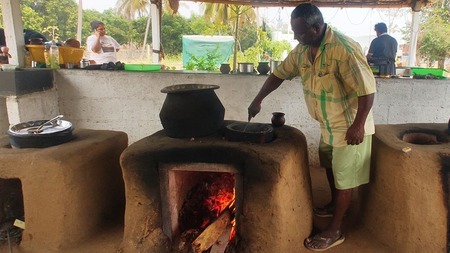
The global energy fallout from the West Asia conflict has reached the rural and semi-urban classrooms of North Bengal. On Friday, March 13, 2026, reports from the Jalpaiguri district reveal a landscape of desperate improvisation. Fearing a total collapse of the LPG supply chain, school authorities have begun repairing decades-old clay stoves, opting for the smoke of firewood over the uncertainty of gas.
For many students, the midday meal is the most substantial nutrition they receive in a day. To ensure this lifeline isn’t cut, headmasters are now managing a “dual-fuel” strategy—saving their remaining gas for emergencies while shifting daily production to labor-intensive traditional methods.
Also Read | Imran Khan and Bushra Bibi Sentenced to 17 Years in Jail
The Return of the Clay Oven: School Survival Tactics
In major educational hubs like Jalpaiguri town and the Nagrakata block, the shift is already visible.
-
Sunitibala Sadar Prathamik Balika Vidyalaya: This prominent girls’ school, which feeds 900 students, used firewood on Thursday to save its last remaining cylinders.
-
Precautionary Measures: At Nagrakata State Plan Primary School, cooks have been instructed to stockpile firewood immediately, even though they still have a few days of gas left.
-
The Labor Trade-off: While wood-fired cooking is significantly more labor-intensive and slower, authorities view it as the only way to “risk-proof” the students’ nutrition.
Institutional Panic: Hospitals and Engineering Colleges
The crisis extends beyond the classroom into critical healthcare and technical institutions.
-
Medical College Strain: The Jalpaiguri Government Medical College and Hospital feeds 1,000 patients daily. With a requirement of four commercial cylinders every 24 hours, the kitchen supervisor warns that current stocks are at a breaking point.
-
Engineering College: Similar worries are echoing through the Jalpaiguri Government Engineering College, where large-scale mess operations are struggling to secure future bookings.
Supply Chain Paralysis: The Dealer’s Perspective
The “ground zero” of the crisis is the local distributorship.
-
Booking Suspensions: Dealers in areas like Mashkalaibari have officially stopped taking new orders. They claim that until trucks arrive from the major refilling plants—currently delayed due to the national shortage—their godowns remain empty.
-
The Application System: In neighboring Alipurduar, schools are now required to file formal applications to dealers to prove their “essential” status and secure a priority spot in the delivery queue.
Also Read | Imran Khan and Bushra Bibi Sentenced to 17 Years in Jail
Administrative Crackdown: Zero Tolerance for Hoarding
Fearing that the shortage is being used as a cover for black marketing, the district administration has stepped in.
-
Emergency Meeting: Additional District Magistrate Dhiman Barui met with distributors on Thursday to issue a stern warning.
-
Price Control: The administration has made it clear that selling cylinders at illegal, inflated prices will result in immediate legal action.
Reality Check
Jalpaiguri’s return to firewood is a stark indicator of how quickly “modern” infrastructure can fail during a global energy shock. Still, the clay oven is a reliable fallback for rural schools that have access to local timber. Therefore, while the smoke might be a health concern, the “hunger gap” is a more immediate threat. In fact, the shift to wood-fired stoves is likely to become a permanent “backup feature” in North Bengal schools until the Strait of Hormuz situation is fully resolved.
The Loopholes
The administration says no “artificial shortage” will be allowed. In fact, this is a “Transportation Loophole”—while the gas might exist at the massive regional bottling plants, the shortage of diesel and the rerouting of trucks for “national priority” tasks means the gas isn’t reaching the local godowns. Therefore, the shortage is real at the local level, even if the national stock is technically sufficient. Still, the “Commercial Diversion Loophole” remains; with commercial cylinders being so scarce, some domestic cylinders are inevitably being “diverted” to high-paying hotels, further starving the school midday meal programs.
Also Read | Imran Khan and Bushra Bibi Sentenced to 17 Years in Jail
What This Means for You
If you are a parent or guardian in the Jalpaiguri/Alipurduar region, be prepared for slight delays in meal times. First, realize that cooking for 900 people on wood takes significantly longer than on high-pressure gas. Then, if you are a local resident, understand that you should not hoard cylinders; the ADM has authorized inspections to identify homes or businesses with excess stock.
Finally, understand that the district administration is your point of contact. You should report any distributor asking for a “premium” or refusing a legitimate booking to the District Magistrate’s office immediately. Before you worry about the fuel, remember that the Midday Meal program has sovereign backing, and the government is legally obligated to find alternatives (like firewood) to keep the children fed.
What’s Next
Expect Jalpaiguri schools to receive a “Priority Quota” of cylinders by Monday as the DM’s office finalizes the list of essential institutions. Then, look for bulk firewood procurement by the district council to assist schools that don’t have their own forest access. Finally, expect Alipurduar dealers to resume limited bookings by the weekend once the next convoy of trucks arrives from the refilling plants.
Also Read | Imran Khan and Bushra Bibi Sentenced to 17 Years in Jail
End….