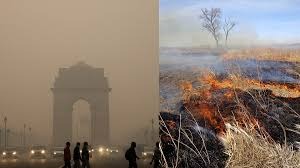
Delhi’s favorite “blame game” is officially hitting a dead end. As of Wednesday, December 31, 2025, a report from the Centre for Science and Environment (CSE) confirmed that while farm fires in Punjab and Haryana have basically vanished this month, the city’s air hasn’t just stayed bad—it’s actually gotten worse.
The thing is, we’ve spent years pointing at the smoke from neighboring states. Or nothing. Let’s be real, while stubble burning is a seasonal disaster, this December has proven that Delhi-NCR is quite capable of choking itself. Those too.
Also Read | Imran Khan and Bushra Bibi Sentenced to 17 Years in Jail
The “Post-Stubble” Smog: Field Notes
December 2025 is on track to be one of the most polluted months since 2018.2
-
The Spike: Even though farm fire contributions dropped to near-zero, PM2.5 levels in Delhi jumped by 29% compared to November.3
-
The NCR Factor: Nearby cities are doing even worse. Noida saw a massive 38% increase in pollution, while Ballabhgarh and Baghpat hit 32% and 31% spikes respectively.4
-
The “Lid” Effect: It’s an ongoing situation where the weather is working against us. Low wind speeds and “temperature inversion” (warm air trapping cold, dirty air near the ground) have created a thick, toxic lid over the city.5
Also Read | Imran Khan and Bushra Bibi Sentenced to 17 Years in Jail
The “Real” Killers: Where’s the Smoke Coming From?
Data from the Decision Support System (DSS) for December 1-15 reveals a hard truth about our “local” cocktail.
| Source Type | Contribution % | The Reality |
| Regional Inflow | 65% | Pollution blowing in from surrounding NCR districts. |
| Local Delhi Sources | 35% | This is what we actually control within city limits. |
| Vehicles | ~50% (of local) | The single biggest “primary” driver of Delhi’s own smoke. |
Also Read | Imran Khan and Bushra Bibi Sentenced to 17 Years in Jail
The “Secondary” Aerosol Problem
And here’s the kicker: it’s not just what comes out of a tailpipe or a chimney. Experts are highlighting “secondary aerosol formation.” This is when gases from vehicles and industries react in the stagnant, cold winter air to form even more solid particles.6 It’s like the pollution is growing on its own while we’re all stuck in traffic.
Field Notes on the Ground
-
Visibility: It’s been a nightmare at IGI Airport. On December 30, over 118 flights were canceled or diverted because of the dense smog-fog mix.7
-
Nighttime Peaks: Roughly 60% of stations recorded their worst pollution between 10 PM and 2 AM.8 This isn’t from farm fires; it’s from heavy trucks entering the city and residents burning solid fuel for heat.9
Basically, the “smokescreen” of blaming farmers is gone. If we want to breathe in 2026, we’re looking at a year-round battle against our own cars, our own trash, and our own industries.
Also Read | Imran Khan and Bushra Bibi Sentenced to 17 Years in Jail
End…