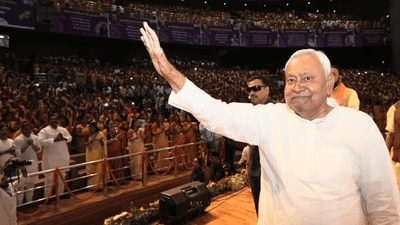
In a move that signals the beginning of a massive power transition in Patna, Chief Minister Nitish Kumar formally resigned from the Bihar Legislative Council (MLC) on Monday. JDU leader Sanjay Gandhi submitted the resignation letter to the secretariat, marking the first step in Kumar’s exit from state-level legislative politics after nearly two decades at the helm.
Also Read | Imran Khan and Bushra Bibi Sentenced to 17 Years in Jail
This development comes just weeks after his successful election to the Rajya Sabha on March 16, where he secured 44 votes from the Bihar Assembly.
The Succession Plan: A New “Kumar” Rises
The most shocking twist in this transition is the official entry of Nitish Kumar’s son, Nishant Kumar, into active politics. After years of staying away from the spotlight, the 50-year-old Nishant formally joined the JD(U) on March 8.
The Deputy CM Buzz: High-level sources within the JD(U) suggest that Nishant is being positioned for a major administrative role. Veteran leader Hari Narayan Singh confirmed that the party’s top brass has discussed the possibility of Nishant becoming the next Deputy Chief Minister.
Transition Timeline: Nitish Kumar is expected to resign as Chief Minister in the coming days. This would trigger a cabinet reshuffle where the NDA (JDU-BJP alliance) must elect a new leader to head the state government.
National Role: By moving to the Rajya Sabha, Nitish Kumar is expected to take on a significant role in the Union Cabinet or a senior advisory position within the NDA at the national level.
Also Read | Imran Khan and Bushra Bibi Sentenced to 17 Years in Jail
Key Milestones in the Transition
| Event | Date |
| Nishant Kumar Joins JDU | March 8, 2026 |
| Nitish Elected to Rajya Sabha | March 16, 2026 |
| Resignation from Bihar MLC | March 30, 2026 (Today) |
| Expected Resignation as CM | Early April 2026 |
Investigative Insight: The “Nishant” Strategy
Nitish Kumar’s decision to launch his son into politics marks a departure from his long-standing public stance against “dynastic politics.” However, party insiders suggest this was a strategic necessity to prevent a leadership vacuum within the JD(U) as Nitish moves to Delhi. By positioning Nishant as a potential Deputy CM under a more experienced BJP or JDU Chief Minister (possibly Samrat Chaudhary or Vijay Chaudhary), Nitish ensures his legacy remains protected while keeping the JD(U) rank and file united.
Furthermore, the presence of Union Home Minister Amit Shah during Nitish’s Rajya Sabha nomination indicates that this entire transition has been meticulously “vetted” and coordinated with the BJP central leadership to ensure stability in Bihar ahead of the 2029 general elections.
Also Read | Imran Khan and Bushra Bibi Sentenced to 17 Years in Jail
End….