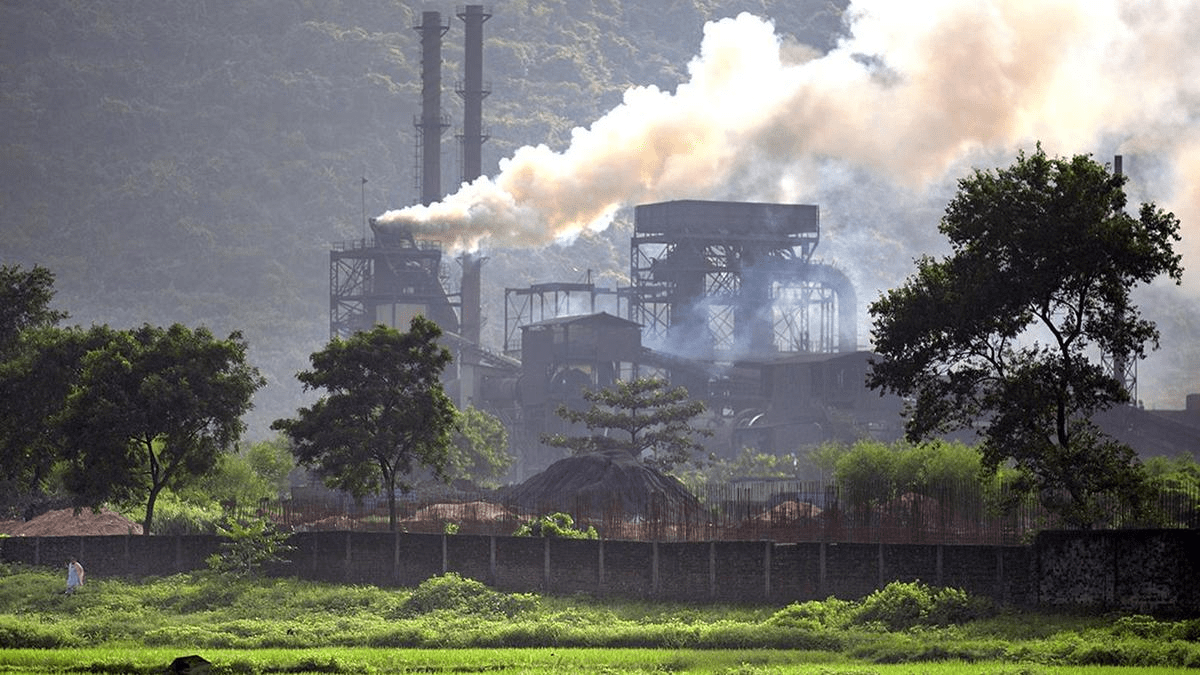
Now India is cementing its role as a global leader in the fight against climate change. On Wednesday, March 25, 2026, the Union Cabinet approved the country’s updated Nationally Determined Contribution (NDC) for the 2031–2035 period. Therefore, this third submission to the United Nations commits India to deeper emissions cuts and a more aggressive transition to renewable power. Currently, the government aims to reduce emissions intensity by 47% and reach 60% non-fossil fuel capacity by 2035. Thus, despite global energy market volatility due to the West Asia conflict, New Delhi is doubling down on a “green” future while ensuring domestic energy security.
Also Read | Imran Khan and Bushra Bibi Sentenced to 17 Years in Jail
At a Glance:
Emissions Target: 47% reduction in GDP emissions intensity from 2005 levels by 2035.
Power Mix: 60% of installed electricity capacity to come from non-fossil sources.
Nature-Based Solutions: Target of 3.5–4 billion tonnes of CO₂ equivalent carbon sink.
Track Record: India reduced emissions intensity by 36% between 2005 and 2020.
Global Leadership: As the BRICS chair, India is signaling strong climate intent from the Global South.
In This Article:
Sharper Climate Commitments: The 2035 Roadmap
Grounded in Performance: Why the Targets are Credible
Strategic Energy Security Amid Global Conflict
Expert Perspectives: Ambition vs. Reality
Frequently Asked Questions (FAQs)
Sharper Climate Commitments: The 2035 Roadmap
Now the Union Cabinet has provided a clear blueprint for India’s decadal climate goals. Because the previous 2015 targets were met well ahead of schedule, the new framework pushes the envelope further. Therefore, the 2035 NDC is built on three major pillars.
First, the pledge to cut emissions intensity of GDP by 47% ensures that economic growth is decoupled from carbon output. Next, the shift to 60% non-fossil power capacity targets the heart of the industrial sector. Finally, the expansion of forests to create a 4-billion-tonne carbon sink addresses nature-based mitigation. Thus, the strategy aligns with the broader vision of Viksit Bharat 2047, aiming for a developed and sustainable India.
Also Read | Imran Khan and Bushra Bibi Sentenced to 17 Years in Jail
Grounded in Performance: Why the Targets are Credible
Now officials are quick to point out that these goals are “not aspirational” but based on hard data. Because India has a history of over-delivering on its climate promises, the international community views these targets with high credibility.
First, by 2020, India had already achieved a 36% reduction in emissions intensity against the 2005 baseline. Next, the non-fossil fuel capacity in the national power mix has already crossed the 52% mark. Thus, moving to 60% by 2035 is seen as a realistic, albeit cautious, progression. Programs like the National Green Hydrogen Mission and massive solar park expansions act as the policy backbone for this transition.
Strategic Energy Security Amid Global Conflict
Now the geopolitical landscape is heavily influencing India’s climate strategy. With ongoing conflicts in West Asia disrupting oil and gas supply chains, the push for clean energy is now a matter of national security.
First, shifting to domestic renewables reduces the country’s vulnerability to global price shocks. Next, the “Lifestyle for Environment (LiFE)” initiative encourages citizens to adopt sustainable habits that lower overall energy demand. Thus, climate ambition and energy affordability are being treated as two sides of the same coin. Currently, India is leveraging its International Solar Alliance leadership to bring global technologies to domestic projects.
Also Read | Imran Khan and Bushra Bibi Sentenced to 17 Years in Jail
Expert Perspectives: Ambition vs. Reality
Now while many experts have welcomed the updated NDC, some argue that India is being overly cautious. Because the Central Electricity Authority projections suggest non-fossil capacity could reach 70% by 2035, the formal 60% target appears conservative to some.
First, Vibhuti Garg of IEEFA noted that a 60% target may not adequately reflect the “scale of opportunity” in industrial electrification. Next, Labanya Jena suggested that the government is being pragmatic due to a reliance on imported technologies and the continued dominance of coal. Thus, the consensus is that while the targets are safe, India is likely to exceed them once again. Meanwhile, the focus remains on the ultimate milestone: Net-Zero by 2070.
Frequently Asked Questions (FAQs)
What are India’s new climate targets for 2035? India aims to reduce emissions intensity by 47% (from 2005 levels) and ensure 60% of its power capacity is from non-fossil sources.
What is the “carbon sink” target in the updated NDC? India plans to create a carbon sink of 3.5 to 4 billion tonnes of CO₂ equivalent through increased forest and tree cover.
Has India met its previous climate goals? Yes. India met its 2015 Paris Agreement targets—33–35% emissions intensity reduction and 40% non-fossil capacity—well before the 2030 deadline.
Why is the 60% clean energy target considered “cautious”? Experts suggest that since India has already crossed 52% capacity, it could realistically hit 70% by 2035, but the government chose a more conservative international commitment.
How does the West Asia conflict affect India’s climate policy? The conflict highlights the risks of fossil fuel dependence, prompting India to accelerate its clean energy shift for better energy security and price stability.
Also Read | Imran Khan and Bushra Bibi Sentenced to 17 Years in Jail
End….