

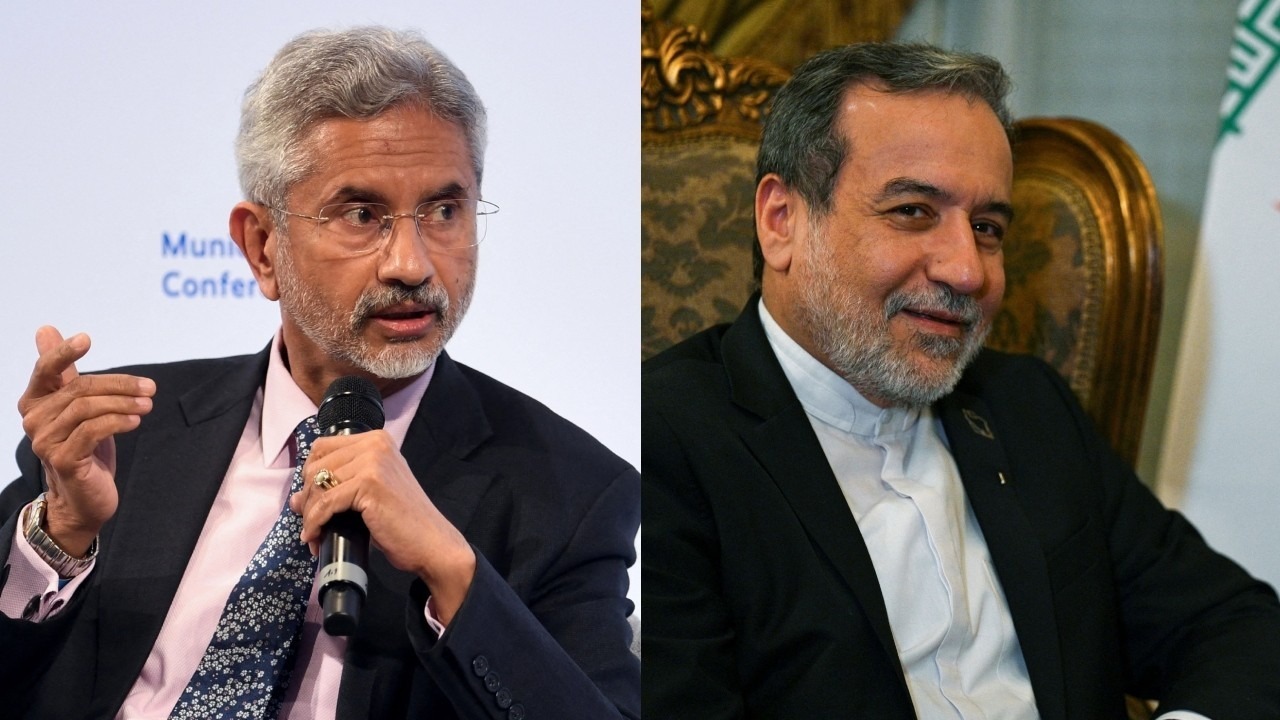
As West Asia enters a volatile new era of leadership, India is doubling down on its diplomatic “balancing act.” On Tuesday, March 10, 2026, External Affairs Minister S. Jaishankar held a critical telephonic conversation with Iranian Foreign Minister Abbas Araghchi.
The timing is significant: the Islamic Republic has just finalized the swift and controversial appointment of Mojtaba Khamenei as its Supreme Leader, following the assassination of his father on February 28. With global oil markets in a tailspin and regional shipping lanes largely paralyzed, New Delhi’s outreach to Tehran is no longer just a matter of foreign policy—it is a race to protect India’s domestic energy and economic stability.
Also Read | Imran Khan and Bushra Bibi Sentenced to 17 Years in Jail
The Successor: Who is Mojtaba Khamenei?
The transition to Mojtaba Khamenei marks a “wartime shift” in Iranian politics.
-
Continuity over Change: A 56-year-old cleric with deep ties to the Islamic Revolutionary Guard Corps (IRGC), Mojtaba is seen as a hardliner who will maintain his father’s confrontational stance.
-
Controversy: His selection by the Assembly of Experts is historic, as it mirrors a “dynastic succession”—a concept the 1979 Revolution originally sought to abolish.
-
Geopolitical View: While Russia and China have supported the appointment, the US has dismissed him as a “lightweight,” and Israel has already signaled that he remains a potential target.
The “Difficult” Leadership Contact: Why Jaishankar is Leading
There is a visible gap in India’s high-level engagement.
-
The Arab-Israel Outreach: PM Modi has held personal calls with the leaders of the UAE, Qatar, Saudi Arabia, Kuwait, Bahrain, Oman, Jordan, and Israel over the last 11 days.
-
The Tehran Gap: Modi has yet to speak with Iranian President Masoud Pezeshkian.
-
The Justification: Jaishankar explained that “contacts with Iran at the leadership level are obviously difficult at this time,” likely due to the extreme security protocols and mourning period in Tehran. As a result, the Jaishankar-Araghchi channel has become India’s primary link to the new regime.
Energy Security: The Hormuz Blockade Impact
The “virtual blockade” of the Strait of Hormuz is India’s greatest immediate threat.
-
Hydrocarbon Lifeline: West Asia provides 48.7% of India’s crude and over 91% of its LPG.
-
The Cost of Conflict: Every $10 increase in oil prices adds approximately **$15 billion** to India’s annual import bill.
-
Commercial Fallout: Shortages of commercial LPG are already being reported in Mumbai and Bengaluru, forcing the government to prioritize domestic “chulha” supplies via the Essential Commodities Act.
Also Read | Imran Khan and Bushra Bibi Sentenced to 17 Years in Jail
Humanitarian Diplomacy: Sinking Ships and Port Access
India has leveraged its maritime proximity to provide humanitarian aid.
-
IRIS Lavan: India recently allowed an Iranian ship to dock at Kochi following the US torpedoing of the frigate IRIS Dena off the coast of Sri Lanka on March 4.
-
Seafarer Safety: With Indian nationals forming a large part of global merchant crews, Jaishankar reiterated that India is “firmly opposed to attacks on merchant shipping” following the loss of two Indian mariners earlier this month.
Reality Check
India is walking a diplomatic tightrope. Still, the signature of the Foreign Secretary in the condolence book at the Iranian Embassy in Delhi—despite domestic political criticism—shows that India will not abandon its “state-to-state” ties. Therefore, while India condemns the “violation of sovereignty” in the Gulf, it refuses to join the Western chorus of total isolation against Tehran. In fact, if India can maintain its neutrality, it remains the only major power capable of acting as a “back-channel” between the US-Israel axis and the new leadership in Iran.
The Loopholes
The government says it is for “dialogue and diplomacy.” In fact, this is a “Strategic Silence Loophole”—by not explicitly condemning the killing of Ayatollah Khamenei while offering condolences, India is practicing “negative neutrality.” Therefore, it keeps both Washington and Tehran guessing. Still, the “Shipping Loophole” remains; while India provides docking rights for “humane” reasons, it must ensure these vessels aren’t used for retaliatory strikes, or it risks violating its “Special Strategic Partnership” with Israel.
Also Read | Imran Khan and Bushra Bibi Sentenced to 17 Years in Jail
What This Means for You
If you are an Indian citizen in the Gulf, stay in constant touch with your local Embassy. First, realize that the security situation is deteriorating; you should ensure your travel documents are up to date and follow the February 14 exit advisory if you are in Iran. Then, if you are a business owner, understand that shipping costs will likely stay 60–70% higher due to war-risk insurance premiums.
Finally, understand that energy prices will be volatile. You should expect the 25-day LPG refill rule to remain in place until the Hormuz blockade is resolved. Before you travel to the region, check for flight cancellations as airlines reroute to avoid civilian airspace over the conflict zone.
What’s Next
The Cabinet Committee on Security (CCS) will meet again on Thursday to assess the 30th wave of Iranian strikes (“Operation True Promise 4”). Then, look for Prime Minister Modi’s first potential contact with the new Supreme Leader, Mojtaba Khamenei, as part of a formal congratulatory message. Finally, expect Jaishankar to visit Oman or Qatar by next week to facilitate “Omani-brokered” back-channel negotiations between the US and Iran.
Also Read | Imran Khan and Bushra Bibi Sentenced to 17 Years in Jail
End…..


