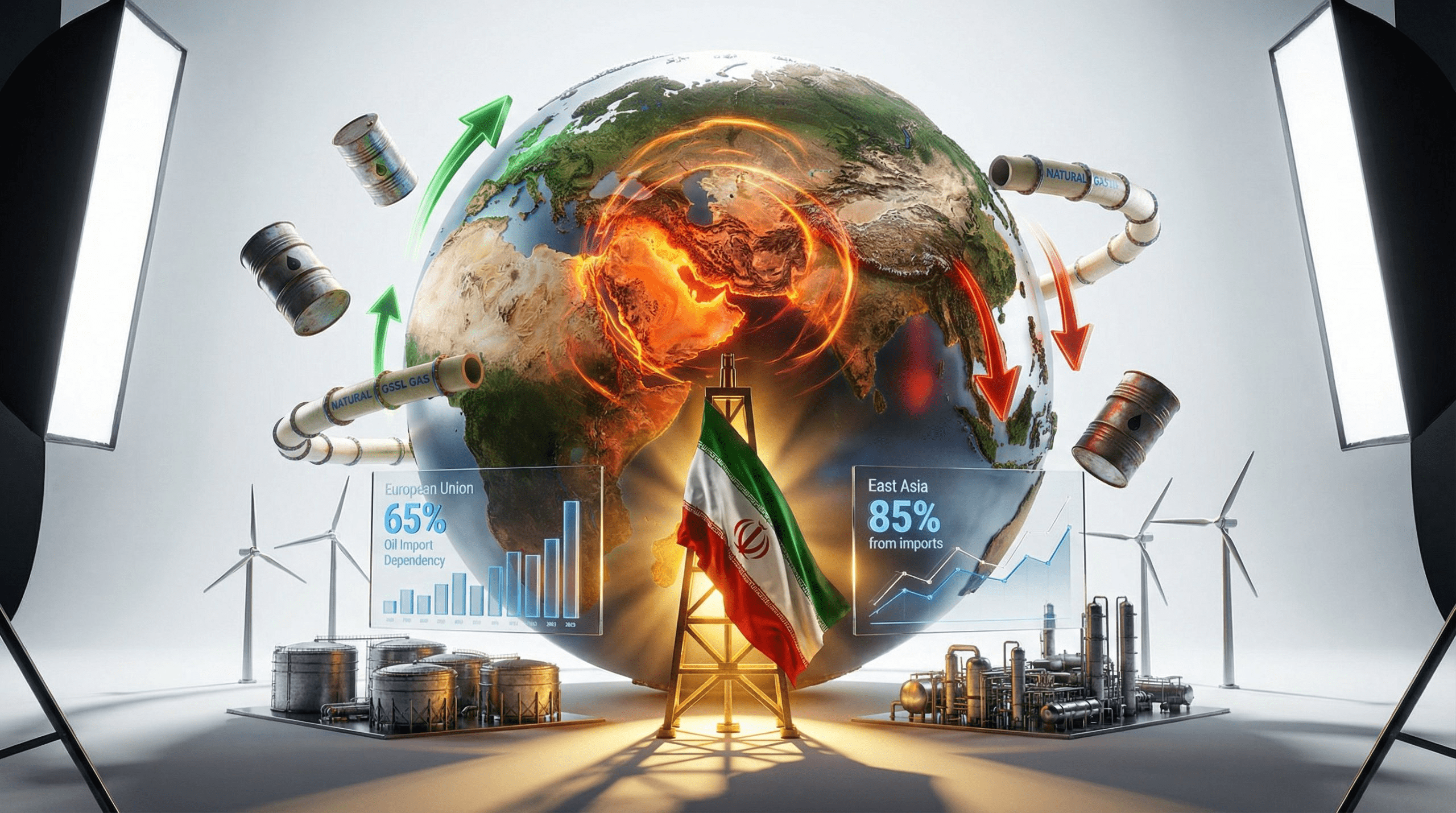
Now the first signs of a synchronized global economic shock are beginning to emerge. Following the outbreak of the Iran war on February 28, 2026, new business surveys reveal that the conflict is effectively crippling growth momentum while stoking record-high prices. Therefore, multiple Purchasing Manager Indexes (PMIs) for March show marked declines across the US, Europe, and India. Currently, the disruption to energy supplies is taking a crushing toll on industrial functioning. Thus, as input costs surge at the fastest pace in years, central banks are pivoting toward a stance of hawkish vigilance to combat the looming “stagflation” threat.
Also Read | Imran Khan and Bushra Bibi Sentenced to 17 Years in Jail
At a Glance:
US Impact: Business activity hit an 11-month low; private-sector employment declined for the first time in a year.
Europe’s Struggle: German input cost inflation is the fastest in three years; UK manufacturing costs jumped the most since 1992.
India’s Slowdown: Private-sector growth hit a three-year low as the nation grapples with high energy import costs.
Policy Pivot: The ECB and Bank of Japan are priming for interest rate hikes as early as April 2026.
The Catalyst: Hostilities sparked by the West Asia conflict and the resulting blockage of global energy choke points.
In This Article:
The PMI Warning: A Synchronized Global Contraction
Energy and Inflation: Why Input Costs are Skyrocketing
India’s Vulnerability: The 90% Crude Import Reality
Hawkish Vigilance: Central Banks Prepare for Rate Hikes
Frequently Asked Questions (FAQs)
Also Read | Imran Khan and Bushra Bibi Sentenced to 17 Years in Jail
The PMI Warning: A Synchronized Global Contraction
Now the “nascent recovery” that global markets hoped for at the start of the year is in grave danger. According to the latest S&P Global surveys, business sentiment has deteriorated sharply in the second half of March. Therefore, the optimism seen in early February has been replaced by a mounting gloom among global manufacturers.
First, the Eurozone’s composite measure dropped far more than economists had originally predicted. Next, Australia’s equivalent gauge slumped into territory that indicates a sudden economic contraction. Thus, the war’s fallout is not limited to the Middle East; it is acting as a global drag on prosperity. “The recovery is in danger of being choked off by higher oil costs and faltering sentiment,” noted Jamie Rush of Bloomberg Economics.
Energy and Inflation: Why Input Costs are Skyrocketing
Now the primary engine of this slowdown is the skyrocketing cost of energy products. Because the Iran war has disrupted supply chains crucial to the world’s biggest economies, prices for essential inputs are surging. Therefore, businesses are being forced to choose between absorbing costs or passing them on to struggling consumers.
First, input cost inflation in Germany has accelerated to its fastest pace in over three years. Next, the UK has witnessed a jump in manufacturing costs not seen since the early 1990s. Thus, the “upside risks for inflation” that ECB Chief Christine Lagarde warned about are now a documented reality. Currently, the persistence of the conflict is making it impossible for firms to maintain their previous profit margins.
Also Read | Imran Khan and Bushra Bibi Sentenced to 17 Years in Jail
India’s Vulnerability: The 90% Crude Import Reality
Now the impact on India is particularly severe due to its heavy reliance on foreign energy. Because India sources roughly 90% of its crude and half of its natural gas from abroad, the West Asia conflict hits the domestic economy at its weakest point. Therefore, Indian factory activity in March slowed to its weakest level since 2021.
First, the private sector saw its growth hit a three-year low as the fiscal year came to a close. Next, input costs for Indian firms are rising at the fastest pace seen since mid-2022. Thus, the cooling of one of the world’s top-performing economies signals a broader risk to global stability. So while firms are attempting to pass on these costs, the “margin compression” is likely to lead to reduced corporate investment in the coming quarters.
Hawkish Vigilance: Central Banks Prepare for Rate Hikes
Now monetary officials are reacting with what they call “hawkish vigilance.” Because inflation is rising alongside a growth slowdown, the traditional tools of central banking are being pushed to their limits. Therefore, the era of stable interest rates appears to be over for now.
First, a Eurozone interest rate hike is now considered possible as early as next month. Next, the Bank of Japan is preparing for its own move in April, while Australia has already delivered two consecutive increases. Thus, the world is entering a period of “tighter financial conditions” designed to prevent inflation from spiraling out of control. Meanwhile, the focus remains on whether these hikes will inadvertently deepen the recessionary pressures already being felt.
Also Read | Imran Khan and Bushra Bibi Sentenced to 17 Years in Jail
Frequently Asked Questions (FAQs)
How has the Iran war affected the US economy? US business activity hit an 11-month low in March 2026, leading to the first decline in private-sector employment in over a year.
Why is the UK manufacturing sector in the news? A key gauge for UK manufacturing input costs jumped the most since 1992, reflecting the extreme pressure of the energy crisis.
How much of its crude oil does India import? India imports approximately 90% of its crude oil and nearly 50% of its natural gas, making it highly vulnerable to Middle East supply disruptions.
What is “hawkish vigilance”? It refers to a policy stance where central banks are ready to aggressively raise interest rates to combat rising inflation, even if growth is slowing.
Will the Eurozone raise interest rates soon? Yes. ECB Chief Christine Lagarde has signaled that a rate hike could occur as soon as April 2026 to counter the upside risks of inflation.
Also Read | Imran Khan and Bushra Bibi Sentenced to 17 Years in Jail
End…