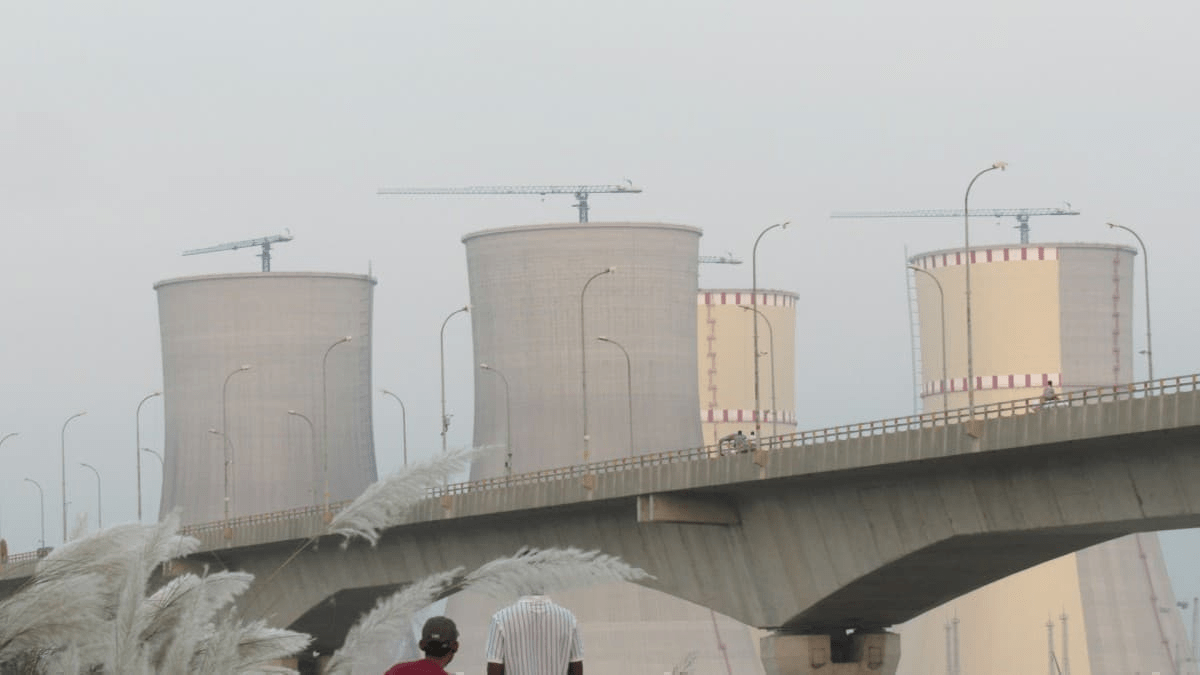
Now India has achieved a feat that global nuclear giants like the United States and France abandoned decades ago. On April 6, the 500 MWe Prototype Fast Breeder Reactor (PFBR) at Kalpakkam attained first criticality. Therefore, the reactor has successfully started its first self-sustaining nuclear chain reaction. This Kalpakkam PFBR criticality 2026 milestone marks India’s entry into the second stage of its three-stage nuclear program. Meanwhile, the world is watching with shock. India is now only the second country after Russia to operate a commercial-scale fast breeder reactor.
Also Read | Imran Khan and Bushra Bibi Sentenced to 17 Years in Jail
Why the Kalpakkam Success is a Global ‘Stunner’
Now we must understand why this is not just another power plant. First, the US and France pumped billions of dollars into similar projects and failed. Therefore, India’s success with a fraction of that budget is remarkable.
Next, most countries gave up on fast breeder technology due to technical complexity. Thus, India’s persistence over decades has finally paid off. Only Russia currently operates these reactors at a commercial scale.
Meanwhile, China is still in the experimental stages of this technology. Therefore, India has officially leapfrogged into a select group of nuclear leaders. So this is a defining moment for our national scientific pride.
Thorium: India’s Secret Energy Weapon
So why did India choose this difficult path? The answer lies in our sandy shores. First, India has very little uranium, which is the standard fuel for reactors. Therefore, we traditionally relied on expensive imports.
Next, India holds some of the world’s largest thorium reserves. These are found in Kerala, Odisha, and Andhra Pradesh. Thus, the PFBR is the key to unlocking this massive resource.
Meanwhile, the Kalpakkam reactor can use thorium-blended fuel in its later stages. Therefore, it will eventually end India’s dependency on foreign uranium. So we are moving toward complete energy autonomy.
How a Fast Breeder Reactor Actually Works
Now let’s look at the “magic” of a breeder reactor. First, a conventional reactor burns fuel and creates waste. Therefore, you always need more fuel.
Next, a Fast Breeder Reactor (FBR) produces more fuel than it burns. It creates fissile material while it generates electricity. Thus, it “breeds” its own future energy supply.
Meanwhile, the Kalpakkam unit uses Mixed Oxide (MOX) fuel. Therefore, it is far more efficient than older reactor designs. So this technology allows us to stretch our nuclear fuel for centuries instead of decades.
Also Read | Imran Khan and Bushra Bibi Sentenced to 17 Years in Jail
The Three-Stage Vision of Dr. Homi Bhabha
So where did this plan come from? It was the vision of Dr. Homi Jehangir Bhabha in the 1950s. First, he realized India’s thorium potential early on. Therefore, he designed a three-stage roadmap.
Stage 1: Use natural uranium to produce electricity and plutonium.
Stage 2: Use that plutonium in FBRs to produce more fuel and uranium-233.
Stage 3: Use thorium to sustain uranium-233 reactors indefinitely.
Now the Kalpakkam PFBR criticality 2026 event marks our official entry into Stage 2. Thus, the dream of the architect of India’s nuclear program is finally becoming a reality.
Why the US and France Failed with This Tech
Now we must ask why the pioneers failed. First, the US built the Fermi 1 reactor in the 1960s. But a partial meltdown in 1966 ended their hopes. Therefore, they pivoted to cheaper uranium they had in surplus.
Next, France built the massive Superphenix reactor. However, it suffered from constant sodium leaks and corrosion. Thus, they shut it down permanently in 1998.
Meanwhile, Japan’s Monju reactor also faced fires and accidents. Therefore, these nations “surrendered” to the technical difficulties. So India’s success in managing these same risks is a testament to our engineering.
Sodium Coolant: The Technical Hurdle India Crossed
So what was the hardest part of the project? The use of liquid sodium as a coolant. First, sodium is highly reactive with air and water. Therefore, even a tiny leak can cause a major fire.
Next, this is exactly what stopped the French and Japanese projects. Thus, Indian engineers had to develop perfect sealing and safety systems.
Meanwhile, the reactor attained criticality at 8:25 PM on April 6 without any issues. Therefore, our indigenous technology has proven to be stable and safe. So we have conquered a hurdle that defeated the world’s biggest economies.
Also Read | Imran Khan and Bushra Bibi Sentenced to 17 Years in Jail
Energy Security Amid Middle East Tensions
Now why is the timing of this success so critical? The current war in the Middle East has disrupted global oil and gas flows. Therefore, energy prices are volatile and unpredictable.
First, the PFBR provides a clean, “baseload” power source. Thus, it does not depend on shifting fossil fuel prices.
Next, it protects India from global supply shocks. Once we use thorium, no foreign power can “turn off” our energy supply. Therefore, this is a strategic win for India’s national security. So we are building a “Viksit Bharat” that is truly self-reliant.
The Path to 100 GW by 2047
So what is the next step for Kalpakkam? First, the reactor will undergo low-power tests. Therefore, it will gradually reach full commercial operation later this year.
Next, India aims to reach 100 GW of nuclear power by 2047. Thus, we need more reactors like the PFBR across the country.
Meanwhile, the International Energy Agency (IEA) has already congratulated India. They noted that this pathway leads to a “closed fuel cycle.” Therefore, India is now a global leader in sustainable nuclear energy.
Common Questions Answered
What is the Kalpakkam PFBR? Now it is India’s first indigenous Prototype Fast Breeder Reactor. Therefore, it is a second-stage nuclear power plant.
What does ‘first criticality’ mean? First, it means the reactor has started a self-sustaining nuclear chain reaction. Thus, it is now “alive” and ready for power generation.
Why is Thorium important for India? Next, India has the world’s largest thorium reserves but very little uranium. Therefore, thorium is our key to long-term energy independence.
How many homes can the Kalpakkam reactor power? So reports suggest it can generate enough electricity for nearly three million Indian homes.
Which other countries have this technology? Currently, only Russia operates a commercial fast breeder reactor. Thus, India will be the second.
Why did France and the US stop their programs? Finally, they faced high costs, sodium leaks, and technical failures. Therefore, they decided to stick with conventional uranium reactors.
Also Read | Imran Khan and Bushra Bibi Sentenced to 17 Years in Jail
End….