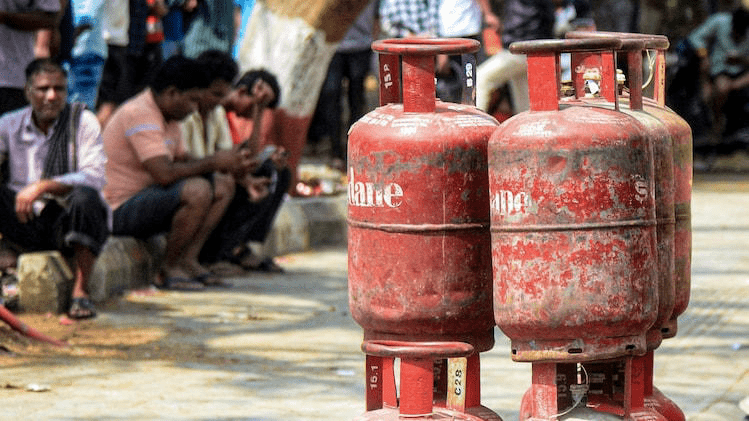
As the West Asia war enters its second month, the “chokehold” on the Strait of Hormuz—through which 90% of India’s LPG imports pass—has triggered a severe domestic supply-demand mismatch. An India Today Digital dipstick survey across 12 states reveals that while the government has prioritized household supply, the “1-day delivery” era has vanished, replaced by waits of up to 40 days and a burgeoning black market.
From Delhi’s migrant colonies to the rural heartlands of Karnataka, millions are being forced back to traditional wood-fired chulhas as the “war tax” on cooking gas hits the poorest the hardest.
Also Read | Imran Khan and Bushra Bibi Sentenced to 17 Years in Jail
State-Wise Delivery Timeline: From Routine to Crisis
The survey highlights a stark contrast between urban centers with Piped Natural Gas (PNG) and regions entirely dependent on cylinders.
| State / Region | Pre-War Delivery | Current Wait Time (April 2026) | Black Market Price |
| Delhi-NCR | 1–2 Days | 7–9 Days | ₹1,100 – ₹6,000 |
| Uttar Pradesh | 2–3 Days | 5–20 Days | ₹2,000+ Premium |
| Karnataka (Mangaluru) | 2–3 Days | 30–45 Days | ₹2,500 – ₹3,500 |
| West Bengal | 2–3 Days | 10–12 Days | Significant Markups |
| Bihar / Jharkhand | 3 Days | 7–8 Days | Forced to use Firewood |
| Tamil Nadu | 1–2 Days | Normal (Stabilizing) | Minimal Impact |
| Maharashtra/Gujarat | 1 Day | Stable (PNG-led) | Low Panic |
Also Read | Imran Khan and Bushra Bibi Sentenced to 17 Years in Jail
Key Findings: The Impact of the “Hormuz Choke”
-
The Urban-Rural Divide: Cities like Ahmedabad and Mumbai, which have robust PNG infrastructure (Adani Gas, Gujarat Gas), are largely unaffected. In contrast, unauthorized colonies in Delhi and rural Bihar are facing the brunt of the shortage.
-
The “Ghost” Delivery: Residents in Faridabad reported receiving “Delivered” messages on their phones 7 days after booking, despite no cylinder arriving—a tactic suspected to be used by agencies to divert stock to the black market.
-
Return to Traditional Fuel: In Patna and Mangaluru, Ujjwala beneficiaries and middle-class families alike are switching to cow-dung cakes and firewood because they cannot afford the ₹4,000+ black market rates.
-
Commercial Collapse: With the government halting fresh commercial supplies, thousands of small dhabas and eateries have temporarily shuttered or shifted to coal, complicating large social gatherings like the tehravi bhoj.
Government Measures vs. Ground Reality
The Ministry of Petroleum has clarified that refill rules (25 days for urban, 45 for rural) remain unchanged. However, the “7-8 Day Gap” in even the most efficient agencies suggests that the physical inventory simply isn’t reaching the local godowns fast enough.
Also Read | Imran Khan and Bushra Bibi Sentenced to 17 Years in Jail
“I had to convince the halwai to cook on coal for my grandfather’s funeral feast. He agreed, but still demanded two cylinders from my home reserve. It’s a struggle just to feed 400 people.”
— Akshay Dubey, Karol Bagh Resident
Investigative Insight: The “Inventory Hoarding” Cycle
The current crisis is being exacerbated by “Panic Booking.” Even households with 50% gas remaining are attempting to book refills, creating a synthetic spike in demand. This has allowed “higher-ups” in the distribution chain to divert cylinders to the black market, where a standard ₹914 refill is being sold for as much as ₹6,000 to desperate consumers in Gurugram.
While the Cabinet Committee on Security (CCS) recently discussed diversifying LPG sources from West Africa and the US, those shipments are weeks away. For now, the “Whole of Government” approach is focused on Anti-Diversion Enforcement. If you are in a PNG-enabled area, you are shielded; but for the rest of India, the “Stone Age” warning from the US President is already being felt in the kitchen, one wood-fire at a time.
Also Read | Imran Khan and Bushra Bibi Sentenced to 17 Years in Jail
End…..