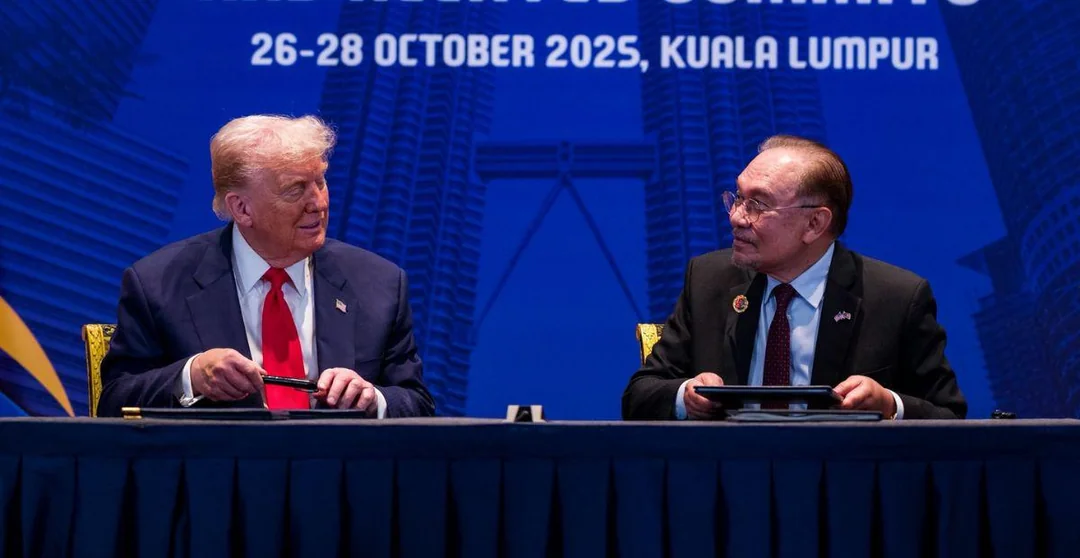
Trade Rupture: Malaysia Becomes First to Declare US Pact ‘Null and Void’
A cornerstone of Washington’s new trade strategy has collapsed. Specifically, Malaysia declared its Agreement on Reciprocal Trade (ART) with the United States “null and void” on Sunday, March 15, 2026. Initially, this deal was signed to protect Malaysian exports from aggressive “reciprocal” tariffs. Now, following a landmark US Supreme Court ruling, Malaysia says the legal rug has been pulled out from under the agreement. Consequently, this move threatens to trigger a domino effect among other major trading partners like India, Vietnam, and the EU.
The Legal Trigger: Trump v. Importers
Look, the collapse started in Washington. Previously, the Trump administration used the International Emergency Economic Powers Act (IEEPA) to bypass Congress and impose sweeping tariffs. However, on February 20, 2026, the US Supreme Court ruled these tariffs unconstitutional, stating that only Congress has the power to tax imports.
Malaysia’s blunt response: Since the “reciprocal” tariffs used as leverage are now illegal in the US, the agreement built on them no longer exists. Indeed, Minister Johari Abdul Ghani stated, “It is not on hold. It is no longer there.”
What the US Stands to Lose
The end of the ART deal is not just a diplomatic snub; it is an economic shock. Specifically, US manufacturers and consumers will likely feel the “inflation in disguise” through three main channels:
| Impact Area | Specific Risk | Affected Industries |
| Supply Chain | Friction in E&E (Electrical & Electronics) | Semiconductors, Smartphones, Laptops |
| Cost Surge | Loss of preferential 19% tariff rates | Medical Gloves, Biofuels, Processed Foods |
| Strategic | Eroding influence in ASEAN vs. China | Geopolitics, Indo-Pacific Economic Framework |
Also Read | 2026 Renault Duster Launched in India: Price, Variants & Specs
The “Section 301” Paradox
Actually, even as the IEEPA framework fell, Washington opened a new front. Specifically, on March 11, the USTR launched a Section 301 investigation into 16 countries—including Malaysia—for “unfair trade practices.” Moreover, a second probe into 60 nations regarding forced labor was launched on March 12. So, Malaysia is facing new pressure while walking away from old promises. Indeed, Minister Johari warned that Malaysian firms must now focus on strict labor and green standards to survive this new wave of scrutiny.
The “Unpredictability” Factor
While the US is currently applying a flat 10% tariff under Section 122 as a “Plan B,” the damage to its reputation as a stable trade partner is done. Recently, analysts from the Global Trade Research Initiative (GTRI) noted that other countries are asking the same question: Why make painful political concessions if US courts can strike down the benefits overnight?
In short, Malaysia has set a precedent that could dismantle a year’s worth of US bilateral deal-making. Next, I can track whether India or Indonesia follows suit in declaring their own trade “side deals” invalid this week. Right.
Also Read | 2026 Renault Duster Launched in India: Price, Variants & Specs