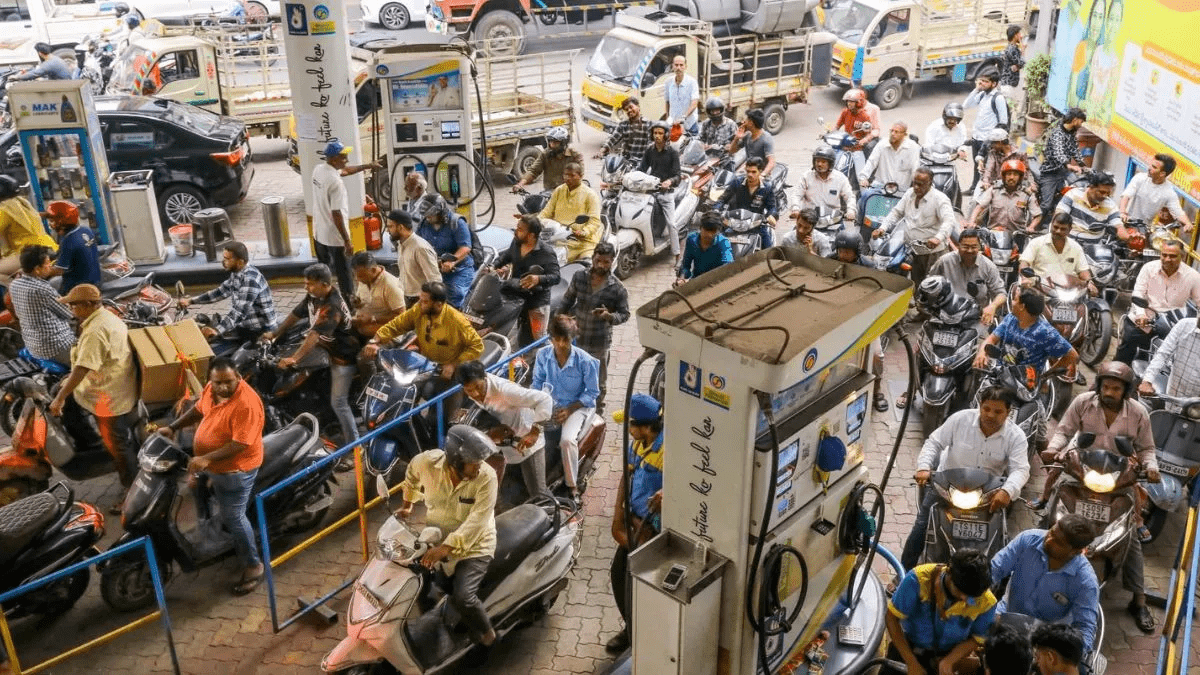
Now the Indian government is stepping in to shield consumers from the soaring costs of the West Asian conflict. On Friday, March 27, 2026, the Ministry of Finance officially slashed special additional excise duties on petrol to zero and diesel to ₹3 per litre. Therefore, despite global crude oil prices breaching the $100 mark due to the ongoing US-Iran war, domestic rates remained largely unchanged today. Currently, while private retailers like Nayara Energy have already hiked prices, the central intervention aims to stabilize the market. Thus, even as the Strait of Hormuz remains a volatile chokepoint, major cities like Hyderabad continue to see petrol at ₹107.46.
Also Read | Imran Khan and Bushra Bibi Sentenced to 17 Years in Jail
At a Glance: Fuel Rate Stability (March 27)
| Item | New Excise Duty Rate | Price Trend (Today) |
| Petrol | ₹0 (Zero) | Unchanged |
| Diesel | ₹3 per Litre | Unchanged |
In This Article:
-
The Excise Intervention: How the Govt is Absorbing the $100 Oil Shock
-
City-Wise Breakdown: Hyderabad and Kolkata Lead the Charts
-
Police Deployment: Managing Petrol Pump Crowds in Uttar Pradesh
-
Private vs. Public: Why Nayara Energy Hiked Prices Early
-
Frequently Asked Questions (FAQs)
The Excise Intervention: How the Govt is Absorbing the $100 Oil Shock
Now the decision to cut excise duty is a strategic move to prevent a massive inflationary spike. Because the US-Iran war has disrupted the primary supply routes for Indian oil, the cost of procurement has skyrocketed.
First, the central government issued an order late Thursday to eliminate the special additional excise duty on petrol. Next, the duty on diesel was reduced to a flat ₹3 per litre to support the logistics and farming sectors. Thus, the government is effectively “eating” the tax revenue to keep retail prices from exploding. Currently, with global crude hovering above $100, this fiscal cushion is the only reason local rates have not mirrored the global surge.
Also Read | Imran Khan and Bushra Bibi Sentenced to 17 Years in Jail
City-Wise Breakdown: Hyderabad and Kolkata Lead the Charts
Now the impact of these policies varies across the map due to state-level VAT and transportation costs. Because fuel prices are reviewed daily, today’s “unchanged” status provides a brief moment of relief for commuters.
First, Hyderabad remains the most expensive city for petrol at ₹107.46, followed closely by Kolkata and Mumbai at ₹103.54. Next, the National Capital Region (NCR) continues to offer some of the lowest rates, with New Delhi holding steady at ₹94.77. Finally, diesel prices show a similar trend, with Hyderabad topping the list at ₹95.70. Thus, the geographical price gap between the South and North remains a significant factor for logistics companies.
Police Deployment: Managing Petrol Pump Crowds in Uttar Pradesh
Now the fear of a genuine shortage has led to a surge in “panic buying” across Northern India. Because viral reports of fuel scarcity flooded social media, residents have been flocking to stations in record numbers.
First, the situation in Uttar Pradesh became so intense that local authorities deployed police at several outlets to maintain order. Next, similar scenes were reported in Navi Mumbai and Vashi, where queues stretched for several kilometers. Thus, the government is not just fighting high prices, but also the psychological impact of war-time rumors. Currently, officials are urging citizens to avoid hoarding, as the supply chain remains functional despite the Strait of Hormuz disruptions.
Also Read | Imran Khan and Bushra Bibi Sentenced to 17 Years in Jail
Private vs. Public: Why Nayara Energy Hiked Prices Early
Now a clear divide has emerged between private and public fuel retailers. Because private firms like Nayara Energy do not receive the same subsidies as state-run companies, they have been forced to pass on costs to the consumer.
First, Nayara Energy—which operates nearly 7,000 pumps—increased petrol by ₹5.30 and diesel by ₹3 per litre just 24 hours ago. Next, according to PTI, this move was necessary to cover the rising “input costs” of imported crude. Thus, consumers at private pumps are feeling the pinch even as state-run outlets (IOCL, HPCL) hold steady. So, the market is currently seeing a two-tier pricing system as the industry reacts to the “steeply upward trajectory” of energy costs.
Frequently Asked Questions (FAQs)
What was the excise duty cut on March 27?
The government cut special additional excise duty on petrol to zero and on diesel to ₹3 per litre to stabilize prices during the US-Iran war.
Why are fuel prices staying the same if crude is over $100?
The government is using the excise duty cut to absorb the price increase, preventing state-run oil companies from raising retail rates for now.
Which city has the highest petrol price today?
Hyderabad continues to report the highest price among major cities at ₹107.46 per litre.
Why did Nayara Energy raise their prices?
As a private retailer, Nayara Energy does not have the same financial cushion as state-run firms and must adjust prices to reflect the high cost of global crude oil.
Is there a fuel shortage in India?
No. The government and oil companies have confirmed that reserves are sufficient. The long queues are caused by “panic buying” due to war rumors.
Also Read | Imran Khan and Bushra Bibi Sentenced to 17 Years in Jail
End….