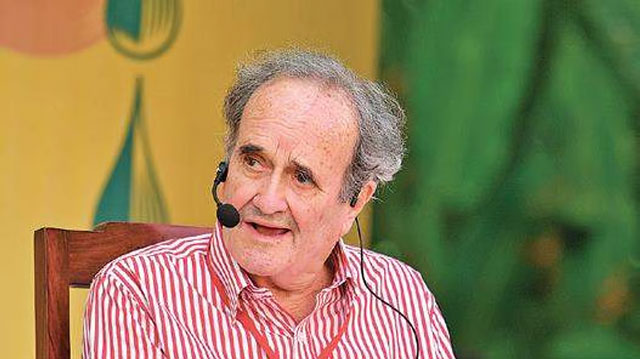
Obituary: Sir Mark Tully (1935–2026), the Voice of Truth
Sir William Mark Tully, the iconic journalist who served as the BBC’s New Delhi Bureau Chief for over 20 years, passed away in New Delhi on Sunday, January 25, 2026, at the age of 90. He died at Max Hospital in Saket following a multi-organ failure after a brief illness.
Also read | IndiGo Vacates 717 Flight Slots After DGCA Curbs; Red-Eye Flights Mostly Affected
For millions across South Asia, Tully was more than just a reporter; he was a standard-bearer for objective journalism whose calm, authoritative voice provided clarity during India’s most chaotic historical shifts.
1. A Life Bridging Two Nations
Born in Kolkata (Tollygunge) in 1935, Tully was a child of the British Raj who eventually chose India as his permanent home.
-
The Return to India: After being educated in Britain and briefly considering a life in the priesthood, Tully joined the BBC in 1964. He returned to India in 1965, later stating, “It was destiny. I was meant to return.”
-
The “Tully Sahib” Legacy: Unlike many foreign correspondents, Tully became fluent in Hindi. This allowed him to bridge the gap between high-level politics and the common man, earning him the affectionate title of “Tully Sahib.”
-
Fearless Reporting: He was famously expelled from India by Indira Gandhi during the Emergency (1975–77) but returned to continue chronicling the nation’s evolution.
Also read | IndiGo Vacates 717 Flight Slots After DGCA Curbs; Red-Eye Flights Mostly Affected
2. Witness to History: Key Moments
Tully’s reporting covered the defining events of modern South Asia, often at great personal risk:
-
1971 Bangladesh Liberation War: His coverage of the conflict and the humanitarian crisis solidified his reputation.
-
1984 Operation Blue Star & Bhopal Gas Tragedy: He provided balanced, real-time accounts of the storming of the Golden Temple and the world’s worst industrial disaster.
-
Political Assassinations: He reported on the deaths of both Indira Gandhi (1984) and Rajiv Gandhi (1991).
-
1992 Ayodhya Crisis: While reporting on the demolition of the Babri Masjid, he was locked in a room by a mob and threatened. He later called the event India’s “greatest setback to secularism.”
Also read | IndiGo Vacates 717 Flight Slots After DGCA Curbs; Red-Eye Flights Mostly Affected
3. Honors and Literary Contributions
Tully was one of the few individuals to be honored by both the British and Indian governments for his lifelong dedication to storytelling.
| Honor | Conferred By | Year |
| Padma Shri | Government of India | 1992 |
| Knight Bachelor (KBE) | United Kingdom | 2002 |
| Padma Bhushan | Government of India | 2005 |
| BAFTA Lifetime Achievement | BAFTA | 1985 |
Acclaimed Works: He authored several seminal books on India, including:
-
Amritsar: Mrs Gandhi’s Last Battle (1985)
-
No Full Stops in India (1991)
-
India in Slow Motion (2002)
-
Upcountry Tales (2017)
Also read | IndiGo Vacates 717 Flight Slots After DGCA Curbs; Red-Eye Flights Mostly Affected