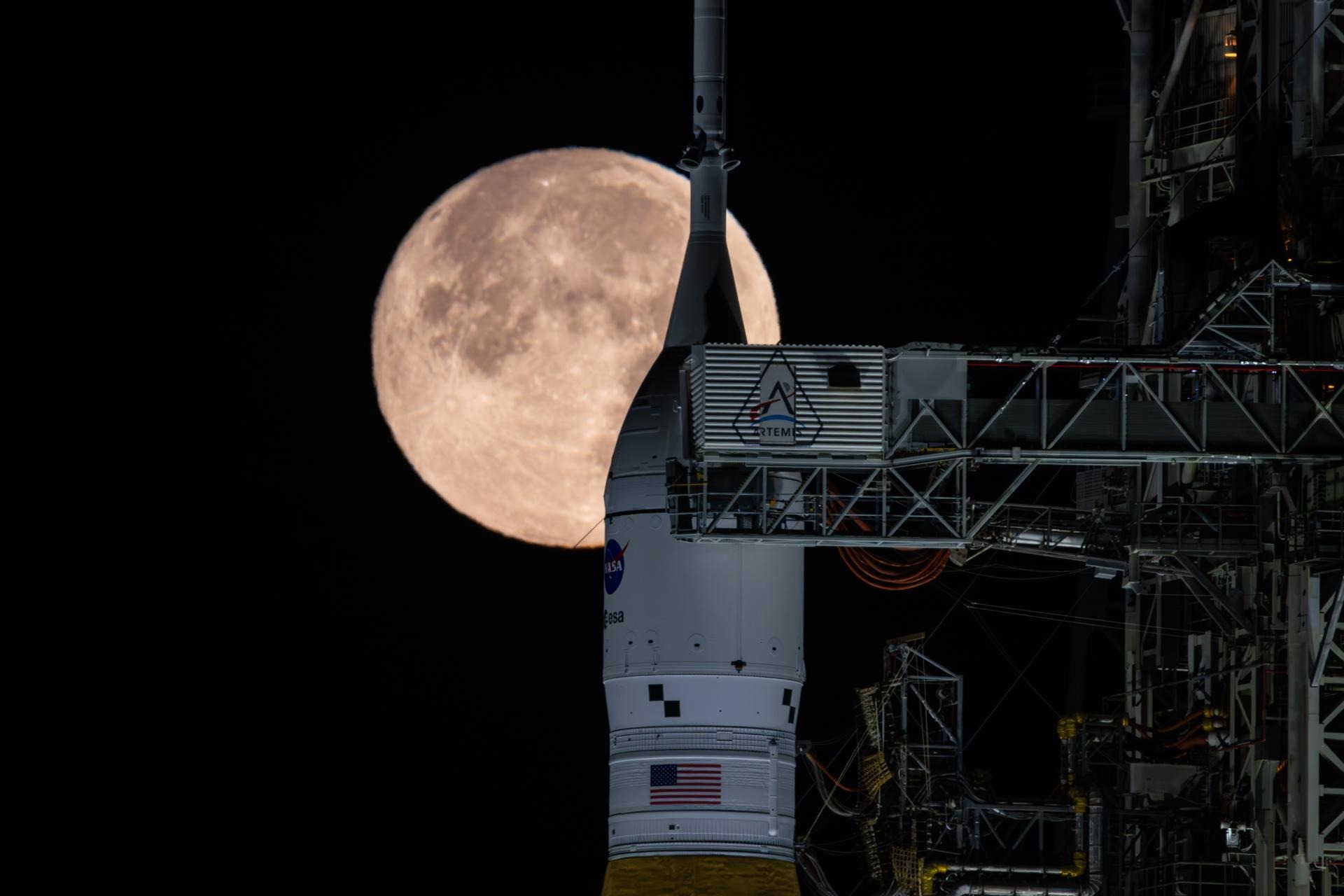
Space exploration is no longer a “behind-the-scenes” government affair. On Monday, March 9, 2026, NASA finalized its public engagement strategy for Artemis II, ensuring that every citizen with an internet connection can ride along as a virtual stowaway. Through the newly launched Artemis Real-time Orbit Website (AROW), the agency is providing the same telemetry data used at Mission Control in Houston directly to the public.
This mission marks the first time humans will venture beyond Low Earth Orbit in over half a century, and the tracking tools are designed to bridge the massive 380,000 km gap between Earth and the Moon.
Also Read | Imran Khan and Bushra Bibi Sentenced to 17 Years in Jail
AROW: The Digital Dashboard for Deep Space
The AROW platform is the primary tool for data enthusiasts and casual observers alike.
Live Telemetry: Beginning roughly 60 seconds after launch, AROW will display Orion’s speed, altitude, and trajectory.
Apollo Connection: The interface includes highlights of Apollo landing sites, allowing users to compare the Artemis flight path with the historic missions of the 1960s and 70s.
Open Data: NASA will provide “state vectors” (precise coordinate data) that artists and developers can use to create their own 3D visualizations or tracking apps.
Mobile Experience: AR Sky-Tracking
For those who prefer looking at the actual stars, the NASA App offers a more immersive experience.
Augmented Reality: After Orion separates from the rocket’s upper stage (about 3 hours into the mission), users can point their phones at the sky to see Orion’s relative position.
Notifications: The app will push alerts for major milestones, such as Trans-Lunar Injection or lunar flyby maneuvers.
Mission Milestones: The 10-Day Itinerary
Artemis II is a rigorous test flight designed to “stress-test” the life-support systems.
Launch: Liftoff via the Space Launch System (SLS) from Pad 39B.
High Earth Orbit: The crew will spend 24 hours orbiting Earth to ensure all systems are “Go” for deep space.
The Flyby: Orion will travel thousands of miles beyond the lunar far side, giving the crew a basketball-sized view of the Moon.
The Return: A free-return trajectory using lunar gravity will “slingshot” the capsule back for a splashdown in the Pacific Ocean.
Also Read | Imran Khan and Bushra Bibi Sentenced to 17 Years in Jail
Meet the Crew: The Historic Four
The Artemis II crew represents a significant departure from the demographic profile of the Apollo era:
Reid Wiseman (Commander): US Navy aviator.
Victor Glover (Pilot): The first Person of Color to fly a lunar mission.
Christina Koch (Mission Specialist): The first Woman to reach the Moon’s vicinity.
Jeremy Hansen (Mission Specialist): The first non-American (Canadian Space Agency) on a deep-space mission.
Reality Check
Artemis II is a “test flight,” not a landing. Still, the risk profile is high because it is the first time the Orion life-support systems will be tested with humans. Therefore, while the uncrewed Artemis I was a success, the stakes for this 10-day journey are exponentially higher. In fact, NASA’s decision to postpone the launch from March to April 2026 highlights the agency’s “safety-first” culture following concerns over heat shield erosion seen in the previous flight.
The Loopholes
NASA says the mission is “10 days.” In fact, this is a “Trajectory Loophole”—the duration can vary by several hours depending on the exact second of launch and the gravitational influence of the Moon during the flyby. Therefore, the “Real-time” aspect of AROW is critical for tracking these micro-adjustments. Still, the “Ground System Loophole” remains; the mission depends on the deep-space network (DSN) in California, Spain, and Australia. If there is a massive solar flare or communications glitch, the public AROW feed might go dark even while Mission Control maintains a private link.
Also Read | Imran Khan and Bushra Bibi Sentenced to 17 Years in Jail
What This Means for You
If you are a space enthusiast, download the NASA App today. First, realize that “Real-time” tracking only works if you are synced with NASA’s Mission Clock. Then, if you are a teacher or parent, understand that AROW is a powerful educational tool; you can use it to teach physics and orbital mechanics as the mission unfolds.
Finally, understand that Artemis II is the “Dress Rehearsal” for Artemis III. You should pay close attention to the Optical Communications (O2O) tests during this flight, as that technology will be used to stream 4K video from the lunar surface in 2027. Before the April launch, check the official Artemis blog for the final “Go” for tanking and wet dress rehearsals.
What’s Next
The SLS rocket is currently in the VAB (Vehicle Assembly Building) for final repairs. Then, look for a final Rollout announcement toward the end of March 2026. Finally, expect the AROW website to go live for public calibration one week before the scheduled launch window.
Also Read | Imran Khan and Bushra Bibi Sentenced to 17 Years in Jail
End..