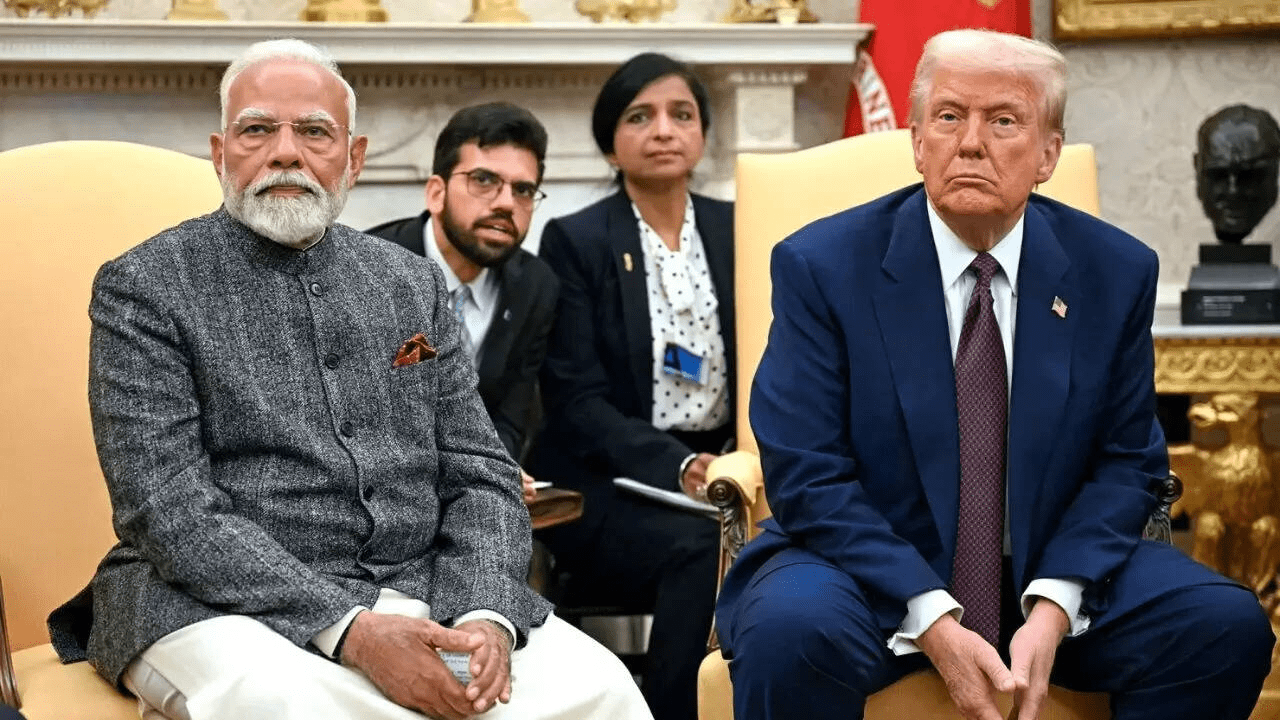
Now the world’s most influential leaders are coordinating to prevent a global energy collapse. On Tuesday, March 24, 2026, US President Donald Trump called Prime Minister Narendra Modi to discuss the rapidly escalating West Asia conflict. Therefore, this marks their first direct conversation since the war broke out on February 28. Currently, the primary objective is ensuring the Strait of Hormuz remains “open, secure, and accessible.” Thus, both leaders agreed that any prolonged disruption to this vital waterway would have catastrophic consequences for the global economy.
Also Read | Imran Khan and Bushra Bibi Sentenced to 17 Years in Jail
At a Glance:
The Call: First direct dialogue between Trump and Modi regarding the 2026 Middle East war.
Primary Focus: Keeping the Strait of Hormuz open for global oil and gas trade.
Diplomatic Chain: Follows a high-level talk between S. Jaishankar and US Secretary of State Marco Rubio.
Regional Outreach: PM Modi also consulted with Sri Lankan President Anura Kumara Dissanayake.
India’s Stance: Reaffirming support for “de-escalation and restoration of peace” at the earliest.
In This Article:
The Hormuz Mandate: Why Trump and Modi Are Aligned
Diplomatic Heavy Lifting: Jaishankar’s Meetings with Iran and the GCC
Regional Energy Security: The India-Sri Lanka Partnership
India as a Neutral Power: Balancing the US, Israel, and Iran
Frequently Asked Questions (FAQs)
Also Read | Imran Khan and Bushra Bibi Sentenced to 17 Years in Jail
The Hormuz Mandate: Why Trump and Modi Are Aligned
Now the strategic importance of the Strait of Hormuz cannot be overstated. Because this narrow waterway carries a significant portion of the world’s energy supply, its closure would trigger an immediate global recession. Therefore, Trump and Modi used their first call of the crisis to send a clear message to regional actors.
First, US Ambassador Sergio Gor confirmed that the leaders discussed the “importance of keeping the Strait open.” Next, PM Modi emphasized that accessibility is “essential for the whole world.” Thus, the conversation underscores a shared commitment to maritime stability. Currently, the US and India are looking to prevent the conflict from evolving into a permanent naval blockade.
Diplomatic Heavy Lifting: Jaishankar’s Meetings with Iran and the GCC
Now while the heads of state are talking, India’s foreign ministry is working the ground. External Affairs Minister S. Jaishankar has been engaged in “marathon” diplomacy over the last 48 hours. Therefore, India is positioning itself as a bridge between conflicting parties.
First, Jaishankar spoke with US Secretary of State Marco Rubio to align on security protocols. Next, he met with envoys from the six Gulf Cooperation Council (GCC) nations, whose territories host critical US military facilities. Finally, he followed up with a meeting with the Iranian Ambassador, Mohammad Fathali. Thus, India is utilizing its unique “good working relationship” with all key players—the US, Israel, and Iran—to push for a ceasefire.
Also Read | Imran Khan and Bushra Bibi Sentenced to 17 Years in Jail
Regional Energy Security: The India-Sri Lanka Partnership
Now the ripples of the West Asia crisis are being felt across South Asia. Therefore, PM Modi also reached out to Sri Lankan President Anura Kumara Dissanayake. Because both nations rely heavily on energy imports, the “evolving situation” poses a direct threat to their domestic stability.
First, the leaders reviewed progress on bilateral energy cooperation initiatives. Next, they reaffirmed their commitment to “enhancing regional security” in the face of shared challenges. Thus, the call highlights how the West Asia war is forcing neighboring countries to integrate their energy grids and security frameworks more tightly than ever before.
India as a Neutral Power: Balancing the US, Israel, and Iran
Now India finds itself in a delicate diplomatic position. Although the Prime Minister visited Tel Aviv just two days before the air strikes began, India has maintained open lines with Tehran. Therefore, the international community is watching to see if New Delhi can broker a de-escalation.
First, India’s support for “de-escalation” is consistent with its long-standing foreign policy. Next, the 2026 conflict presents a unique challenge, as Indian statements since February 28 have been perceived by some as weighing against Tehran. Thus, the call with President Trump is a pivotal moment in determining if India will act as a silent partner to the US or an active independent mediator.
Frequently Asked Questions (FAQs)
What was the main topic of the Trump-Modi call? The leaders primarily discussed the West Asia conflict and the urgent need to keep the Strait of Hormuz open for global trade.
Why is the Strait of Hormuz so important? It is a vital choke point for the world’s oil and gas supply. A closure could lead to a global energy crisis and a massive spike in fuel prices.
When did the current West Asia conflict begin? The current conflict broke out on February 28, 2026.
Who else did PM Modi speak with about the crisis? He spoke with Sri Lankan President Anura Kumara Dissanayake to discuss regional energy security and joint challenges.
What is India’s official position on the war? India officially supports the “restoration of peace at the earliest” and the de-escalation of military hostilities.
Also Read | Imran Khan and Bushra Bibi Sentenced to 17 Years in Jail
End….