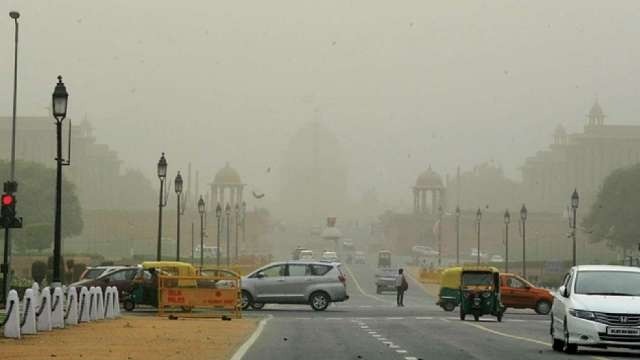
Residents of the national capital are packing away their heavy woolens earlier than expected this year. As of Monday, February 16, 2026, Delhi is witnessing a sharp temperature spike, with the mercury consistently hovering 4°C above the seasonal average.
While February is typically a month of transition, the current “heat pulse” suggests that the city is skipping the pleasant spring window and heading directly into early summer. On Sunday, the city recorded a maximum of 28.5°C, and forecasts indicate the 30°C barrier could be breached before the week is out.
Also Read | Imran Khan and Bushra Bibi Sentenced to 17 Years in Jail
February Heat: Breaking Down Delhi’s 30°C Surge
The first 15 days of the month have been an anomaly. According to an analysis of IMD data:
-
The Mean Maximum: Delhi’s daytime average for Feb 1–15 stood at 25.05°C, compared to the Long Period Average (LPA) of 23.14°C.
-
Consistent Warmth: The maximum temperature stayed above normal for 14 out of the first 15 days.
-
Night Relief: Despite the hot afternoons, minimum temperatures remain manageable, recorded at 11.1°C on Monday—roughly in line with the seasonal norm.
The Role of Western Disturbances: Feeble Winds and Dry Plains
The primary culprit for this premature warmth is the absence of “active” Western Disturbances (WDs). These extra-tropical storms, which originate in the Mediterranean, are the traditional source of Delhi’s winter rain and cooling winds.
-
The “Feeble” Factor: A weak WD is expected to affect the Himalayan belt starting February 17. While it may bring snow to Kashmir and Himachal Pradesh, its impact on the plains will be restricted to cloudy skies and a mere 1–2°C dip in temperature.
-
Dry Spell: In the absence of moisture-laden winds, the dry north-westerly winds are allowing the sun to bake the northern plains unimpeded.
Also Read | Imran Khan and Bushra Bibi Sentenced to 17 Years in Jail
Investigative Angle: Is This the New Normal for North India?
Our investigation into regional climate shifts reveals a concerning multi-year trend. While 2024 was relatively cooler, 2021, 2023, and now 2026 have all seen February maximums cross the 32°C mark by the third week.
The Strategy: Meteorologists like Mahesh Palawat of Skymet suggest that the subtropical westerly jet stream is shifting northward. This displacement prevents colder air from reaching the NCR, effectively shortening the Indian winter by 15–20 days. If this pattern holds, the “Red Gold” (Saffron) and wheat yields in the northern belt could face heat-stress challenges as early as next month.
Also Read | Imran Khan and Bushra Bibi Sentenced to 17 Years in Jail
[DELHI FEBRUARY TEMPERATURE COMPARISON (2021-2026)]
| Year | Feb 1-15 Mean Max | Highest Max in Feb | Date of Peak Heat |
| 2026 | 25.05°C | 28.6°C (so far) | Feb 10 |
| 2025 | 25.6°C | 32.4°C | Feb 26 |
| 2024 | 22.0°C | 29.7°C | Feb 19 |
| 2023 | 25.8°C | 33.6°C | Feb 21 |
| 2021 | 25.8°C | 33.2°C | Feb 26 |
Regional Impact: Beyond the National Capital
The heat isn’t confined to Delhi. The IMD has noted similar above-normal anomalies across Punjab, Haryana, Rajasthan, and even the lower Himalayan regions.
-
Punjab & Haryana: Maximums are already touching 27°C, threatening the grain-filling stage of the Rabi wheat crop.
-
Kashmir: While the hills expect light snow this week, the long-term “snowfall deficit” remains a critical concern for water security in the summer months.
Next Steps
If you are a resident of Delhi-NCR, you should prepare for poor air quality (AQI ~216) over the next few days as weak wind speeds fail to disperse pollutants. Furthermore, if you are planning outdoor activities, you should monitor the IMD’s Wednesday forecast for isolated drizzle updates, though you should carry light summer wear as daytime temperatures will likely rebound to 29°C by Friday.
Also Read | Imran Khan and Bushra Bibi Sentenced to 17 Years in Jail
End…