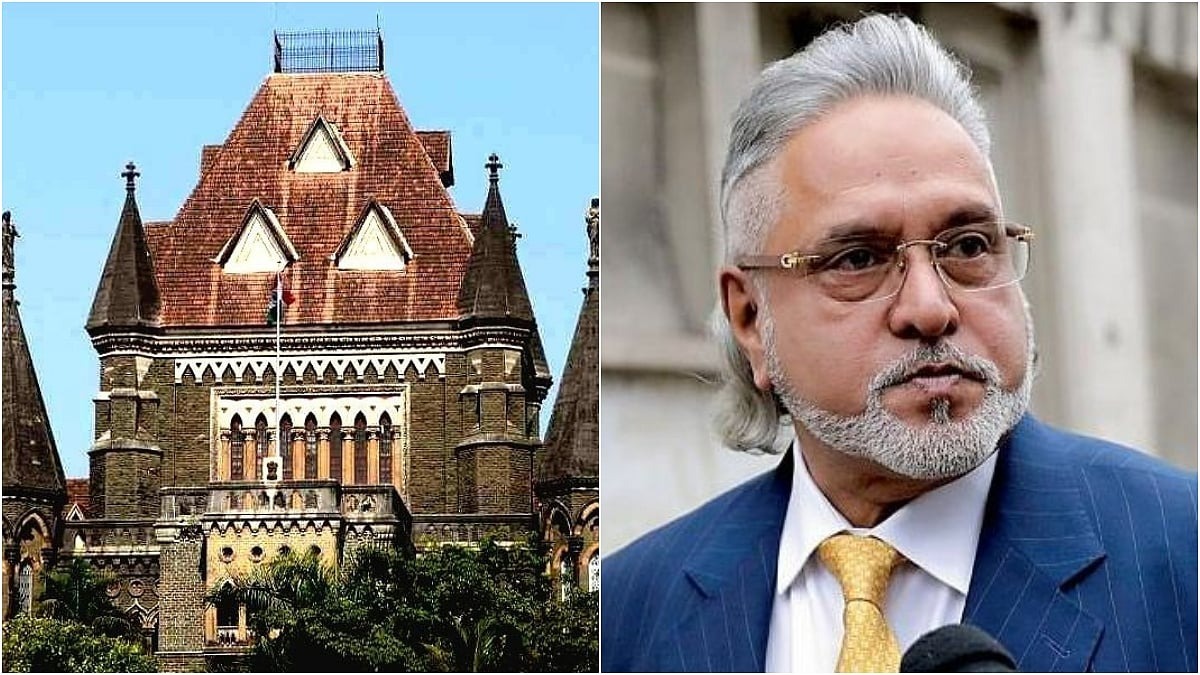
Fugitive businessman Vijay Mallya informed the Bombay High Court Wednesday that he cannot provide a timeline for his return to India. The 70-year-old former liquor baron cited restrictive orders from UK courts and the revocation of his Indian passport as insurmountable barriers.
The statement, submitted through senior counsel Amit Desai, follows a stern directive from a bench of Chief Justice Shree Chandrashekhar and Justice Gautam Ankhad. Last week, the court made it clear that Mallya’s challenge to his “fugitive” status would not be heard until he returned to the country.
Also Read | Imran Khan and Bushra Bibi Sentenced to 17 Years in Jail
The “Legal Restrictions” Defense
Mallya has been based in the United Kingdom since March 2016. In his latest submission, he argued that courts in England and Wales have explicitly prohibited him from leaving their jurisdiction. Therefore, he remains unable to apply for or possess any international travel document.
“Mallya is not permitted to leave or attempt to leave England and Wales,” Desai read out the statement Wednesday. Meanwhile, his Indian passport was revoked by the government shortly after his departure. Thus, Mallya contends that he is trapped in a legal “Catch-22” where India demands his return while the UK prevents it.
The Fugitive Economic Offender Act Challenge
The businessman has filed two petitions before the high court. One contests the specialized court order declaring him a Fugitive Economic Offender (FEO) in January 2019. The other challenges the constitutional validity of the Fugitive Economic Offenders Act itself.
Next, his legal team argued that his physical presence is not a prerequisite for the court to hear his legal arguments. Desai told the bench that if Mallya were to appear in India, the very statutes being challenged would render the current proceedings irrelevant. In fact, Mallya is accused of defaulting on loans amounting to over ₹9,000 crore for the defunct Kingfisher Airlines.
Court Demands vs. Defense Arguments
The High Court remains focused on the “fugitive” tag, which allows the government to confiscate properties even before a conviction. The bench reiterated that the law is designed specifically for those who evade the Indian justice system. Therefore, Mallya’s absence is the primary reason the FEO Act was invoked in the first place.
However, the defense maintains that money laundering charges under the PMLA (Prevention of Money Laundering Act) should be heard on their merits regardless of the petitioner’s location. Still, the Union government is expected to argue that Mallya is using the UK legal system as a shield to avoid trial in India.
Also Read | Imran Khan and Bushra Bibi Sentenced to 17 Years in Jail
Reality Check
Mallya claims he “cannot” leave the UK. Still, the Indian government has been seeking his extradition for years, which the UK courts have already cleared in principle. Therefore, the “bar on leaving” is likely related to his ongoing asylum or confidential legal proceedings rather than a simple travel ban. In fact, Mallya has exhausted almost all public legal avenues to prevent his return. Thus, the current statement appears to be another attempt to stall the seizure of his Indian assets.
The Loopholes
The FEO Act contains a loophole where a person can have their “fugitive” status revoked if they return and present themselves before the court. In fact, Desai used this very point to argue that Mallya’s presence is unnecessary for the challenge. Therefore, if the court hears the case in his absence, Mallya avoids the risk of immediate arrest upon landing. Still, the Act’s primary “teeth” are the property confiscations, which Mallya is desperate to halt before they are auctioned by banks.
Also Read | Imran Khan and Bushra Bibi Sentenced to 17 Years in Jail
What This Means for You
If you are a taxpayer or a customer of the public sector banks involved, realize that the recovery of the ₹9,000 crore remains stalled in high-court rooms. First, monitor the next hearing in March to see if the Union government files a rebuttal regarding the UK “travel ban.” Then, track the progress of property auctions linked to Kingfisher Airlines, which are often contingent on these legal rulings.
Finally, understand that the FEO Act is becoming a standard tool for the government to handle white-collar fugitives. You should follow this case as it will set a precedent for other high-profile escapees like Nirav Modi and Mehul Choksi. Before the end of the year, expect the Bombay High Court to pass a definitive order on whether a “fugitive” has the right to be heard remotely.
What’s Next
The Bombay High Court has directed the Union government to file a formal response to Mallya’s latest statement. Then, the matter will be listed for a final hearing next month. Finally, a separate ruling on the constitutional validity of the FEO Act is expected by late 2026.
Also Read | Imran Khan and Bushra Bibi Sentenced to 17 Years in Jail
End…