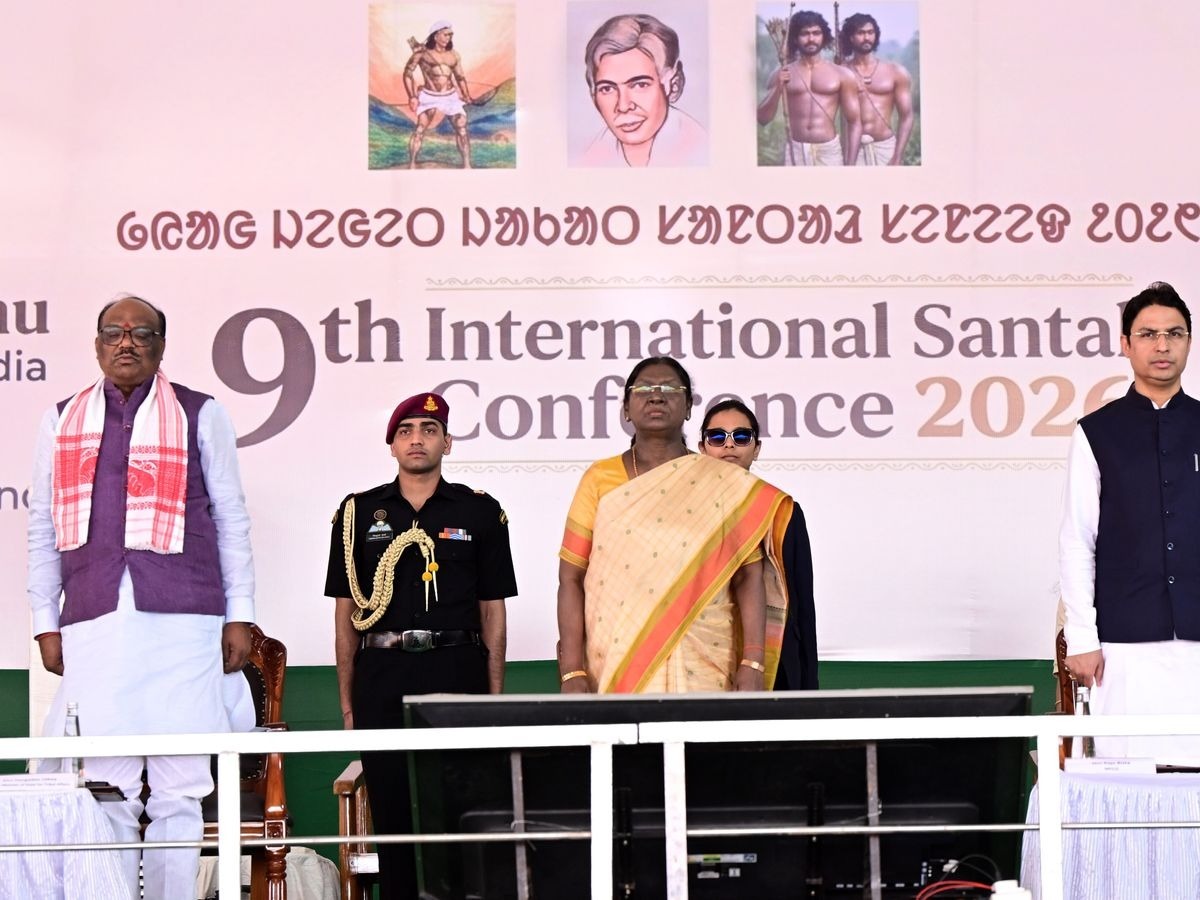
The administrative friction between “Delhi and Calcutta” has flared into a fresh constitutional standoff. On Saturday, March 14, 2026, the West Bengal government effectively blocked a central move to summon a top IAS officer to the national capital. By transferring Darjeeling DM Manish Mishra to the state Home Department, Chief Minister Mamata Banerjee has pre-emptively acted against a “Central Deputation” request that arose from a high-profile controversy involving the President of India.
This move is the latest in a series of federal disputes where the state government utilizes its power over cadre management to resist what it views as the Centre’s overreach into state-level administration.
Also Read | Imran Khan and Bushra Bibi Sentenced to 17 Years in Jail
The Siliguri Protocol Row: President’s Allegations
The genesis of this transfer lies in the recent visit of President Droupadi Murmu to North Bengal for an International Santhal Council conference.
-
The Complaint: The President alleged a “protocol breach,” noting that no state minister received her at the airport.
-
The Logistics: She also claimed the state denied the original venue requested and intentionally kept attendance low, describing the situation as an attempt to “stop people from coming.”
The Deputation Dilemma: State vs. Centre Power
In response to the alleged lapses, the Centre sent a letter to the state on Thursday expressing intent to deploy the Darjeeling DM and Siliguri CP on central deputation.
-
The State’s Veto: Nabanna held an emergency meeting and decided to transfer the DM internally rather than releasing him to the Union.
-
Federal Structure: While the Centre’s decision technically prevails in disputes over IAS/IPS transfers, states often refuse to “release” officers, leading to a legal and administrative stalemate.
Historical Context: Echoes of the 2021 Nadda Convoy Case
This isn’t the first time Bengal has locked horns with the Centre over officer transfers.
-
The 2021 Precedent: Ahead of the previous Assembly elections, the Centre ordered three IPS officers to Delhi after BJP President J.P. Nadda’s convoy was attacked.
-
The Result: The state refused to release them, and the Centre eventually cancelled the orders after the elections concluded. This 2026 move follows a similar playbook.
Also Read | Imran Khan and Bushra Bibi Sentenced to 17 Years in Jail
The “Routine” Shuffle: Murshidabad and Darjeeling
To minimize the appearance of a direct confrontation, the state also transferred Nitin Singhania, the Murshidabad DM.
-
The New Face: Sunila Agarwal takes over as the Darjeeling DM.
-
The Message: Bureaucrats suggest the Murshidabad transfer was a “decoy” to make the Darjeeling move look like a regular administrative reshuffle rather than a specific response to the Centre’s pressure.
Reality Check
The state government is legally within its rights to transfer its officers. Still, by refusing to send the DM on central deputation, the state is risking a direct constitutional confrontation with the President’s office. Therefore, while this might be a tactical win for Nabanna, it could lead to the Union government invoking harsher service rule provisions that have remained dormant for the sake of the federal structure. In fact, if the Siliguri CP is also transferred in the coming days, it will confirm a total breakdown in administrative cooperation.
The Loopholes
The state says the transfer is “routine.” In fact, this is a “Cadre Control Loophole”—as long as the state keeps an officer in a new internal post, they can claim the officer is “indispensable” for state duties, thereby delaying or denying their release for central deputation. Therefore, the officer remains “protected” by the state government. Still, the “Centre’s Precedence Loophole” remains; if the Centre insists, the officer could find themselves in a professional limbo where neither the state nor the Centre recognizes their specific authority.
Also Read | Imran Khan and Bushra Bibi Sentenced to 17 Years in Jail
What This Means for You
If you live in North Bengal, expect a period of administrative transition. First, realize that a change in DM and potentially the CP just weeks before an election can impact the speed of local governance. Then, if you are a follower of Indian politics, understand that tribal welfare (the focus of the President’s visit) will be a massive election theme, with both sides accusing each other of neglect or politicization.
Finally, understand that federalism is being tested. You should watch for whether the Centre escalates this to a legal challenge in the High Court. Before the April polls, check if Sunila Agarwal implements any new “reach-out” measures to tribal communities to counter the President’s narrative.
What’s Next
Expect the Union Home Ministry to respond to Nabanna’s transfer order by Monday. Then, look for a potential transfer of the Siliguri Police Commissioner to complete the state’s defensive reshuffle. Finally, expect Mamata Banerjee to address this “interference” in her upcoming campaign rallies across North Bengal.
Also Read | Imran Khan and Bushra Bibi Sentenced to 17 Years in Jail
End…