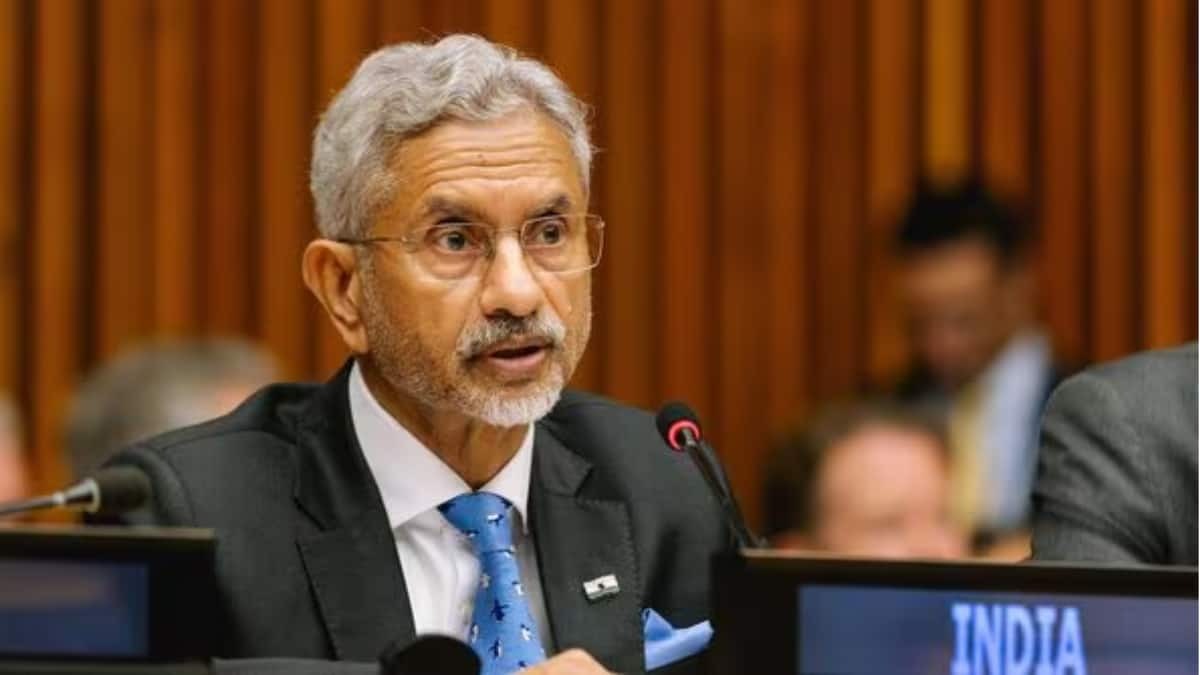
India’s masterclass in “Strategic Autonomy” has been put under the global microscope. On Monday, March 16, 2026, EAM S. Jaishankar addressed speculations regarding what New Delhi might have “given up” to secure safe passage for its energy tankers in the war-torn Strait of Hormuz. His answer was blunt: nothing.
Dismissing rumors of a secret deal or a “quid pro quo” arrangement, Jaishankar emphasized that India’s ability to move ships through the world’s most dangerous bottleneck is a result of decades of diplomatic “capital” built with Tehran. As $100-per-barrel oil threatens the global economy, India’s success in navigating the Iranian blockade has become a case study for world leaders.
Also Read | Imran Khan and Bushra Bibi Sentenced to 17 Years in Jail
The “No-Exchange” Diplomacy: India’s Unique Path
Jaishankar clarified that the recent passage of two LPG carriers was not a trade-off.
-
Beyond Transactionalism: “It’s not an exchange issue,” Jaishankar stated. “India and Iran have a relationship.”
-
The Basis: He cited a “history of dealing with each other” as the foundation that allowed him and PM Modi to engage directly with President Pezeshkian.
-
Direct Yields: He confirmed that communication continues and that he would naturally persist with this approach as long as it yields results for India’s energy security.
Status of Indian Vessels: Four Home, 22 Still Waiting
While the headlines celebrate the breakthrough, the crisis is far from over.
-
Individual Movement: There is no “green light” for all Indian ships. Each vessel is vetted and moved individually to ensure safety.
-
The Count: So far, four Indian-flagged vessels have successfully transited the war zone.
-
The Backlog: Approximately 22 Indian-flagged vessels remain stranded on the west side of the Gulf, awaiting their turn to navigate the “electronic fog” and physical threats of the Strait.
The Trump Pressure: Alliances vs. Direct Talks
India’s diplomatic approach stands in stark contrast to Washington’s military-first strategy.
-
Warship Protection: President Donald Trump is moving to send warships to the region to forcibly “protect” the Strait.
-
The “Beneficiary” Tax: Trump has explicitly called on allies to provide military aid, stating it is “only appropriate” that those who benefit from the oil flow help secure the waterway.
-
The Conflict: Iran has warned it is “ready for a long war” and has specifically targeted US and Israeli assets, while leaving “friendly” nations a narrow window of passage.
Also Read | Imran Khan and Bushra Bibi Sentenced to 17 Years in Jail
European Replication: Can the EU Copy India?
Jaishankar was asked if European capitals could replicate India’s success.
-
Merit-Based: He noted that each relationship stands on its own merits, implying that Europe’s alignment with US/Israeli interests might make a similar “deal” difficult.
-
Open to Sharing: However, he offered to share India’s “approach” with EU capitals, positioning India as a potential mediator or advisor in the crisis.
Reality Check
Jaishankar’s assertion that there was “nothing in exchange” is a powerful diplomatic statement. Still, in the world of realpolitik, “relationships” are often maintained through non-public cooperation—such as India’s continued purchase of Iranian energy or its role as a neutral diplomatic backchannel. Therefore, while no specific favour was traded for these ships, the safe passage is a “dividend” of India’s long-standing refusal to join US-led sanctions. In fact, if India were to join Trump’s proposed maritime coalition, this “relationship” would likely evaporate instantly.
The Loopholes
The Iranian FM says the Strait is “open to all.” In fact, this is a “Flagging Loophole”—it is only open to ships whose “flag state” has a positive relationship with Tehran. Therefore, a ship carrying Indian oil that is flagged in a Western country (like Liberia or the Marshall Islands) remains a target. Still, the “Blanket Arrangement Loophole” remains; by refusing a “blanket” deal, Iran keeps India in a state of constant negotiation, ensuring New Delhi remains “engaged” and sympathetic to Iranian concerns throughout the conflict.
Also Read | Imran Khan and Bushra Bibi Sentenced to 17 Years in Jail
What This Means for You
If you are tracking fuel prices, expect volatility to remain despite the safe passage news. First, realize that 4 ships out of 26 is a slow recovery; the “bottleneck” is still very much in place. Then, if you are an investor, understand that Jaishankar’s “Relationship Diplomacy” is the only thing keeping Indian petrol pumps from going dry.
Finally, understand that the US military response is the new “X” factor. You should watch if Trump’s warships begin active escort missions; this could trigger a full-scale maritime war that would nullify India’s diplomatic “green channel.” Before you plan any long-distance travel, remember that the “third week of war” is often when supply chain shocks finally hit the retail level.
What’s Next
Expect another 2-3 Indian ships to attempt the crossing by Thursday. Then, look for a meeting in Brussels where EU leaders might officially discuss the “Indian Approach” mentioned by Jaishankar. Finally, expect oil prices to hit $105 if the rumored “massive explosion near Dubai airport” (following an Iranian drone attack) is confirmed to have hit energy infrastructure.
Also Read | Imran Khan and Bushra Bibi Sentenced to 17 Years in Jail
End….