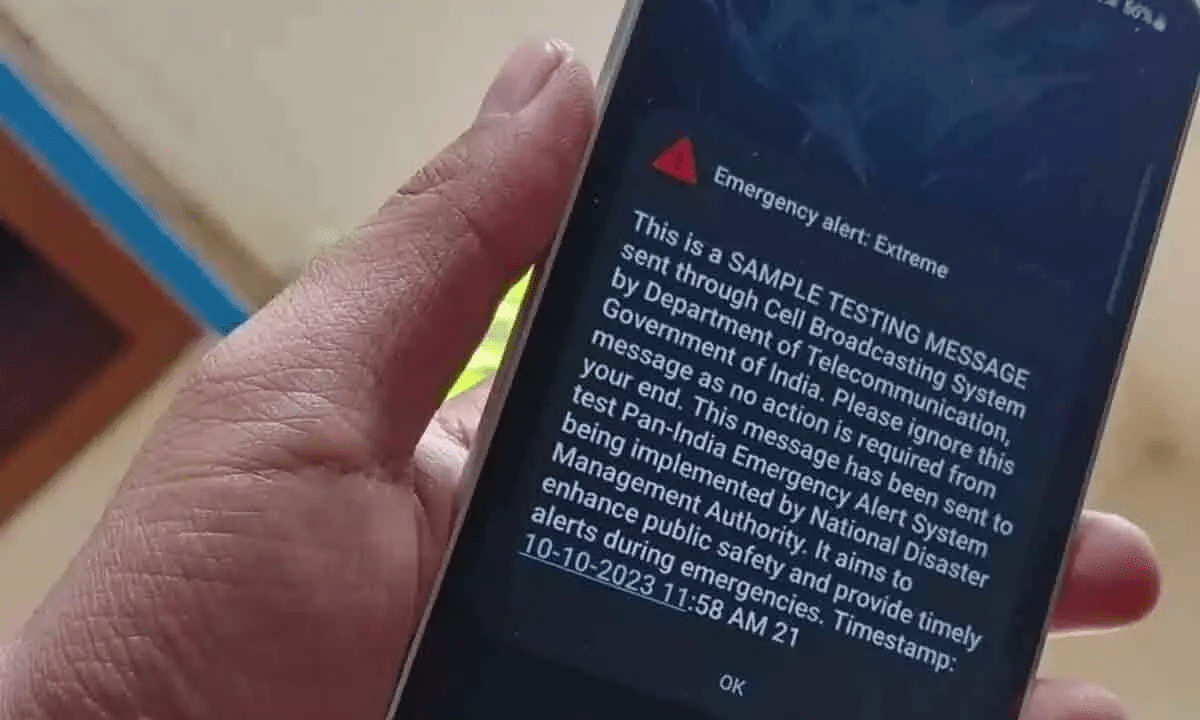
Now the Government of India has reached a major safety milestone. The Department of Telecommunications and NDMA conducted a Nationwide Mobile Alert Drill this Saturday, May 2. Therefore, millions of mobile users received a loud “Extremely Severe Alert” notification. Meanwhile, the trial marks the launch of the indigenous SACHET system. Thus, India now has a state-of-the-art disaster warning network for all citizens.
Also Read | Imran Khan and Bushra Bibi Sentenced to 17 Years in Jail
The Saturday Siren: Why Your Phone Buzzed at Noon
Now many citizens felt a moment of panic today. Millions of smartphones across the country emitted a loud siren and vibration. Therefore, the Nationwide Mobile Alert Drill caught the immediate attention of the public.
First, the message was labeled as an “Extremely Severe Alert.” Next, it clearly stated that it was only a test message. Thus, the government ensured that no public action was required.
Meanwhile, the trial covered every corner of the nation. Therefore, even users in remote areas reported receiving the high-pitched beep.
So what was the goal?
First, the government wanted to test the reach of the new infrastructure. Next, they aimed to check if the alerts could reach phones even in “Do Not Disturb” mode. Thus, the Nationwide Mobile Alert Drill served as a stress test for the digital network.
Finally, the trial was deemed a massive success by the DoT.
SACHET: The Homegrown Power Behind the Alert
Now we must look at the technology driving this change. The system operates under the SACHET platform. Therefore, India has moved away from relying on foreign software for its primary safety warnings.
First, the Centre for Development of Telematics (C-DOT) developed this Integrated Alert System. Next, it was designed specifically for India’s diverse and dense population. Thus, it can handle billions of connections simultaneously without crashing.
Meanwhile, SACHET is an indigenous “Made in India” solution. Therefore, it represents a significant step toward technological sovereignty.
So what makes SACHET special?
First, it is a multi-dissemination platform. Next, it integrates with mobile networks, TV, radio, and even railway display systems. Thus, it ensures that a warning reaches every possible medium.
Finally, the SACHET app is now available for all citizens to download for personalized weather updates.
Cell Broadcast vs. Traditional SMS: What’s the Difference?
Now there is a major technical difference between a text message and today’s alert. The Nationwide Mobile Alert Drill used “Cell Broadcast” technology. Therefore, it is much more efficient than a standard SMS.
First, traditional SMS alerts can be delayed by network congestion. Next, they are sent individually to each number. Thus, sending 100 million texts could take hours.
Meanwhile, Cell Broadcast works like a radio station.
First, it sends the alert to every phone connected to a specific cell tower at once. Next, it overrides the silent mode and “Do Not Disturb” settings. Thus, the warning is immediate and impossible to ignore.
Finally, Cell Broadcast is not affected by mobile network traffic during a crisis.
Also Read | Imran Khan and Bushra Bibi Sentenced to 17 Years in Jail
The Official Launch: Amit Shah and Jyotiraditya Scindia
Now the Nationwide Mobile Alert Drill coincided with a major political event. Union Home Minister Amit Shah and Union Communications Minister Jyotiraditya Scindia officially launched the system today. Therefore, the drill was a live demonstration of the nation’s new capabilities.
First, the ministers emphasized that “Alert citizens, safe nation” is the new motto. Next, they highlighted how this system will save thousands of lives during cyclones. Thus, the project is a high-priority national security asset.
Meanwhile, Jyotiraditya Scindia noted that the system is now operational in 36 states and union territories.
So what does the leadership expect?
First, they want a 100% reach within seconds of a disaster. Next, they intend to expand the system to include alerts for localized man-made hazards. Thus, the government is building a digital shield for every Indian.
Finally, the ministers thanked C-DOT for delivering the system on schedule.
Global Standards: Adopting the Common Alerting Protocol
Now India has ensured that its system is internationally compatible. The Nationwide Mobile Alert Drill used the Common Alerting Protocol (CAP). Therefore, our warnings follow the recommendations of the International Telecommunications Union (ITU).
First, CAP provides a standardized format for emergency messages. Next, it allows for seamless communication between different agencies like IMD and NDMA. Thus, the entire disaster management workflow is now automated.
Meanwhile, this standardization makes it easier for international visitors in India to understand the alerts.
So why use a global standard?
First, it allows India to participate in global early-warning networks. Next, it ensures that mobile manufacturers can easily bake the alert support into their software. Thus, whether you use an iPhone or an Android, you will get the alert.
Finally, this adoption places India among the top nations with advanced warning systems.
Disaster Coverage: From Natural to Human-Caused Emergencies
Now the scope of this system is incredibly broad. While the Nationwide Mobile Alert Drill was just a test, the real system will cover serious threats. Therefore, citizens should know when to take these beeps seriously in the future.
First, natural calamities like earthquakes and tsunamis are primary triggers. Next, the system will warn about severe thunderstorms and lightning strikes. Thus, it covers the most common environmental risks in India.
Meanwhile, human-caused emergencies are also included.
First, the system can send alerts regarding gas leaks or chemical dangers. Next, it can be used for public safety warnings during large-scale accidents. Thus, SACHET is a comprehensive guardian for all types of crises.
Finally, the alerts can be localized down to a specific neighborhood or village.
Also Read | Imran Khan and Bushra Bibi Sentenced to 17 Years in Jail
NDMA’s 134 Billion SMS Milestone
Now we must appreciate the work already done by the NDMA. Before the Nationwide Mobile Alert Drill, they relied heavily on traditional SMS. Therefore, they have already built a massive database and network.
First, authorities have sent over 134 billion SMS alerts to date. Next, these messages have been distributed in more than 19 Indian languages. Thus, the reach of the disaster management agencies is already legendary.
Meanwhile, the shift to Cell Broadcast is an evolution, not a replacement.
First, SMS will still be used for detailed follow-up information. Next, Cell Broadcast will handle the initial “siren” and immediate warning. Thus, the two technologies will work together to keep India safe.
Finally, the multi-language support ensures that every citizen understands the danger in their mother tongue.
Future of SACHET: Mass Communication for a Safer Nation
Now today’s drill was just the beginning. The future of SACHET involves making mass communication even smarter. Therefore, the Nationwide Mobile Alert Drill is the foundation for a much larger project.
First, the system will soon include interactive features. Next, it might allow users to send “Safe” signals back to a central hub. Thus, the government can track the effectiveness of evacuations in real-time.
Meanwhile, the integration of AI will help predict which areas need the most urgent warnings.
So what should you do if you missed the alert today?
First, check if your phone settings allow “Wireless Emergency Alerts.” Next, ensure your operating system is updated to the latest version. Thus, you will be prepared when the next trial—or a real emergency—occurs.
Finally, the goal is to have zero deaths due to a lack of communication.
Common Questions (FAQ)
1. Why did I receive a loud emergency alert on my phone today? Now it was part of the Nationwide Mobile Alert Drill. Therefore, the government was testing its new SACHET indigenous technology.
2. Do I need to do anything after receiving the “Extremely Severe Alert”? First, no. The message explicitly stated it was a test. Next, no public action is required during the drill phase. Thus, you can go back to your day normally.
3. Will the alert still beep if my phone is on silent? Meanwhile, yes. The Cell Broadcast technology used in the Nationwide Mobile Alert Drill has the power to override silent and “Do Not Disturb” settings.
4. What is SACHET? So SACHET is an Integrated Alert System developed by C-DOT. First, it stands for an indigenous digital platform. Next, it coordinates warnings across various media.
5. Which disasters will this system warn me about? First, it covers earthquakes, tsunamis, and cyclones. Next, it also includes man-made dangers like gas leaks or chemical spills. Thus, it is a versatile safety tool.
6. Is this system available in my local language? Finally, yes. The alerts are programmed to be sent in more than 19 Indian languages. Therefore, you will receive information in the language spoken in your region.
Also Read | Imran Khan and Bushra Bibi Sentenced to 17 Years in Jail
End…