

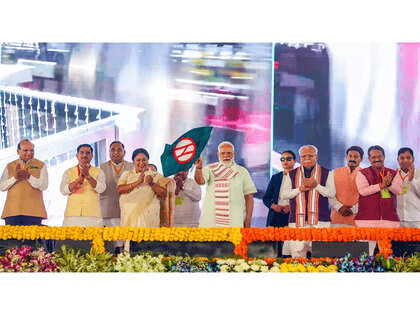
Now the Indian Parliament stands at the threshold of a historic transformation. Prime Minister Narendra Modi issued a powerful appeal Thursday for the Women Reservation Act amendment 2026. First, he called on all MPs to support the ‘Nari Shakti Vandan Adhiniyam’ during a special session. Therefore, the government plans to implement 33 per cent reservation as early as the 2029 elections. This move requires a massive expansion of legislative seats across the country. Meanwhile, the Prime Minister emphasized that society only progresses when women progress.
Also Read | Imran Khan and Bushra Bibi Sentenced to 17 Years in Jail
The Special April 16 Session: What to Expect
Now the Budget Session of Parliament has taken a surprising turn. The government has extended the sitting for a special three-day window. First, the House will convene on April 16 to discuss the Women Reservation Act amendment 2026. Therefore, the focus is purely on empowering “Nari Shakti” before the next poll cycle.
Next, PM Modi has urged all political parties to rise above their differences. He believes this is a moment of national importance that cannot be deferred. Thus, the April 16-18 sitting will likely see intense debates on seat distribution.
Meanwhile, the Prime Minister considers this among the most special occasions of his life. Therefore, the government is treating this as a civilisational milestone. So the entire nation is watching the capital next week.
816 Seats: The New Shape of the Lok Sabha
So how exactly will the reservation work in practice? The proposed amendment introduces a massive structural change. First, the total number of Lok Sabha seats will jump to 816. Therefore, the current 543-seat limit will finally be retired.
Next, exactly 273 of these seats will be reserved for women. This ensures that women hold one-third of the power in the lower house. Thus, the “Nari Shakti” vision becomes a mathematical reality.
Meanwhile, this expansion aims to provide better representation for a growing population. Therefore, the new Lok Sabha will be more inclusive than ever before. So every citizen will have a more direct stake in shaping the nation’s destiny.
Why the 2011 Census is Being Used Now
Now the technical details of the “delimitation” are very important. Originally, the 2023 law required the completion of the 2027 Census. Therefore, the reservation would have been delayed until 2034.
First, the government has decided to fast-track the process. They will now use the 2011 Census data to redraw constituencies. Thus, the implementation can happen in time for the 2029 elections.
Next, this shift removes a major hurdle for women’s representation. Therefore, the delay of nearly a decade has been successfully avoided. Meanwhile, a similar exercise will be carried out for all state assemblies. So the entire legislative map of India is about to change.
Also Read | Imran Khan and Bushra Bibi Sentenced to 17 Years in Jail
Nari Shakti: Beyond Legislative Exercise
So why is PM Modi pushing so hard for this move now? In a signed article, he explained that this is not just about law. First, it is a reflection of the aspirations of crores of women. Therefore, the amendment honors their contributions to science, tech, and the arts.
Next, the PM noted that women are now at the forefront of progress. They serve in the armed forces and lead massive corporations. Thus, their absence in high-level decision-making is “unfortunate.”
Meanwhile, he argued that women bring unique insights to governance. Therefore, their participation improves the quality of public discourse. So the Women Reservation Act amendment 2026 is about enriching Indian democracy itself.
The ‘Vertical’ Reservation Model Explained
Now let’s look at the “vertical basis” of seat allocation. This ensures that the quota is fair for all sections of society. First, the 273 reserved seats will include specific slots for SCs and STs. Therefore, intersectional representation is guaranteed.
Next, this prevents the reservation from becoming a tool for only one demographic. Thus, women from marginalized communities will also find a voice in Parliament.
Meanwhile, the pro-rata basis will also apply to state assemblies. Therefore, every state will see a proportional increase in women leaders. So the model aims for a balanced and inclusive legislative body.
Overcoming Decades of Political Gridlock
So why did this take so many decades to happen? Previous governments made repeated efforts to pass similar bills. First, committees were formed and drafts were introduced as early as the 1990s. Therefore, the concept of a quota is not new.
Next, those efforts never saw the light of day due to a lack of consensus. Thus, the bill remained stuck in political limbo for nearly thirty years.
Meanwhile, the 2023 passage of the original Act broke the silence. Therefore, the current amendment is the final step toward actual implementation. So the PM is calling on this generation of MPs to finish what others started.
Also Read | Imran Khan and Bushra Bibi Sentenced to 17 Years in Jail
Global Headlines: The US-Iran Truce Context
Now while India focuses on internal reforms, the world is shifting. Recent reports suggest a major breakthrough in the Middle East. First, Mojtaba Khamenei helped cut a truce deal with the US. Therefore, global tensions are easing as India prepares its legislative session.
Next, Israel has expressed unhappiness over being kept in the dark. Thus, the geopolitical landscape remains complex during this historic week.
Meanwhile, PM Modi’s call for “unity” in India stands in contrast to global friction. Therefore, he wants India to show that it can rise above differences for national progress. So the timing of the Women Reservation Act amendment 2026 highlights India’s stability.
The Road to the 2029 General Elections
So what happens after the bill passes on April 18? The road to 2029 will involve a massive logistical effort. First, the Election Commission must finalize the new boundaries. Therefore, the delimitation exercise will be the largest in history.
Next, political parties must identify and train thousands of women candidates. Thus, the political landscape will see a massive influx of new faces.
Meanwhile, the Assembly elections in several states will also adopt the new quota. Therefore, the “Nari Shakti” impact will be felt from the local level to the national level. So the next three years will be the most transformative for Indian women in politics.
Common Questions Answered
What is the Women Reservation Act amendment 2026? Now it is a plan to fast-track the 33% quota for women by using 2011 Census data. Therefore, it can be implemented by 2029.
How many seats will the Lok Sabha have? First, the total number of seats will increase to 816. Thus, 273 of these will be reserved for women.
When is the special Parliament session? Next, the session is scheduled from April 16 to April 18, 2026. Therefore, the vote will happen next week.
Why was it delayed before? So previous laws required the 2027 Census. Thus, the reservation would not have happened until 2034 without this amendment.
Does this include SC and ST women? Finally, yes. The reservation will follow a “vertical basis,” meaning seats are reserved for SC/ST women within the quota.
Can the 2011 Census be used for this? Actually, the amendment specifically allows for the use of 2011 data. Therefore, the delimitation can proceed immediately.
Also Read | Imran Khan and Bushra Bibi Sentenced to 17 Years in Jail
End…..

