

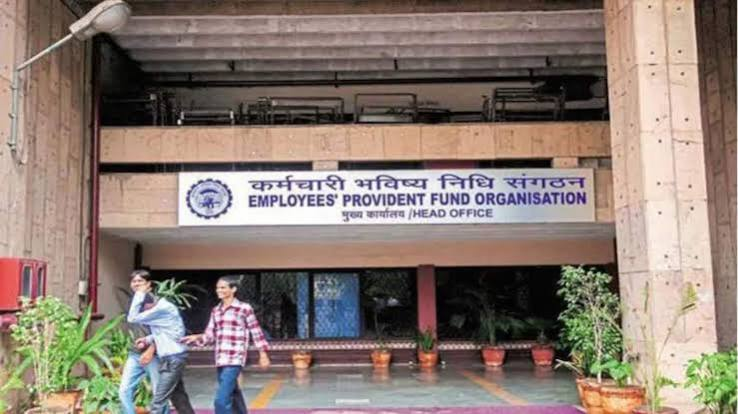
Union Minister Dr. Mansukh Mandaviya confirms over Rs 1.44 lakh crore will be distributed across 34 crore EPF accounts using a newly centralized, automated database infrastructure.
NEW DELHI — The Employees’ Provident Fund Organisation (EPFO) is on track to wrap up the direct interest credit for the financial year 2025-26 by July 15, 2026. Union Minister for Labour and Employment, Dr. Mansukh Mandaviya, announced that an aggregate interest yield of 8.25 percent—translating to a massive capital deployment of over Rs 1.44 lakh crore—will be pushed into roughly 34 crore active EPF subscriber accounts.
Also Read | Goa Moves to Ban New Rental Licenses for Mahindra Thar SUVs Following Fatal Tourist Accidents
The nationwide rollout marks the debut of the retirement fund’s highly anticipated Centralised IT Enabled Services (CITES) ecosystem, a technical overhaul that shifts the EPFO away from localized, legacy servers into a single, unified database architecture.
1. The CITES Migration: A Single Interface for Subscribers
Prior to this rollout, the EPFO operated on a decentralized architectural model, which often led to disjointed regional records, tracking friction during job switches, and delayed passbook updates. The completion of the database migration means all member records now live on a centralized server.
For the everyday subscriber, this structural shift introduces a revamped, unified member portal designed to serve as a comprehensive dashboard for retirement assets:
Also Read | Goa Moves to Ban New Rental Licenses for Mahindra Thar SUVs Following Fatal Tourist Accidents
Unified Member Portal Dashboard (Single Interface):
📊 PF Account Balance ➔ 📁 Membership Details ➔ ⏳ Real-Time Claim Status ➔ 📜 Pensionable Service Records & Benefits
2. Automated Pre-Validation: Slashing Claim Rejection Rates
Beyond simpler bookkeeping, the core structural change under the CITES project is the introduction of automated rule-based processing and pre-validation engines for withdrawals and advance claims.
Historically, subscribers faced high rejection rates due to minor data mismatches or errors in requested withdrawal limits, forcing them to restart the manual filing process. The new IT framework shifts this screening process to the front end:
| System Stage | Operational Function under CITES Architecture | Subscriber Benefit |
| Step 1: Input Check | Validates the request automatically before it routes to a physical EPFO field office. | Stops invalid or poorly formatted requests instantly. |
| Step 2: Eligibility Check | Scans individual pensionable service timelines and parameters rule-by-rule. | Ensures statutory compliance without human bias. |
| Step 3: Cap Verification | Flags instances where a member tries to withdraw more than their permissible limit. | Gives real-time notice to adjust the amount downward. |
| Ultimate Outcome | Filters and corrects basic discrepancies prior to official administrative logging. | Lowers overall rejection rates; boosts first-time acceptance. |
3. Operational Timeline and Strategic Goals
The massive scale of sending interest to 34 crore accounts simultaneously serves as the primary real-world stress test for the CITES project. Bureaucrats state that the primary objective of the modernization push is to ensure transparent, seamless, and citizen-centric welfare delivery.
Subscribers can expect their passbooks to accurately reflect the 8.25 percent interest additions progressively over the next week, with the government guaranteeing complete reconciliation across all active accounts by the July 15 cutoff.
Also Read | Goa Moves to Ban New Rental Licenses for Mahindra Thar SUVs Following Fatal Tourist Accidents

