

Now the latest International Monetary Fund (IMF) data reveals a shift. India has slipped to the 6th largest economy in the world. Therefore, the country has moved out of the global top five. This change appeared in the April 2026 World Economic Outlook. Specifically, the shift reflects nominal GDP terms rather than a lack of growth.
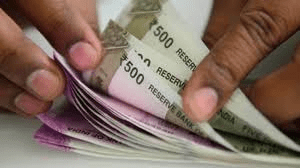
Meanwhile, experts say the ranking drop is a currency story. The Indian Rupee recently hit record lows against the US Dollar. Thus, the dollar-denominated size of the economy looks smaller.
But the underlying economic momentum remains very strong.
Also Read | Imran Khan and Bushra Bibi Sentenced to 17 Years in Jail
Breaking Down the IMF April 2026 Estimates
Now the global economic hierarchy has shifted slightly. The US remains the leader at over $30 trillion. Then, China follows in the second spot. Therefore, the battle for the middle ranks is where India sits.
The Global Top List
First, Germany holds the third spot at $5 trillion. Then, Japan and the UK are clustered near $4.5 trillion. Thus, India is now positioned just below this elite group.
Next, these rankings use “Nominal GDP” in US Dollars. This means they look at the current market value. Therefore, price changes and exchange rates dictate the final number.
“This is a valuation shift,” an IMF official noted.
The Currency Factor: Why the Rupee Matters
Now you might wonder how a growing economy slips. Global GDP rankings are calculated in US dollars. Therefore, the exchange rate is the most critical factor.
The Weakening Rupee
First, the rupee moved from the mid-80s to the 90-plus range. This sharp drop reduces the dollar value of India’s output. Then, even if production stays the same, the rank falls. Thus, the currency is the primary reason for the 6th place.
Next, a weak rupee makes our economy look smaller abroad. Meanwhile, the UK and Japan benefited from more stable exchange rates. Therefore, they climbed above India in this specific update.
So the shift is not about “less work” but “less value.”
West Asia Tensions and Oil Prices
Now external pressures are weighing on the local currency. The conflict in West Asia is the main driver. Therefore, global crude oil prices have surged recently.
Import Bill Stress
First, India imports nearly 90% of its crude oil. Higher oil prices mean India must spend more dollars. Then, this creates a massive dollar outflow from the country. Thus, the rupee faces direct downward pressure.
Next, global investors are currently in “risk-aversion” mode. They are moving money out of emerging markets. Therefore, foreign portfolio flows have become highly volatile.
Meanwhile, the US Dollar is acting as a safe haven.
Also Read | Imran Khan and Bushra Bibi Sentenced to 17 Years in Jail
The Clustering Effect of Global GDP
Now several economies are currently grouped very closely. India, Japan, and the UK are all in the $4–5 trillion band. Therefore, even small changes can shift their rankings.
Unstable Near-Term Ranks
First, a 1% currency move can flip the 5th and 6th spots. Then, a slight revision in GDP data can change everything. Thus, these rankings are inherently unstable in the short term.
Next, Japan and the UK saw recent upward revisions. Meanwhile, India’s dollar value took a hit. Therefore, the clustering effect made the slip inevitable this quarter.
[Infographic of the world’s top 7 economies and their nominal GDP clusters]
Is India’s Structural Growth Weakening?
Now the simple answer is no. The IMF’s broader assessment is actually positive. Therefore, India remains the fastest-growing major economy today.
Growth Projections
First, growth is projected at 6.4–6.5% for 2026-27. This is much higher than advanced nations. Then, India continues to contribute more to global output expansion. Thus, the physical economy is expanding rapidly.
Next, India’s growth is not dependent on exports alone. It is driven by domestic demand and services. Therefore, India is less exposed to a global slowdown.
” momentum remains intact,” the report emphasized.
Domestic Demand and Public Investment
Now the internal engines of the economy are firing. Public investment in infrastructure is at a record high. Therefore, the physical capacity of the nation is growing.
Resilient Services Sector
First, the services sector continues to lead the way. IT and digital services are seeing strong demand. Then, domestic consumption is rising in middle-class households. Thus, the local market is very resilient.
Next, government spending on roads and railways is creating jobs. Therefore, the structural foundation is actually strengthening.
Meanwhile, the 2026 technology cycle is boosting digital trade.
Also Read | Imran Khan and Bushra Bibi Sentenced to 17 Years in Jail
The ‘Punching Below Weight’ Reality
Now the Economic Survey used a curious phrase. It said the rupee is “punching below its weight.” Therefore, there is a gap between growth and currency.
Deeper Pressures
First, India runs a persistent trade deficit. We buy more oil, gold, and electronics than we sell. Then, this creates a constant demand for dollars. Thus, the rupee stays under pressure.
Next, the reliance on foreign capital is a risk. During global stress, this capital leaves quickly. Therefore, the external vulnerability offsets the domestic strength.
So the ranking reflects this struggle between growth and value.
Projections: When Will India Regain Its Rank?
Now the IMF data suggests this slip is temporary. The long-term trajectory for India is still upward. Therefore, the return to the top five is likely soon.
Regaining Lost Ground
First, if the rupee stabilizes, India’s dollar-GDP will jump. Then, the higher growth rate will naturally push us past Japan. Thus, the 2027-2028 projections show India back at 4th or 5th.
Next, the “India 6th largest economy IMF” tag is a snapshot. It is not a permanent status. Therefore, investors should focus on the 6.5% growth rate instead.
Finally, the underlying economic story is about expansion.
Common Questions Answered
Is India the 6th largest economy now? Now according to the IMF’s April 2026 data, yes. India sits just below Japan and the UK in nominal terms.
Why did India’s ranking fall? First, the rupee weakened significantly against the dollar. Then, global rankings are calculated in dollars. Thus, the economy’s size appeared smaller.
Is the Indian economy shrinking? Next, no. The economy is growing at 6.4–6.5%. The slip is purely due to currency exchange rates.
Which countries are ahead of India? So the US, China, Germany, Japan, and the UK are currently ahead.
Will India become the 3rd largest economy? Finally, projections still suggest India will reach the 3rd spot by 2028-2030. Therefore, the current slip is a short-term volatility.
Also Read | Imran Khan and Bushra Bibi Sentenced to 17 Years in Jail
End…

