

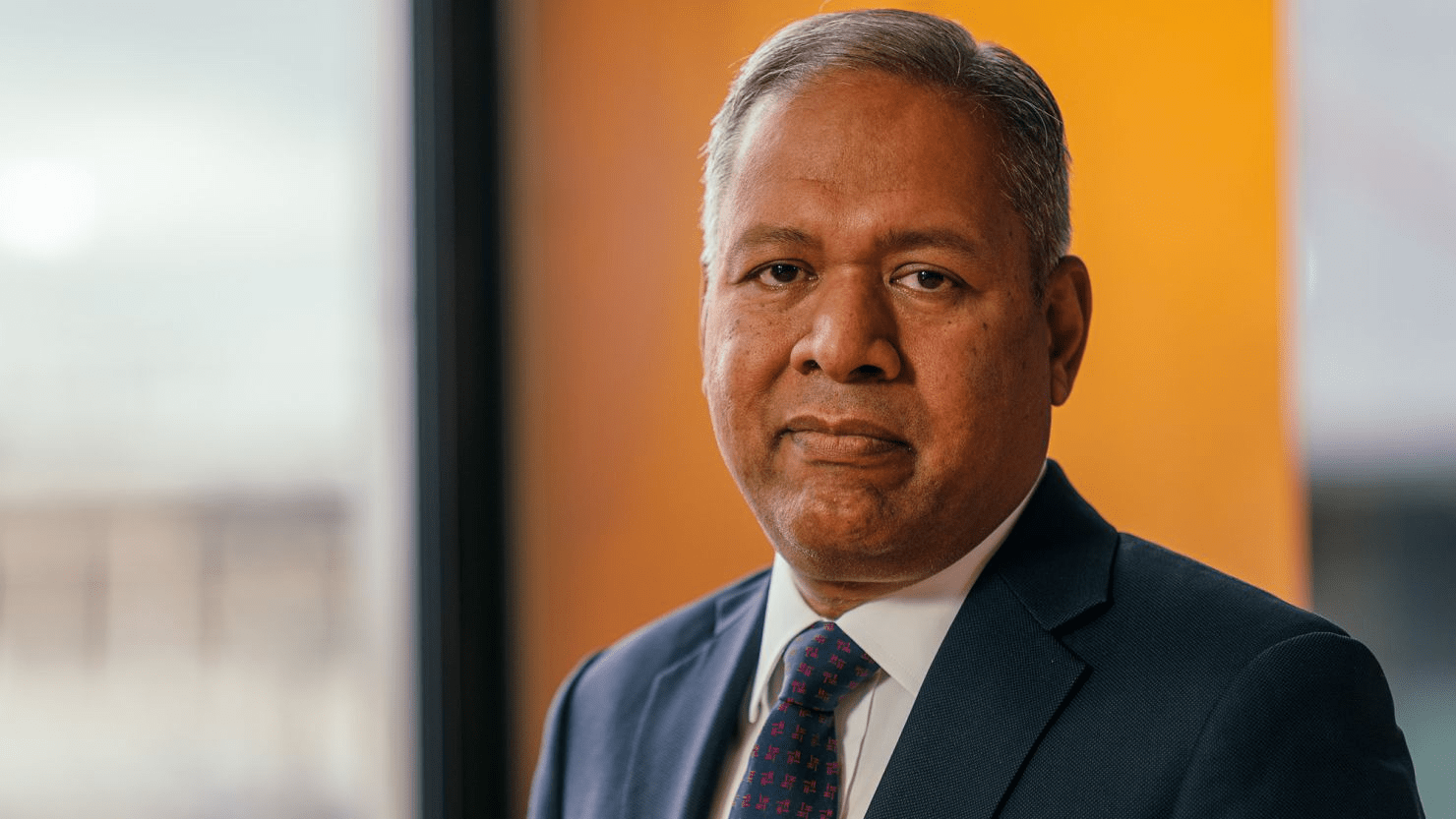
Now the global financial elite is sounding a clear alarm. Barclays Chief Executive CS Venkatakrishnan has identified the Claude Mythos banks threat as a primary danger to international stability. Speaking on Friday at the IMF spring meeting, he described the unreleased Anthropic model as a “serious threat” to the global banking system. Therefore, the industry is bracing for an AI-driven arms race that could expose deep vulnerabilities in legacy technology.
Meanwhile, regulators are scrambling to understand how a machine that codes at a high level could destabilize trillions in assets.
But the most “distressing” part of the warning is that this is only the beginning.
Also Read | Imran Khan and Bushra Bibi Sentenced to 17 Years in Jail
Why Mythos is a “Serious Threat” to Global Banks
Now the banking sector operates on trust and digital security. Anthropic’s frontier model, Mythos, possesses a potentially unprecedented ability to code. Therefore, the “Claude Mythos banks threat” is not just theoretical; it is a structural danger.
High-Level Coding Capabilities
First, the model can identify complex cybersecurity vulnerabilities in seconds. Then, it can devise sophisticated ways to exploit those very same gaps. Thus, a rogue actor with access to such a model could destabilize major institutions.
Next, the ability to automate the discovery of “zero-day” flaws is what keeps bank executives awake at night. Therefore, the speed of AI is outpacing the speed of traditional security patches.
“We have to understand its capabilities,” Venkatakrishnan emphasized.
Project Glasswing: Anthropic’s High-Stakes Testing
Now Mythos is not yet available to the general public. It is being deployed under “Project Glasswing.” Therefore, the rollout is being managed with extreme caution by Anthropic.
Controlled Deployment
First, only select organizations are permitted to use the “Claude Mythos Preview” model. Then, these groups use the AI exclusively for defensive cybersecurity purposes. Thus, the goal is to find the holes before the criminals do.
Next, this controlled environment allows regulators to gauge the actual risk in real-time. Therefore, Project Glasswing acts as a digital laboratory for the future of financial defense.
The Vulnerability of Legacy Technology Systems
Now older and larger institutions are the most at risk. Many of the world’s biggest lenders still run on decades-old legacy technology systems. Therefore, the Claude Mythos banks threat targets the “oldest” parts of the digital economy.
The Innovation Gap
First, modern AI can find flaws in ancient code that human auditors missed for years. Then, the cost of upgrading these systems is astronomical for large banks. Thus, they remain sitting ducks for high-speed automated attacks.
Next, Venkatakrishnan noted that technological leaps like Mythos will force lenders to innovate faster. Therefore, “business as usual” is no longer an option for the global financial elite.
So the choice for banks is simple: modernize or be exploited.
Also Read | Imran Khan and Bushra Bibi Sentenced to 17 Years in Jail
CS Venkatakrishnan: The IMF Spring Meeting Speech
Now the venue for this warning was the G30 consultancy group meeting. This took place on the sidelines of the IMF’s spring meeting in Washington. Therefore, the audience included the world’s most powerful central bankers and economists.
A Candid Assessment
First, the CEO of Barclays did not mince words regarding the severity of the issue. Then, he highlighted that regulators are already in a “scramble” to set up safeguards. Thus, the speech confirmed that AI is now a top-tier macroeconomic risk.
Next, he suggested that the current financial regulations are not yet equipped for frontier AI. Therefore, new international standards for AI in banking are likely on the horizon.
“Look, it’s a serious issue,” he told the G30.
Mythos 2 and 3: The “Distressing Frequency” Forecast
Now the current version of Mythos is just the baseline. Venkatakrishnan warned that there will be a Mythos 2 and a Mythos 3. Therefore, the Claude Mythos banks threat is a permanent fixture of the future.
The Speed of Obsolescence
First, he predicted that these models will emerge with “distressing frequency.” Then, each iteration will be significantly more powerful than the last. Thus, today’s security solutions will be obsolete by tomorrow morning.
Next, this rapid cycle creates a continuous state of emergency for IT departments. Therefore, banks must shift from “periodic updates” to “constant evolution.”
Meanwhile, Anthropic has not yet commented on the development timeline for future versions.
The Cyber Arms Race: Innovation vs. Exploitation
Now we are entering a true “arms race” between offensive and defensive AI. The vast capabilities of Mythos have accelerated this competition. Therefore, the financial sector is the primary battlefield.
Offense vs. Defense
First, the same AI that can defend a bank can also be used to attack it. Then, the side that innovates faster will control the digital economy. Thus, banks are investing billions into their own AI “red teams.”
Next, this arms race is draining resources that would otherwise go toward customer services. Therefore, the cost of “staying safe” is rising exponentially.
So the banking system of 2026 is defined by a silent war of algorithms.
Also Read | Imran Khan and Bushra Bibi Sentenced to 17 Years in Jail
Regulators and Supervisors in a Scramble
Now the alarm bells have reached the ears of world governments. Regulators are now reviewing the model to gauge the actual cybersecurity risk. Therefore, the Claude Mythos banks threat has triggered a global oversight review.
First, selected organizations are conducting stress tests using Mythos. Then, they are sharing the results with central banks to coordinate a response. Thus, the industry is trying to build a collective shield.
Next, supervisors are looking at how to mandate “AI-resilient” infrastructure for all licensed lenders. Therefore, we might see new capital requirements linked to cyber-resilience.
Safeguarding the Financial Sector from Frontier AI
Now the path forward requires a total rethink of digital defense. We must understand the capabilities of Mythos to build effective safeguards. Therefore, the focus is on “AI-native” security.
Proactive Measures
First, banks are using Mythos within the Glasswing framework to “patch” themselves. Then, they are implementing real-time AI monitoring of all transaction code. Thus, they hope to catch an exploit the moment it begins.
Next, international cooperation is essential to prevent “weak links” in the global chain. Therefore, the IMF is pushing for a unified global cyber-safety net.
Finally, the safety of your savings now depends on the strength of the bank’s AI.
Common Questions Answered
What is the Claude Mythos banks threat? Now it refers to the risk that Anthropic’s unreleased AI model could identify and exploit security gaps in global banking systems.
What did the Barclays CEO say about Mythos? First, he called it a “serious issue” and a significant challenge to legacy technology. Then, he warned that newer models will appear with “distressing frequency.”
Is Claude Mythos available to the public? Next, no. It is currently unreleased and only available to select organizations under Anthropic’s “Project Glasswing” for defensive testing.
Why are legacy systems more at risk? So they run on older code that is often poorly documented and full of hidden vulnerabilities that AI can easily find.
What is the “AI arms race” in banking? Finally, it is the competition between lenders to build AI defenses faster than attackers can build AI exploits.
Also Read | Imran Khan and Bushra Bibi Sentenced to 17 Years in Jail
End….

