

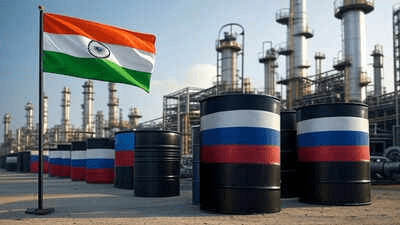
Now the global energy landscape has taken a sudden, dramatic turn. The United States has renewed temporary sanctions waivers for Russian oil purchases. Therefore, this move effectively pushes the deadline for loaded tankers to May 16, 2026. This decision comes as a shock to the markets. Specifically, Treasury Secretary Scott Bessent had ruled out any such relief just two days ago.
Meanwhile, India stands as the primary beneficiary of this policy shift. As a key importer of Russian crude, New Delhi can now secure its energy needs in a tumultuous market.
But the “U-turn” highlights just how desperate Washington is to stabilize oil prices.
Also Read | Imran Khan and Bushra Bibi Sentenced to 17 Years in Jail
The Logic Behind the US General License
Now the Treasury Department’s “general license” is a tactical survival tool. It replaces an earlier waiver that expired on April 11. Therefore, vessels already loaded with Russian oil can continue to their destinations.
Stabilizing the Sea Lanes
First, the US wants to ensure that oil already at sea doesn’t become “ghost crude.” Then, allowing these sales prevents a sudden supply vacuum in the market. Thus, the global energy supply stays somewhat fluid.
Next, the war in the Middle East has made every barrel critical. Therefore, even Russian oil is being used to prevent a global economic crash.
“The focus is on availability, not just ideology,” a market analyst noted.
Why Secretary Scott Bessent Changed His Stance
Now the political optics of this move are complicated. On Wednesday, Secretary Bessent was firm that no extensions would happen. Therefore, the “change of heart” on Friday reflects extreme pressure from global partners.
Market Volatility
First, Brent crude prices surged following his Wednesday comments. Then, the realization hit that an Iranian oil waiver is also set to expire tomorrow. Thus, the US faced a double-shortage scenario.
Next, Washington realized it could not fight a war with Iran and a supply war with Russia simultaneously. Therefore, the extension provides a “pause” on sanctions to keep the lights on globally.
How India Benefits from the Russia-Iran Cushion
Now India imports about 90% of its crude requirements. Therefore, any disruption in the Gulf is a national security threat. The US Russian oil waiver India receives is a vital lifeline.
Allaying Shortage Fears
First, the waiver addresses immediate availability concerns. It adds a “cushion” for Indian refiners who were worried about the expiring Iranian waiver. Then, it ensures that ships currently in transit won’t be blocked by banking sanctions. Thus, the energy market in Mumbai and Delhi remains stable.
Next, the access to Russian crude has historically helped India manage financial pressure. Therefore, this month-long extension is seen as a strategic victory for New Delhi’s diplomacy.
Also Read | Imran Khan and Bushra Bibi Sentenced to 17 Years in Jail
The Strait of Hormuz Chokepoint Crisis
Now the geography of the war is the biggest problem. About 40% of India’s oil must cross the Strait of Hormuz. Therefore, the maritime chokepoint is at the center of the US-Israel-Iran conflict.
Waiting for Passage
First, many ships are waiting for days to pass through the strategic waterway. Then, insurers are reassessing risks, making shipping costs skyrocket. Thus, finding alternative sources—like Russian oil delivered through different routes—is essential.
Next, the waiver allows India to bypass some of the Gulf drama. Therefore, the supply chain remains functional even as the “center of the war” stays volatile.
So the Russian oil waiver acts as a secondary lung for the Indian economy.
Why Russian Oil No Longer Comes at a Discount
Now there is a catch for Indian refiners. The steep discounts India was familiar with in 2024 are gone. Therefore, the financial benefit is shifting from “saving money” to “securing supply.”
Prices at 2013 Levels
First, Russian crude prices have jumped significantly since last week. Then, reports suggest they have reached their highest level in over a decade. Thus, India’s import bill is rising even with the waiver in place.
Next, the increase is driven by the global surge in all oil benchmarks. Therefore, while India has access to the oil, it is no longer “cheap” oil.
“The binge comes with a higher price tag now,” an energy economist explained.
March Data: India’s 3X Jump in Russian Imports
Now the numbers from last month are staggering. India’s crude imports from Russia tripled to 5.3 billion euros in March. Therefore, the volume of oil arriving at Indian ports has effectively doubled.
Market Share Shift
First, India was the second-largest importer of Russian oil in March (38%). Then, it sat only behind China (51%). Thus, India has overtaken Turkey to become Moscow’s second-most important customer.
Next, this “buying binge” followed a temporary drop in February. Therefore, the March surge was a clear response to the escalating tensions in the Middle East.
Also Read | Imran Khan and Bushra Bibi Sentenced to 17 Years in Jail
Inflation Pressures on the Indian Economy
Now the rising import bill has domestic consequences. A sustained rise in oil prices always feeds into inflation. Therefore, the government is watching the fuel markers closely.
Overcoming Financial Pressure
First, the access to Russian crude has prevented a much worse inflationary spike. Then, even at higher prices, it provides more stability than the volatile Gulf spot market. Thus, the waiver is a tool to protect the Indian consumer’s wallet.
Next, the government is reportedly settling some deals in alternative currencies like the Yuan. Therefore, the dependency on the US Dollar for energy is also being tested.
“Access is the priority to keep inflation in check,” officials stated.
The Role of State-Owned Refiners in March
Now the biggest shift in March came from state-owned refiners. They saw a 148% month-on-month rise in Russian purchases. Therefore, the government-backed entities are leading the charge for energy security.
Think Tank Analysis
First, the Centre for Research on Energy and Clean Air (CREA) noted this sudden pivot. Then, they highlighted that private refiners also maintained high volumes. Thus, the entire Indian refining sector is now deeply integrated with Russian supply.
Next, the April 11 expiry of the previous waiver caused a brief panic. Therefore, the Friday “U-turn” has been greeted with a sigh of relief in corporate boardrooms.
Common Questions Answered
What is the new deadline for the US Russian oil waiver? Now the deadline has been pushed to May 16, 2026. This allows for the delivery of oil already loaded on vessels.
Why did the US grant this waiver? First, to stabilize global energy markets during the war with Iran. Then, to prevent a massive supply shock that would drive prices higher.
How does this help India specifically? Next, it ensures continuous oil flows for a country that imports 90% of its crude. Therefore, it prevents an energy shortage.
Is Russian oil still discounted for India? So no. Reports indicate prices have reached their highest levels since 2013, meaning the steep discounts of the past have vanished.
What happens if the waiver isn’t extended after May 16? Finally, that remains uncertain. Much depends on the status of the Iran war and the level of global crude reserves at that time.
Also Read | Imran Khan and Bushra Bibi Sentenced to 17 Years in Jail
End…

