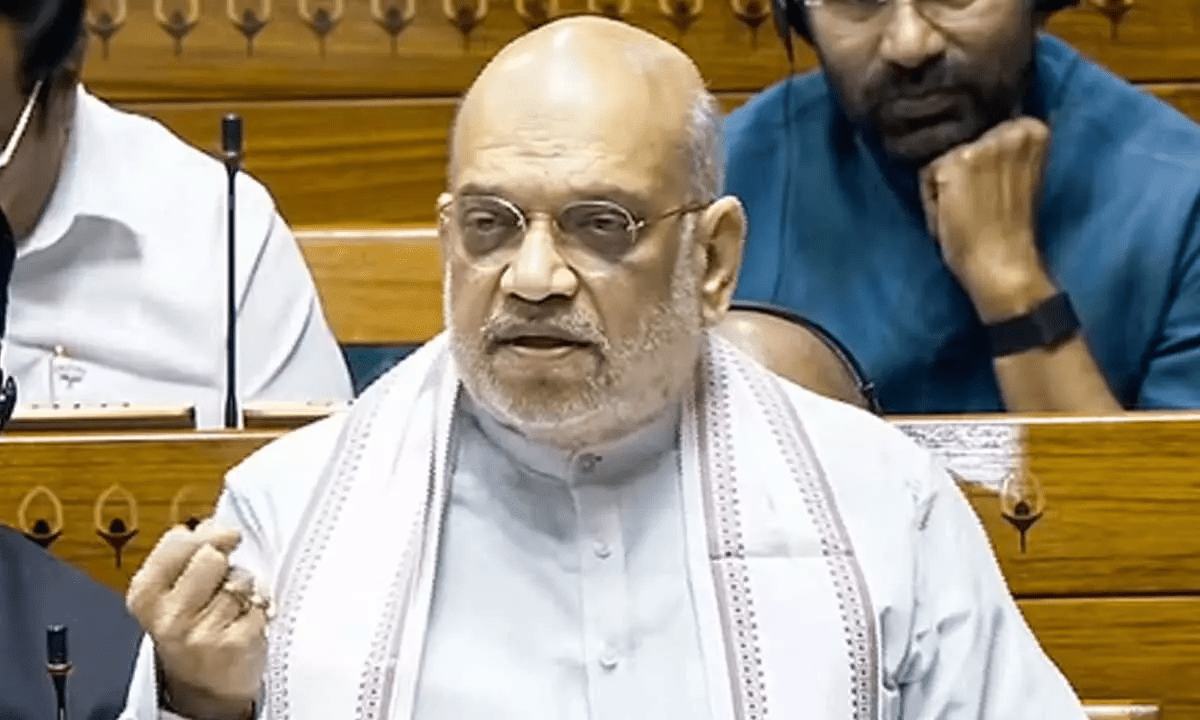
Now the decades-long debate over the Uniform Civil Code (UCC) has shifted from ideological rhetoric to administrative action. On Tuesday, April 28, 2026, Madhya Pradesh became the latest state to constitute a high-level committee to examine the feasibility of a unified legal framework. Therefore, the BJP plan for UCC implementation India is increasingly visible: a methodical, state-led approach designed to bypass the friction of a sudden national rollout. Specifically, by enacting the code in individual states like Uttarakhand and Gujarat first, the leadership intends to test these laws against judicial scrutiny before attempting a federal mandate.
Meanwhile, Union Home Minister Amit Shah has reinforced that the UCC is not merely a political card but a constitutional mandate under Article 44.
But for the opposition, this move remains a “polarization tactic” that threatens the delicate fabric of India’s cultural and religious diversity.
Also Read | Imran Khan and Bushra Bibi Sentenced to 17 Years in Jail
The UCC Roadmap: Why “One State at a Time” is the Preferred Path
Now we must analyze the tactical shift in the BJP’s approach to civil reform. Rather than introducing a bill in Parliament that could face massive procedural delays and nationwide protests, the party is opting for a staggered rollout. Therefore, the BJP plan for UCC implementation India utilizes states as “legal laboratories.”
Building a Broad Consensus
First, the party aims to implement the code in all its governed states to create a majority consensus. Then, as these laws are challenged in various High Courts, the resulting judgments will clarify which provisions are constitutionally sustainable. Thus, a “refined” version of the code can eventually be presented as a national law. Next, this strategy allows the government to address localized concerns—such as tribal customs in Chhattisgarh or hilly traditions in Uttarakhand—separately. Therefore, the incremental path reduces the “shock value” of the reform while moving steadily toward the final goal of a national code.
Madhya Pradesh and Chhattisgarh: The Newest Battlegrounds
Now the momentum has shifted toward central India. On April 15, the Chhattisgarh Cabinet led by CM Vishnu Deo Sai initiated its UCC panel, quickly followed by a similar move in Madhya Pradesh.
Harmonizing Diverse Laws
First, both states have appointed committees headed by retired Supreme Court judge Ranjana Prakash Desai. Then, these panels are tasked with drafting a code that brings uniformity to marriage, divorce, inheritance, and adoption. Thus, the goal is to replace community-specific personal laws with a single secular code. Next, the focus in these states will be on ensuring that the rights of women regarding maintenance and inheritance are protected. Therefore, the BJP plan for UCC implementation India is gaining significant geographic weight in the heart of the country.
The Uttarakhand and Gujarat Precedent: A Blueprint for Reform
Now we must look at the pioneers. Uttarakhand made history as the first state in independent India to enact the UCC, providing the primary template for other states to follow.
The Second Mover Advantage
First, Gujarat followed closely, becoming the second state to implement the rule. Then, these states provided the first real-world data on how different communities respond to a unified code. Thus, the “Uttarakhand Model” has become the gold standard for the BJP’s legislative drafting. Next, by showing that these laws can coexist with social order in Gujarat and Uttarakhand, the party is attempting to dispel “fear-mongering” narratives. Therefore, these two states serve as proof-of-concept for the rest of the nation.
Also Read | Imran Khan and Bushra Bibi Sentenced to 17 Years in Jail
Article 44: The Constitutional Mandate vs. Personal Laws
Now the legal justification for this move rests on the Directive Principles of State Policy. Article 44 explicitly states that the State shall “endeavour to secure for the citizens a uniform civil code.”
Constitutional Agenda
First, Union Home Minister Amit Shah has pivoted the narrative from “party agenda” to “constitutional duty.” Then, the government argues that diverse personal laws create legal complexity and inequality, particularly for women. Thus, the UCC is presented as a tool for modernization and simplification of the judicial system. Next, the debate centers on whether “Directive Principles” (which are not enforceable by courts) can override “Fundamental Rights” related to religious practice. Therefore, the BJP plan for UCC implementation India is a high-stakes interpretation of the Constitution’s vision for equality.
Overcoming Judicial Hurdles: The “Test and Learn” Method
Now the BJP leadership is well aware that the UCC will face immediate challenges in the Supreme Court. However, their strategy includes a built-in mechanism for judicial feedback.
The Court-Led Refinement
First, state laws will be challenged individually, providing multiple opportunities for legal debate. Then, the judgments from these cases will act as “guidelines” for the national drafters. Thus, the government can strip away provisions that courts find “unconstitutional” before the national rollout. Next, this minimizes the risk of a national law being struck down in its entirety. Therefore, the “one state at a time” method is as much a legal defense strategy as it is a political one.
The Role of the 23rd Law Commission
Now, while states move ahead, the central machinery is also in motion. The 23rd Law Commission of India is currently examining the UCC as part of its formal terms of reference.
Expert Consultation
First, the Commission is reviewing the 2018 consultation paper which suggested that a UCC was “neither desirable nor necessary” at that time. Then, they are updating these findings based on new social data and the successful implementation in Uttarakhand. Thus, the Commission’s report will provide the necessary “neutral” expert backing for a national bill. Next, this dual-track approach—state action and central consultation—ensures that the BJP plan for UCC implementation India has both political and academic weight.
Also Read | Imran Khan and Bushra Bibi Sentenced to 17 Years in Jail
Opposition Strike Back: Cultural Diversity vs. Uniformity
Now the opposition parties, led by Congress, have launched a scathing critique of the plan. They argue that India’s strength lies in its diversity, not in forced uniformity.
The Unity Argument
First, Congress points to a 185-page consultation paper from the 21st Law Commission which warned against compromising cultural diversity. Then, they argue that imposing a single code could prove “counter-productive” to national unity. Thus, the opposition views the UCC as a “polarization” tool rather than a reform measure. Next, they cite Supreme Court observations that caution against enacting such laws in one go without a broad social consensus. Therefore, the opposition’s defense is built on the idea that personal laws are an integral part of religious freedom.
Abhishek Banerjee on UCC: The Argument Against “Imposition”
Now, in West Bengal, the Trinamool Congress (TMC) has made the UCC a central issue of state identity. TMC General Secretary Abhishek Banerjee has been particularly vocal.
Undermining Diversity
First, Banerjee claims that the UCC is a move to “decide how you will practice your religion.” Then, he argues that the BJP wants to “impose” its own cultural standards on a diverse state like Bengal. Thus, the TMC is framing the UCC as an attack on “federalism” and “religious autonomy.” Next, the party has vowed to block any implementation of the code in West Bengal, setting up a potential constitutional standoff between the state and the center. Therefore, the BJP plan for UCC implementation India faces its toughest political resistance in the eastern states.
Common Questions Answered
Which Indian states have already implemented the UCC? Now Uttarakhand was the first to implement it in independent India, followed by Gujarat. Therefore, these two BJP-ruled states are the pioneers.
What is the “one state at a time” strategy? First, the BJP plans to implement UCC in all its governed states to test the laws in court. Then, they will use that feedback to create a national law. Thus, it reduces legal risk.
What does Article 44 say? Next, it is a Directive Principle stating that the State shall endeavor to secure a uniform civil code for all citizens throughout the territory of India.
Why is Justice Ranjana Prasad Desai important? So she is a retired Supreme Court judge who chairs the UCC committees in Uttarakhand, Gujarat, and now Madhya Pradesh and Chhattisgarh. Therefore, she provides a consistent legal framework across states.
What is the main objection from the opposition? Finally, they argue that UCC undermines religious freedom and cultural diversity. Thus, they believe it is a “socially divisive” tool used for political polarization.
Also Read | Imran Khan and Bushra Bibi Sentenced to 17 Years in Jail
End…..