Now a historic landmark in South Asian diplomacy stands at its most precarious junction in 66 years. On Tuesday, April 28, 2026, we mark exactly one year since India placed the 1960 Indus Waters Treaty (IWT) in “abeyance.” Therefore, the Indus Waters Treaty suspension 2026 impact is no longer just a hypothetical discussion in academic circles but a formal grievance at the United Nations. Specifically, the decision was a direct response to the deadly Pahalgam terror attack on April 22, 2025, which claimed 26 lives. In the months following, India adopted a “blood and water cannot flow together” policy, effectively halting all Treaty-mandated cooperation, data sharing, and commission meetings.
Meanwhile, Pakistan has now formally written to the UN Security Council, warning that this unilateral suspension has “grave implications” for regional peace and humanitarian conditions.
But for the common farmer in Pakistan’s Punjab province, the “invisible” consequences of this data blackout are just beginning to surface as the summer heat intensifies.
Also Read | Imran Khan and Bushra Bibi Sentenced to 17 Years in Jail
The Pahalgam Catalyst: Why New Delhi Hit the “Pause” Button
Now we must analyze the event that shattered six decades of water cooperation. On April 22, 2025, a terror attack in Pahalgam, Jammu and Kashmir, resulted in the deaths of 25 Indians and one Nepali citizen. Therefore, the Indus Waters Treaty suspension 2026 impact is fundamentally rooted in national security.
Blood and Water Cannot Flow Together
First, the Cabinet Committee on Security (CCS), chaired by PM Narendra Modi, met on April 23, 2025, to finalize a multi-front response. Then, the MEA announced that the IWT would be held in abeyance alongside the closure of the Attari border and a reduction in diplomatic staff. Thus, the treaty was no longer seen as a standalone humanitarian agreement but as a strategic leverage point. Next, India reiterated that the pact would remain paused until Pakistan takes “credible and irreversible” steps to end terror support. Therefore, the suspension is a “deterrence framework” move designed to link environmental cooperation with security compliance.
Pakistan’s UN Appeal: A Diplomatic Move for Regional Stability
Now, a year into the freeze, Pakistan has elevated the matter to the global stage. Ambassador Asim Iftikhar Ahmad handed a letter from Deputy PM Ishaq Dar to the Security Council President.
Warning of “Grave Implications”
First, Islamabad argues that the move is “unilateral and illegal” under international law. Then, the letter emphasizes that the suspension affects not only political relations but also “humanitarian conditions” for millions. Thus, Pakistan is attempting to “internationalize” what New Delhi considers a bilateral security matter. Next, the appeal urges the UNSC to call upon India to resume Treaty-mandated data sharing immediately. Therefore, the Indus Waters Treaty suspension 2026 impact is now a formal agenda item for global observers monitoring South Asian stability.
The Data Blackout: Why “Invisible” Information Matters for Farmers
Now, the most immediate consequence for Pakistan is the cessation of the “daily data exchange.” Under the 1960 agreement, India was obligated to share river flow data every day between certain dates.
Planning in the Dark
First, Pakistan’s water management authorities rely on this data to predict the arrival of water for irrigation. Then, without this “early warning,” agricultural departments cannot accurately advise farmers on sowing cycles. Thus, the risk of “unpredictability” has skyrocketed. Next, regular data sharing also helps in managing floods during the monsoon season. Therefore, while India has not “blocked” the rivers, the lack of information creates a “functional drought” where water may arrive at the wrong time or in the wrong volume for optimal crop yields.
Also Read | Imran Khan and Bushra Bibi Sentenced to 17 Years in Jail
Western vs. Eastern Rivers: The 80% Arithmetic Imbalance
Now we must understand the fundamental math of the IWT. The treaty allocated 80% of the basin’s water—the western rivers (Indus, Jhelum, Chenab)—to Pakistan, while India received the eastern rivers (Ravi, Beas, Sutlej).
Strategic Re-calibration
First, India has long felt that the 1960 division was an “act of remarkable generosity” that ignored its own growing needs. Then, experts point out that India has allowed roughly 0.6 MAF (Million Acre-Feet) of its own Ravi entitlement to flow into Pakistan unused for decades. Thus, the current suspension allows India to rethink its infrastructure projects without being slowed down by Pakistan’s “weaponized” dispute architecture. Next, there is a growing push to divert more water toward northern Indian states like Punjab and Haryana. Therefore, the suspension provides a “strategic window” for India to accelerate its own water security projects.
Run-of-the-River Projects: The Threat of Future Infrastructure
Now, a major point of contention remains India’s right to build “run-of-the-river” hydroelectric projects on the western rivers. Pakistan has historically raised thousands of objections to these designs.
The Power of Dams
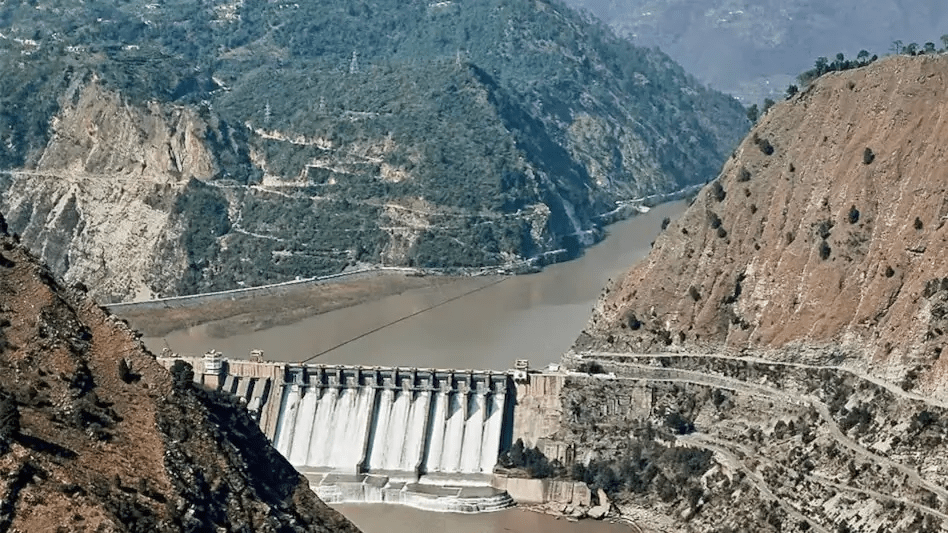
First, while these projects do not “consume” water, they allow India to regulate the timing of the flow. Then, if India decides to fill or empty its reservoirs without prior notification (due to the data blackout), it can create artificial shortages or surges downstream. Thus, the Indus Waters Treaty suspension 2026 impact gives India significant tactical control over Pakistan’s lifeline. Next, projects like the Kishenganga and Ratle HEP are at the heart of this “timing” dispute. Therefore, the suspension has left Pakistan without a formal venue (the PIC) to raise technical objections to these constructions.
Diplomatic Freeze: The Persona Non Grata and High Commission Status
Now the suspension of the IWT was just one piece of a broader diplomatic dismantling. Following the Pahalgam attack, India significantly downgraded its engagement with Islamabad.
Reducing the Presence
First, Pakistani defense officials in New Delhi were declared persona non grata. Then, the strength of the High Commissions in both capitals was reduced to a skeleton staff. Thus, the “bilateral channels” for resolving water disputes have effectively vanished. Next, travel restrictions on Pakistani nationals were tightened, and visas under the SAARC scheme were cancelled. Therefore, the Indus Waters Treaty suspension 2026 impact is part of a “comprehensive freeze” where no cooperation is possible until the “terror epicentre” is dismantled.
Also Read | Imran Khan and Bushra Bibi Sentenced to 17 Years in Jail
Agricultural Unpredictability: Timing the Kharif and Rabi Crops
Now we look at the ground level in Pakistan. The agriculture sector contributes roughly 23% to Pakistan’s GDP, and it depends entirely on the Indus river system.
A Game of Timing
First, the lack of river data makes it difficult to manage the transition between the Kharif (summer) and Rabi (winter) crops. Then, if water doesn’t arrive during the critical “tillering” stage of wheat, yields can drop by 20–30%. Thus, Pakistan’s food security is becoming hostage to this diplomatic standoff. Next, the unpredictability makes it harder for the government to manage its national grain reserves. Therefore, the year-long suspension has created a “stress test” for Pakistan’s agrarian economy, which is already struggling with a debt crisis.
Legal Forums: From the UNSC to the International Court of Justice
Now, what is next for Pakistan’s diplomatic counter-offensive? Approaching the UN Security Council is just the first step in a multi-platform strategy.
The International Legal Route:
-
UNSC: Seeking a resolution calling for the restoration of the treaty.
-
ICJ: Exploring the International Court of Justice to declare the suspension illegal.
-
World Bank: Pressuring the original mediator to intervene and restart the arbitration.
-
EU/US: Lobbying Western powers to view the suspension as a “humanitarian threat.”
First, India has already reiterated its position that the treaty is a bilateral matter and third-party interference is not welcome. Then, India contends that the “fundamental change of circumstances” (persistent terrorism) justifies the abeyance. Thus, we are headed for a protracted “legal war” in international corridors. Next, the World Bank’s role as a signatory will be tested as it tries to remain “neutral.” Therefore, the Indus Waters Treaty suspension 2026 impact is likely to define South Asian law and order for the remainder of the decade.
Common Questions Answered
Why did India suspend the Indus Waters Treaty in 2025? Now, the decision was taken by the Cabinet Committee on Security after the April 22 Pahalgam terror attack that killed 26 people. India stated that “blood and water cannot flow together.”
How much water does Pakistan get from the western rivers? First, the treaty gives Pakistan control over roughly 80% of the water from the Indus, Jhelum, and Chenab. Therefore, it is the lifeline of their economy.
Can India fully stop the water flow to Pakistan? Next, under the current infrastructure, India can only regulate the timing and flow through its run-of-the-river projects. Thus, it cannot “dry up” Pakistan entirely without building massive new storage dams.
What is the “data blackout”? So, India has stopped sharing daily river flow and project data with Pakistan. This makes it difficult for Islamabad to plan for irrigation and floods.
Is the Indus Waters Treaty officially cancelled? Finally, no. It is currently in “abeyance,” meaning it is suspended but not formally scrapped. Therefore, it remains in a legal limbo as of April 2026.
Also Read | Imran Khan and Bushra Bibi Sentenced to 17 Years in Jail
End….