

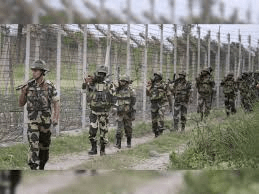
Now the first anniversary of India’s most significant cross-border military action in decades is being marked with a stern warning to those across the border. Addressing a joint press conference in Jaipur, Deputy Chief of Army Staff Lieutenant General Rajiv Ghai asserted that no terror sanctuary across the Line of Control (LoC) remains safe. Therefore, as India commemorates one year since Operation Sindoor, the military leadership has made it clear that the “new normal” established by Prime Minister Narendra Modi is here to stay.
Also Read | Imran Khan and Bushra Bibi Sentenced to 17 Years in Jail
One Year of Operation Sindoor: A Defining Moment in Strategy
Now exactly one year has passed since the Indian Armed Forces executed a precision strike on terror camps in Pakistan and PoJK. Lieutenant General Rajiv Ghai, who served as the DGMO during the operation, described it as a “defining moment” in India’s strategic journey. Therefore, the anniversary is being observed not just as a military milestone but as a shift in national resolve.
First, the operation was a direct response to the horrific Pahalgam terror attack on April 22, 2025, which claimed 26 lives. Next, the 2026 briefing in Jaipur emphasizes that the fight against terrorism is far from over. Thus, the military is reinforcing the principle that India will defend its sovereignty decisively.
So the anniversary has seen a surge in national sentiment, with PM Modi and Union Ministers updating their social media profiles. Meanwhile, the South Western Command has become the hub for this strategic messaging. Therefore, Operation Sindoor is being hailed as the beginning of a relentless counter-terror doctrine.
Identifying the Infrastructure: Terror Clusters Across the LoC
Now the Indian Army has confirmed that its intelligence agencies have mapped the entire terror ecosystem operating across the border. Lieutenant General Ghai stated that specific clusters across Pakistan-occupied Jammu and Kashmir (PoJK) and the international boundary have been identified. Therefore, the “sanctuaries” that terrorists once relied upon are now visible to Indian sensors.
First, these clusters include launch pads and training infrastructure for groups like Lashkar-e-Taiba (LeT) and Jaish-e-Mohammed (JeM). Next, while the exact locations remain confidential for security reasons, the Army’s awareness is described as “fairly comprehensive.” Thus, the fog of war is being replaced by high-resolution intelligence.
So the nature and numbers of these camps may fluctuate daily. Meanwhile, the Army is monitoring every shift in terrorist movement. Therefore, identification is the first step toward potential neutralization whenever the “new normal” dictates action.
The ‘New Normal’: Timing and Method of India’s Choice
Now the “new normal” is a phrase that has redefined the subcontinent’s security architecture since last year. It implies that India no longer tolerates cross-border aggression without a precise and decisive response. Therefore, the timing and manner of future operations remain entirely at the discretion of the Indian military.
First, Air Marshal Awadhesh Kumar Bharti reiterated that air power is no longer considered a merely escalatory tool. Next, the Prime Minister’s template ensures that the military has full operational flexibility. Thus, the element of surprise remains firmly in India’s hands.
So the conditions for any operation will be set by the security environment and intelligence triggers. Meanwhile, the military maintains a posture of “Strategic Restraint” paired with “Calculated Force.” Therefore, the enemy is kept in a state of perpetual uncertainty regarding when the next strike might occur.
Also Read | Imran Khan and Bushra Bibi Sentenced to 17 Years in Jail
Deep Strikes: Why Moving Camps Inland Won’t Protect Terrorists
Now there is a noticeable shift in how terror groups are operating following the 2025 strikes. Some camps and launch pads have been moved deeper into Pakistani territory—away from the immediate vicinity of the LoC. Therefore, terror networks are attempting to create a “safe distance” to avoid detection.
First, Lieutenant General Ghai dismissed the idea that depth provides safety. Next, he emphasized that India is prepared to go after infrastructure regardless of how far inland it is moved. Thus, the reach of Indian precision weapons, such as the BrahMos supersonic cruise missile, has effectively nullified geographic distance.
So the attempt to hide “in depth” is being viewed as a sign of fear rather than a viable strategy. Meanwhile, the Navy and Air Force have integrated their operations to provide a 360-degree strike capability. Therefore, there is no corner of the neighbor’s territory that is considered a “no-go” zone for Indian assets.
Operation Sindoor Retrospective: The 25-Minute Blitz of 2025
Now to understand the current warning, one must look back at the events of May 7, 2025. In a rapid 25-minute window between 1:05 AM and 1:30 AM, India launched a saturated missile and air strike on nine major terror camps. Therefore, the operation was a masterclass in jointness and precision.
First, the strikes targeted facilities of LeT, JeM, and Hizbul Mujahideen. Next, over 100 terrorists were neutralized, and high-resolution post-damage assessments later confirmed the destruction. Thus, the operation proved that India can go from “silent to violent” in a matter of minutes.
So the four-day conflict that followed saw India establish complete military dominance. Meanwhile, the ceasefire on May 10, 2025, brought an end to active hostilities but not the underlying tension. Therefore, the 2025 operation remains the blueprint for all future responses.
Modernization Update: 65% of Weapons Now ‘Made in India’
Now the military’s ability to conduct such operations is increasingly backed by domestic manufacturing. During the press conference, Lt Gen Ghai highlighted that nearly 65 percent of the weapons currently used by the armed forces are manufactured within India. Therefore, the “Aatmanirbhar Bharat” initiative is having a direct impact on battlefield readiness.
First, the integration of indigenous systems like the Akash air defense and BrahMos has been battle-proven. Next, this self-reliance reduces dependence on foreign supply chains during short, intense conflicts. Thus, the Indian military is more autonomous in its planning and execution than ever before.
So the modernization front is moving as fast as the tactical front. Meanwhile, emergency procurements have bridged the gap for high-tech requirements like drones and loitering munitions. Therefore, India’s strike power is as much about the factory as it is about the cockpit.
Also Read | Imran Khan and Bushra Bibi Sentenced to 17 Years in Jail
Message to Pakistan: Resolve, Responsibility, and Strategic Restraint
Now the final message from the joint leadership in Jaipur was one of focused resolve. Lieutenant General Ghai remarked that if the neighbor invested as much in combat capabilities as it does in “propaganda and narrative warfare,” its performance might have been better. Therefore, India is dismissing the “narrative war” in favor of “kinetic results.”
First, the operation demonstrated that India can act professionally and with the utmost responsibility without targeting civilian or military sites. Next, the establishment of military asymmetry between the two nations is now a firm reality. Thus, the cost of supporting cross-border terror has been made prohibitively high.
So the 2026 briefing is a reminder that the “book is not closed” on Operation Sindoor. Meanwhile, the military continues to prioritize persistent intelligence and surveillance. Therefore, the message is clear: India will protect its people at a time and place of its own choosing.
FAQ: Operation Sindoor and the Current Security Posture
1. What was Operation Sindoor? Now, it was a major cross-border military operation launched by India on May 7, 2025, in response to the Pahalgam terror attack. It targeted nine terror camps in Pakistan and PoJK.
2. Why was the Jaipur press conference held today? First, it was to mark the first anniversary of Operation Sindoor. Next, the top military leadership used the platform to warn that no terror sanctuary is safe.
3. Has India identified new terror camps in 2026? So yes. The Army confirmed that it has identified “clusters” of terror infrastructure across the LoC and the international boundary.
4. What is the ‘New Normal’ mentioned by the Army? Next, it refers to the strategic shift where India will strike terror sources precisely and decisively without being deterred by nuclear blackmail.
5. How successful was the 2025 operation? Now, over 100 terrorists were killed, and nine major launch pads were destroyed within a 25-minute strike window.
6. Are these strikes targeted at the Pakistani military? Finally, no. India has consistently maintained that its actions are focused solely on “terrorist infrastructure” and avoid civilian or military facilities.
Also Read | Imran Khan and Bushra Bibi Sentenced to 17 Years in Jail
End…

