

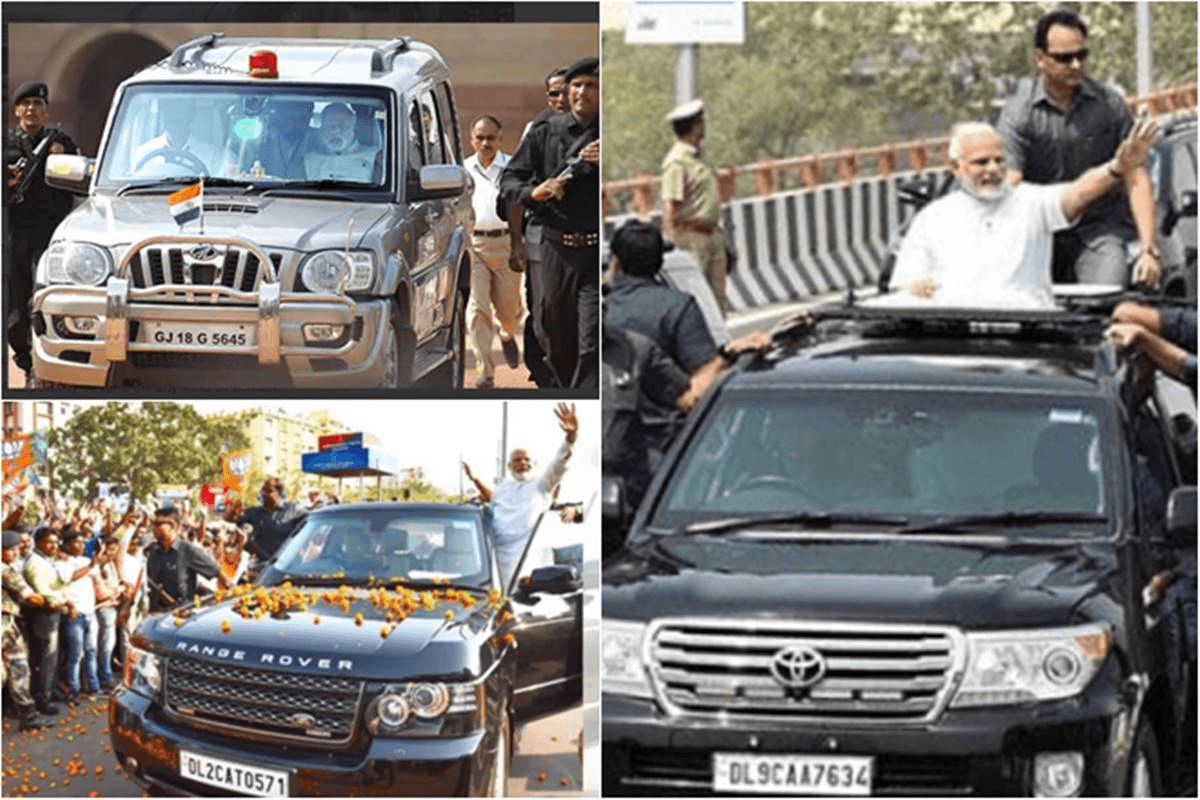
Now the corridors of power in New Delhi are adopting a leaner, greener look. In a significant move to signal national discipline, Prime Minister Narendra Modi has reportedly directed a 50% reduction in the size of his official convoy. Therefore, as India navigates the economic pressures of the ongoing Iran conflict and rising global oil prices, the Prime Minister is choosing to lead by example. Meanwhile, he has also called for a rapid transition toward electric vehicles (EVs) within the Special Protection Group (SPG) fleet, specifically mandating that no new vehicles be purchased for this shift. Following his “Seven Appeals” to citizens, this decision marks a mechanical necessity for the government to mirror the austerity it asks of the public.
Also Read | Imran Khan and Bushra Bibi Sentenced to 17 Years in Jail
Leading by Example: The 50 Percent Convoy Reduction
Now the Prime Minister’s decision to slash his convoy size is a direct response to the economic volatility affecting the nation. By reducing the number of vehicles by half, the PMO aims to significantly lower the daily fuel consumption associated with the leader’s movement. Therefore, the move is a powerful symbolic and practical gesture toward national belt-tightening.
First, the reduction was first observed during the Prime Minister’s recent domestic visits to Gujarat and Assam. Next, sources indicate that the decision was finalized immediately after his landmark speech in Hyderabad earlier this week. Thus, the government is moving at a rapid pace to implement these self-imposed restrictions.
So the move is designed to show that the administration is not immune to the pressures it asks citizens to bear. Meanwhile, the visual of a smaller, more efficient motorcade is expected to set a precedent for other state and central dignitaries. Therefore, the “convoy cut” is the first major structural change in the PM’s daily logistics.
The EV Mandate: Transitioning Without New Purchases
Now the push for electric vehicles has moved from a policy goal to a logistical requirement for the Prime Minister’s team. PM Modi has asked for an increased presence of EVs within his convoy to further reduce reliance on imported petrol and diesel. Therefore, the motorcade is becoming a testing ground for high-security sustainable transport.
First, the Prime Minister has made it clear that “no new vehicles” should be purchased to achieve this transition. Next, the SPG is tasked with repurposing existing electric assets or optimizing current inventories to meet the directive. Thus, the focus is on maximizing existing resources rather than increasing the fiscal burden.
So the shift toward EVs is a mechanical necessity for reducing the government’s carbon and import footprint. Meanwhile, this move is expected to accelerate the development of high-security EV technology within India. Therefore, the Prime Minister’s fleet is now a reflection of the nation’s broader “Green Energy” ambitions.
SPG Readiness: Balancing Austerity with High-Level Security
Now while the number of vehicles has been reduced, there is no compromise on the safety of the head of state. The Special Protection Group (SPG) has been ordered to shrink the convoy size while ensuring that all mandatory security protocols remain intact. Therefore, the challenge for the elite force is to maintain a “protective bubble” with fewer moving parts.
First, the SPG has already begun reconfiguring its tactical layouts to compensate for the reduced vehicle count. Next, modern surveillance and communication tech are being used to fill the gaps left by the smaller motorcade. Thus, the security remains robust despite the leaner physical footprint.
So the “convoy optimization” has required significant logistical planning from the security high command. Meanwhile, sources say the SPG is successfully implementing these changes without increasing the risk profile. Therefore, the 2026 security model is proving that efficiency and safety can coexist under austerity.
Also Read | Imran Khan and Bushra Bibi Sentenced to 17 Years in Jail
The ‘Seven Appeals’: Summarizing Modi’s Economic Resilience Plan
Now the convoy reduction is part of a much larger strategy known as the “Seven Appeals.” These directives were issued to the public to strengthen India’s economic resilience against the backdrop of the Middle East conflict. Therefore, every citizen is being asked to contribute to the national cause through personal behavioral changes.
The Seven Appeals for 2026:
-
Fuel Conservation: Opt for public transport, carpooling, and EVs.
-
Gold Purchases: Avoid buying gold for at least one year.
-
Foreign Travel: Postpone non-essential international trips.
-
Edible Oil: Reduce consumption to lower import bills.
-
Natural Farming: Move away from chemical fertilisers.
-
Responsible Living: Treat daily duties as a form of patriotism.
-
Leading by Example: Government sectors to adopt similar cuts.
First, these measures are designed to protect India’s foreign exchange reserves. Next, they aim to reduce the inflationary pressure caused by high energy costs. Thus, the Prime Minister is framing “frugality” as a collective national effort.
From Secunderabad to Assam: Real-Time Implementation of the Push
Now the transition from words to action has been nearly instantaneous. Following his speech in Secunderabad on Sunday, the Prime Minister’s motorcade in Gujarat and Assam was visibly smaller. Therefore, the public is getting a front-row seat to the government’s commitment to its own rules.
First, the reduction in Assam was particularly noted given the geographical and security challenges of the region. Next, the use of electric SUVs within the convoy has been highlighted as a major step toward sustainable VVIP transport. Thus, the “Secunderabad Mandate” is already operational across the country.
So the speed of implementation has surprised many political analysts. Meanwhile, state governments are expected to follow suit by reviewing their own ministerial convoys and fuel expenditures. Therefore, the Assam visit has set the gold standard for high-security austerity in 2026.
Patriotism in Daily Life: Redefining National Duty in 2026
Now during his gathering in Secunderabad, PM Modi provided a new definition of what it means to be a patriot. He emphasized that in the current times, patriotism is not just about defending borders but about “responsible behavior in everyday life.” Therefore, every drop of fuel saved is being equated to a service to the motherland.
First, the Prime Minister stated that “patriotism is about living responsibly and fulfilling duties in our daily lives.” Next, he urged the youth to take the lead in adopting carpooling and public transport. Thus, the national narrative is shifting from “sacrifice” to “discipline.”
So the idea is to make every citizen an active participant in India’s economic defense. Meanwhile, the government’s own convoy cuts serve as the moral high ground for these requests. Therefore, the 2026 austerity push is being framed as a new form of “civic nationalism.”
Also Read | Imran Khan and Bushra Bibi Sentenced to 17 Years in Jail
Reducing Import Dependence: Edible Oil, Gold, and Fertilisers
Now the austerity drive goes beyond the fuel pump. The Prime Minister has specifically targeted edible oil and chemical fertilisers as areas where India needs to reduce its import reliance. Therefore, the “Seven Appeals” include a significant push toward “Atmanirbhar” (self-reliant) agriculture and consumption.
First, farmers are being encouraged to move toward natural farming to reduce the massive subsidy bill on chemical fertilisers. Next, citizens are asked to cut down on edible oil usage to ease the pressure on foreign trade balances. Thus, the strategy is a multi-sectoral approach to financial sovereignty.
So the ban on gold purchases for a year is perhaps the most discussed of all the appeals. Meanwhile, the reduction in non-essential foreign travel is aimed at keeping Indian capital within the domestic economy. Therefore, the 2026 plan is a comprehensive effort to insulate the nation from global shocks.
FAQ: Understanding PM Modi’s New Austerity Directives
1. Why has PM Modi reduced his convoy size by 50%? Now, the reduction is part of a national austerity drive to save fuel and lead by example during the 2026 global energy crisis.
2. Are new electric vehicles being bought for the PM’s convoy? First, no. The Prime Minister has explicitly clarified that no new vehicles should be purchased for the EV transition. Thus, existing resources must be utilized.
3. What are the “Seven Appeals” mentioned by the PM? So they are a set of directives for citizens, including saving fuel, avoiding gold purchases, reducing edible oil use, and postponing foreign travel.
4. Is the Prime Minister’s security compromised by a smaller convoy? Next, no. The SPG has been directed to maintain all mandatory security protocols while optimizing the number of vehicles.
5. When were these changes first implemented? Now, the 50% reduction was seen during the PM’s recent visits to Gujarat and Assam, following his speech in Secunderabad on May 10, 2026.
6. How does this move help the Indian economy? Finally, it helps reduce the national import bill for crude oil and protects foreign exchange reserves during international conflict-driven price hikes.
Also Read | Imran Khan and Bushra Bibi Sentenced to 17 Years in Jail
End…

