

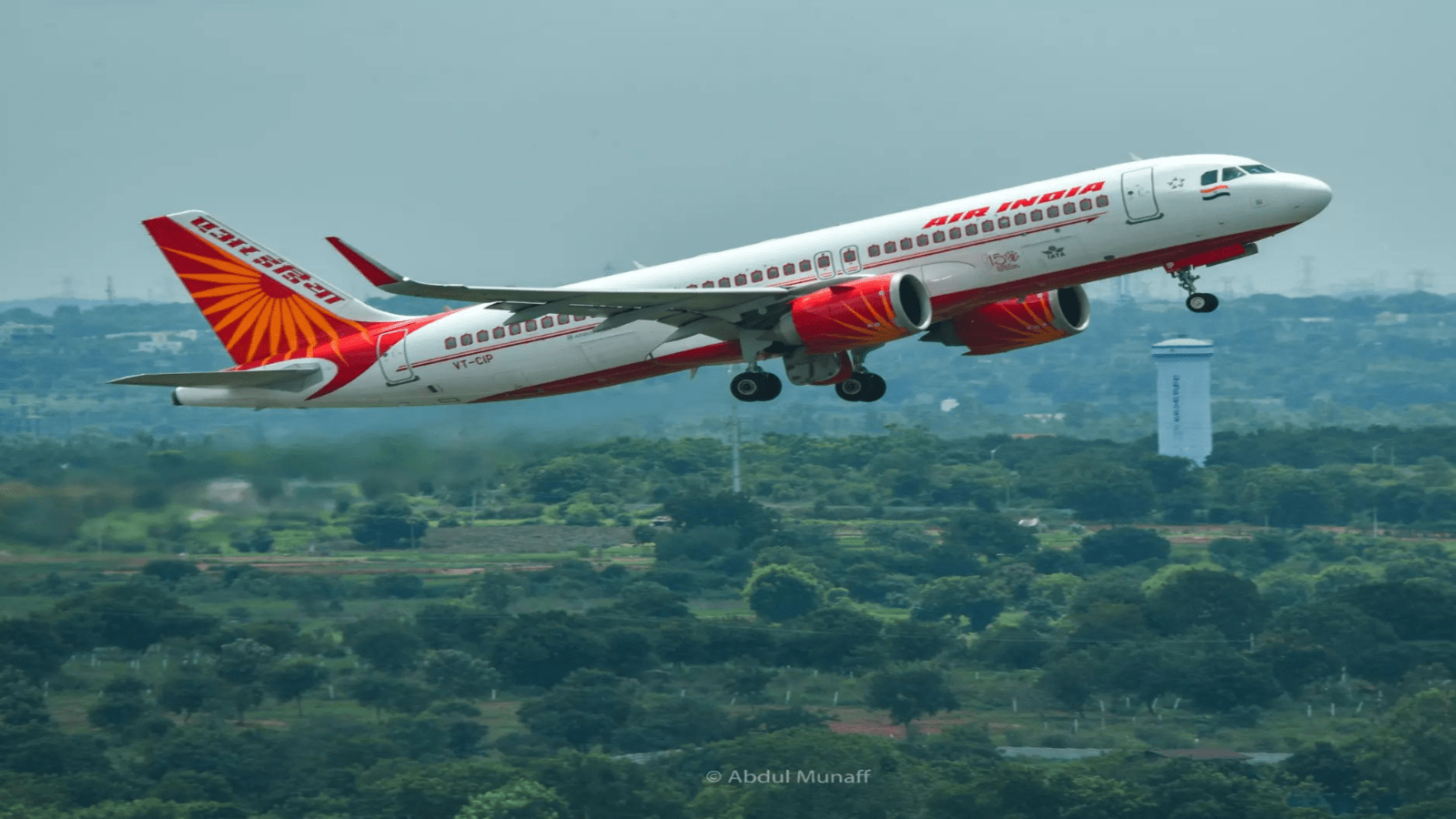
Now the global aviation industry is feeling the heat of rising geopolitical friction. Air India has announced a significant adjustment to its international flight schedule, reducing or temporarily suspending services on 29 key routes between June and August 2026. Therefore, the airline is citing record-high jet fuel prices and continuous airspace restrictions in West Asia as the primary drivers for this massive network change. Meanwhile, while the carrier maintains over 1,200 monthly international flights, travelers heading to North America, Europe, and Southeast Asia will face reduced frequencies. Following the Prime Minister’s recent appeal for austerity, this move signals a mechanical necessity for the airline to achieve operational stability amidst a projected ₹22,000 crore loss.
Also Read | Imran Khan and Bushra Bibi Sentenced to 17 Years in Jail
Fuel and Geopolitics: The Dual Drivers of Air India’s Cutbacks
Now the aviation landscape has become increasingly difficult to navigate since the West Asia conflict began. With nearly 20% of the world’s crude supply moving through the Strait of Hormuz, the ongoing instability has pushed fuel prices to record highs. Therefore, the commercial viability of several long-haul services has been severely compromised.
First, jet fuel (ATF) prices for international operations have reached levels that make certain routes unsustainable. Next, airspace restrictions mean airlines must take longer, circuitous routes to avoid conflict zones. Thus, every flight now costs more in fuel and manpower while taking longer to complete.
So industry experts agree that these “uneven” demand patterns require a more disciplined approach to scheduling. Meanwhile, the airline’s official statement emphasizes that the move is designed to avoid last-minute disruptions for passengers. Therefore, the summer of 2026 will be defined by a leaner, more focused international network.
North America Adjustments: Changes to US and Canada Services
Now several of the airline’s flagship routes to North America are seeing significant frequency reductions. As these are some of the longest flights in the world, they are the most sensitive to fuel price fluctuations. Therefore, the mechanical necessity of maintaining these routes has forced a “quality over quantity” approach.
Key US and Canada Adjustments:
-
Delhi to San Francisco: Reduced from 10 flights per week to 7.
-
Delhi to Toronto: Dropped from 10 to 5 flights weekly (until August).
-
Delhi to Vancouver: Scaled back from 7 to 5 weekly flights.
-
Mumbai to New York (JFK): Impacted as part of the broader schedule realignment.
First, not all news is negative; the Mumbai-Newark service will actually expand to a daily service. Next, the Delhi-New York (JFK) route will continue its daily operation without cuts. Thus, the airline is consolidating its North American presence into its most high-performing hubs.
Europe and Australia: Scaling Back Long-Haul Operations
Now the European sector has seen some of the most drastic percentage cuts. The flight frequency between Delhi and Paris has been slashed by half, dropping from 14 flights to just 7 per week. Therefore, travelers to the French capital will need to book significantly further in advance.
First, other major European cities like Milan, Vienna, Zurich, and Rome will see their frequencies reduced from 4 or 5 down to 3 per week. Next, in Australia, both the Melbourne and Sydney routes are moving from a daily service to just 4 flights per week. Thus, the “connectivity cushion” for long-haul leisure travel is thinning.
So these adjustments reflect a strategic retreat from markets where demand has softened relative to operational costs. Meanwhile, the airline is maintaining its footprint in these cities, ensuring that the brand remains visible even with a reduced presence. Therefore, the European summer travel season will likely see higher ticket prices as capacity drops.
Also Read | Imran Khan and Bushra Bibi Sentenced to 17 Years in Jail
The Asian Shift: Drastic Cuts to Singapore and Bangkok Hubs
Now the regional routes within Asia and the SAARC countries are also facing a major reset. Singapore, usually a high-frequency hub, will see its Delhi services drop from 24 to 14 weekly flights. Therefore, the “business shuttle” experience to the city-state is being significantly modified.
Asian Frequency Drops:
-
Delhi to Singapore: 24 per week down to 14.
-
Mumbai to Singapore: 14 per week down to 7.
-
Delhi to Bangkok: 28 per week down to 21.
-
Delhi to Kathmandu: Slashed from 42 to 21 flights by August.
-
Mumbai to Bangkok: 13 per week down to 7.
First, these cuts also extend to emerging routes like Delhi-Kuala Lumpur and Delhi-Ho Chi Minh City. Next, services to Dhaka and Colombo are being scaled down to match the current regional economic slowdown. Thus, the Asian network is being trimmed to prioritize high-yield business traffic over low-margin leisure volume.
Financial Strain: Understanding the ₹22,000 Crore Backdrop
Now it is impossible to ignore the financial context of these cancellations. Reports suggest that Air India posted losses exceeding ₹22,000 crore in the previous financial year. Therefore, every flight on the schedule is now being audited for its direct contribution to the bottom line.
First, the airline already cut 90 daily flights in May as an initial cost-saving measure. Next, the current reduction of 29 international routes is a continuation of this “austerity first” philosophy. Thus, the airline is undergoing a painful but mechanical necessity of a structural cleanup.
So the rising cost of aircraft maintenance and lease payments is adding to the pressure. Meanwhile, the airline continues to integrate new aircraft into its fleet, which requires significant capital expenditure. Therefore, the frequency cuts are a way to manage cash flow during this high-expenditure phase.
Austerity Measures: From Meal Changes to Lounge Access Fees
Now the schedule changes are only part of a broader “war on waste” within the airline. Air India is exploring several additional cost-saving steps to mitigate its massive losses. Therefore, the passenger experience on short-haul and domestic routes is also set to change.
First, the airline is considering adjustments to in-flight meal options for domestic flights to reduce catering costs. Next, a new policy may introduce separate charges for lounge access for certain premium passengers who previously received it for free. Thus, the “all-inclusive” nature of the legacy carrier is being unbundled.
So these steps mirror the strategies used by global low-cost carriers to maintain liquidity. Meanwhile, the airline is also looking at fuel-efficient taxiing and flight planning to save every gram of ATF. Therefore, the operational stability mentioned by the airline is being pursued through both network and service-level changes.
Also Read | Imran Khan and Bushra Bibi Sentenced to 17 Years in Jail
Passenger Rights: How to Manage Your Rebooking and Refunds
Now for those whose travel plans have been disrupted, the airline has outlined a clear support protocol. If your flight has been canceled or the frequency reduced, you have several options. Therefore, you should check your email and the Air India mobile app for personalized notifications.
Support Protocols:
-
Rebooking: Options to move to alternative flights on the same or adjacent dates.
-
Free Changes: No fee for a one-time date change on impacted routes.
-
Full Refunds: Passengers can opt for a full refund if the new schedule doesn’t suit them.
-
Customer Care: Dedicated help desks have been set up to handle the June–August surge.
First, ensure your contact information is updated on your booking so you receive immediate alerts. Next, if you booked through a travel agent, you may need to coordinate with them for the refund process. Thus, the airline aims to minimize the “last-minute disruption” factor that prompted these changes.
FAQ: Frequently Asked Questions on Air India’s 2026 Schedule
1. Why has Air India cut so many international flights? Now, the airline cites high fuel costs, airspace restrictions due to the West Asia conflict, and the need for operational stability as the primary reasons.
2. Which countries are most affected by the cancellations? First, routes to the US, France, Singapore, Australia, and Thailand have seen the most significant frequency reductions.
3. What should I do if my flight is canceled? So you can opt for a free date change, rebook on an alternative flight, or request a full refund from Air India.
4. Are there any flights being increased? Next, yes. The Mumbai-Newark service is being expanded to a daily flight, and Delhi-New York (JFK) will remain daily.
5. How long will these reductions last? Now, the current schedule adjustment is planned for the months of June, July, and August 2026.
6. Is this related to PM Modi’s appeal for austerity? Finally, while the airline’s decision is commercial, it aligns with the government’s recent push to conserve foreign exchange during global economic pressure.
Also Read | Imran Khan and Bushra Bibi Sentenced to 17 Years in Jail
End….

