

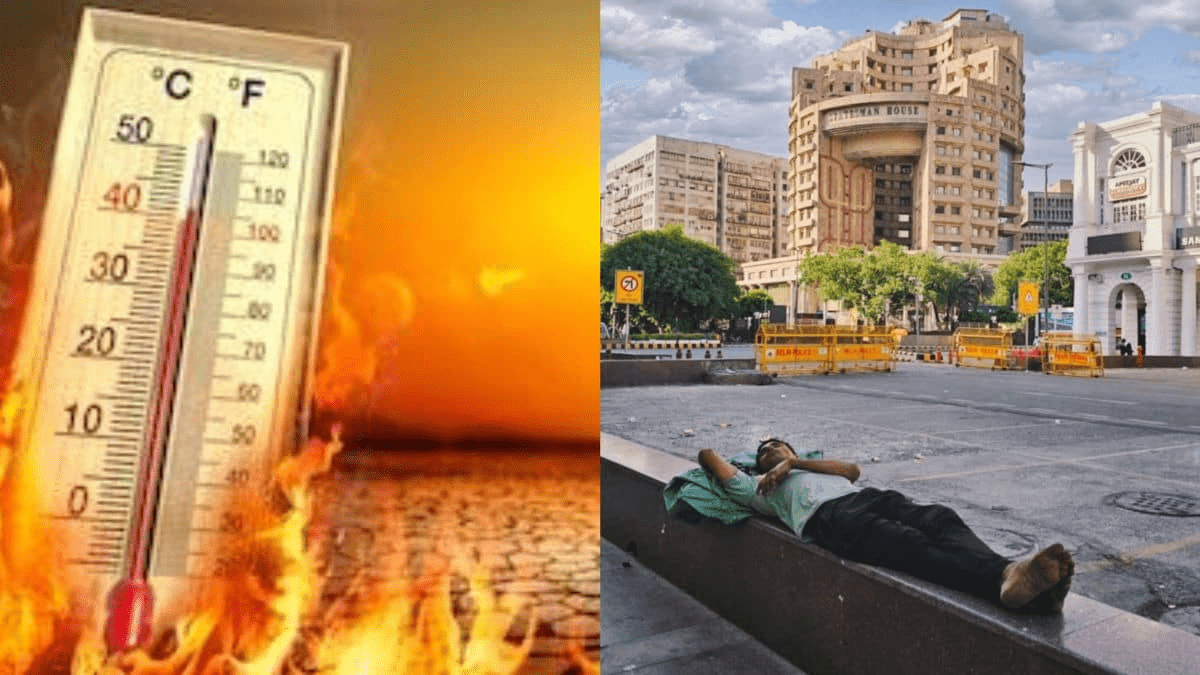
Now the national capital is preparing for a grueling stretch of extreme summer heat. Following a sudden change in the weather pattern on Thursday, which saw gusty winds battering several parts of Delhi-NCR, the India Meteorological Department (IMD) has issued a severe heatwave forecast. Therefore, while the high-speed winds offered a brief “psychological respite” to residents, the thermometer is set to climb rapidly in the coming days. Meanwhile, temperatures are expected to breach the 40°C mark consistently, peaking at 42°C by the middle of next week. Following the latest satellite data, clear skies and warm northwesterly winds will act as a mechanical necessity for a significant spike in the regional heat index.
Also Read | Imran Khan and Bushra Bibi Sentenced to 17 Years in Jail
Thursday Review: Sudden Gusty Winds and Dust Storms
Now the weather on Thursday, May 14, 2026, took residents by surprise as sudden gusty winds buffeted several regions. While these winds helped momentarily lower the perceived temperature, the day still saw a record maximum of 40.6°C. Therefore, it officially stands as the highest temperature recorded so far this year.
First, the winds brought with them a significant amount of dust particles, a common feature of North Indian summers. Next, the minimum temperature was reported at 23.4°C, providing only a slight cooling effect during the night. Thus, the “temporary respite” was more of a psychological shift than a climatic one.
So while the city saw 2mm of rain recorded by Thursday morning, the moisture was quickly evaporated by the rising mercury. Meanwhile, the extreme heat conditions forced many to seek refuge indoors, avoiding the harsh direct sunlight. Therefore, the brief wind spell has now set the stage for the intense heatwave to follow.
The 42°C Forecast: Breaking Down the IMD Weekly Outlook
Now the IMD has provided a clear timeline for the incoming heatwave. According to the forecast, the temperature will begin its steady climb starting May 15 and will peak around May 20. Therefore, the next five days are expected to be the most challenging of the season so far.
First, the maximum temperature is estimated to hover between 38°C and 42°C. Next, the minimum temperature will also see a rise, ranging from 26°C to 29°C. Thus, even the nights will offer less relief as the ground continues to radiate heat accumulated during the day.
So the mechanical necessity of keeping indoor spaces cool will drive up power consumption across the capital. Meanwhile, the “severe heatwave” tag applies to those days where the maximum deviates significantly from the normal average. Therefore, residents must prepare for sustained high-intensity heat throughout the upcoming week.
Solar Radiation: Why Clear Skies Will Intensify the Heat
Now the condition of the sky will play a major role in the rising temperatures. While partial cloudiness may persist for the next 48 hours, the skies will clear significantly from May 16 to May 19. Therefore, there will be no atmospheric buffer to block the sun’s rays.
First, the mostly clear skies will allow solar radiation to reach the surface directly and with maximum intensity. Next, this direct heating will cause the mercury to shoot up drastically during the mid-day hours. Thus, the lack of cloud cover acts as a force multiplier for the existing thermal conditions.
So the “heat torture” is expected to be most intense between 12:00 PM and 4:00 PM. Meanwhile, the UV index will also be at a seasonal high during this clear-sky window. Therefore, protecting oneself from direct exposure is not just a suggestion but a mechanical necessity for safety.
Also Read | Imran Khan and Bushra Bibi Sentenced to 17 Years in Jail
Wind Patterns: The Influence of Hot Northwesterly Air
Now the direction of the wind will further exacerbate the heatwave conditions. The dominant wind direction for the coming days will be from the West and Northwest. Therefore, Delhi will be receiving air that has been heated over the desert regions of Rajasthan and Pakistan.
First, these winds are typically dry and carry a high thermal load. Next, the moderate wind flow will ensure that this hot air is consistently circulated across the city, preventing any localized cooling. Thus, the phenomenon known as “Loo” will be a major factor in the upcoming week.
So the wind pattern is a key reason why the heat will feel so “scorching.” Meanwhile, the lack of moisture in these northwesterly winds means that there is very little chance of evening showers or thunderstorms. Therefore, the “dry heat” characteristic of mid-May will be fully on display.
Humidity and Rainfall: 2mm Showers Fail to Provide Long-term Relief
Now looking back at the previous 24 hours, the humidity levels showed a wide variance. The highest relative humidity was measured at 84%, likely due to the early morning rain, while the lowest stood at 37%. Therefore, the air became progressively drier as the day advanced.
First, the 2mm of rain was too insignificant to impact the long-term heat index. Next, the high morning humidity combined with the 40.6°C heat actually increased the “real feel” temperature, making it feel more oppressive. Thus, the moisture was a double-edged sword that eventually gave way to dry heat.
So the current weather patterns suggest that no further significant rainfall is expected until after May 20. Meanwhile, the ground moisture levels are rapidly depleting under the direct solar glare. Therefore, the brief wet spell has officially ended, leaving behind a parched landscape.
Health Advisory: Essential Tips for Navigating the ‘Loo’
Now with the heat index rising to dangerous levels, experts have issued a set of advisories for all residents. When the mercury breaches 40°C, the risk of heat exhaustion and heatstroke increases significantly. Therefore, behavioral adjustments are a mechanical necessity.
Recommended Safety Measures:
-
Hydration: Drink plenty of fluids (water, electrolytes, juices) even if you don’t feel thirsty.
-
Outdoor Limits: Avoid strenuous outdoor activity during the peak heat hours of 12 PM to 4 PM.
-
Protective Gear: Wear light, loose cotton clothing and use umbrellas or hats when outdoors.
-
Home Care: Keep windows and curtains closed during the day to prevent hot air from entering.
First, it is important to monitor the elderly and young children, who are more susceptible to heat-related illnesses. Next, recognizing the signs of heatstroke—such as dizziness, headaches, or rapid pulse—is vital. Thus, the community must prioritize safety during this “heat torture” phase.
Also Read | Imran Khan and Bushra Bibi Sentenced to 17 Years in Jail
Activities Impacted: Residents Seek Refuge from Sunlight
Now the social and economic activity in the city is already feeling the impact of the rising heat. On Thursday, despite the gusty winds, streets in major markets were seen with fewer people than usual. Therefore, the peak of the heatwave is expected to further slow down outdoor commercial activities.
First, workers in the unorganized sector, such as street vendors and construction laborers, are facing the most hardship. Next, many have been forced to adjust their working hours to avoid the mid-day sun. Thus, the “loo” winds are dictating the rhythm of life in the capital.
So the psychological respite of Thursday has quickly been replaced by the reality of a severe forecast. Meanwhile, local parks and public spaces remain deserted during the afternoon. Therefore, the city’s focus has shifted entirely to survival and mitigation as the mercury climbs toward 42°C.
FAQ: Understanding the May 2026 Delhi Heatwave
1. When is the peak of the heatwave expected? Now, according to the IMD forecast, the heatwave is expected to be most severe between May 15 and May 20, 2026.
2. What is the maximum temperature predicted for Delhi? First, the mercury is projected to reach as high as 42°C during this heatwave period.
3. Why did it feel windy on Thursday? So, a sudden change in the weather pattern caused gusty winds, which offered a brief “psychological respite” but did not stop the temperature from hitting a record 40.6°C.
4. What is the ‘Loo’ and why is it dangerous? Next, the ‘Loo’ consists of hot, dry winds blowing from the northwest (desert regions), which can cause rapid dehydration and heatstroke.
5. Will it rain in Delhi during the heatwave? Now, the forecast suggests mostly clear skies and no significant rainfall between May 16 and May 19.
6. How much rain was recorded on Thursday? Finally, the city recorded a minimal 2mm of rainfall until Thursday morning, which was quickly evaporated by the extreme heat.
Also Read | Imran Khan and Bushra Bibi Sentenced to 17 Years in Jail
End….

