

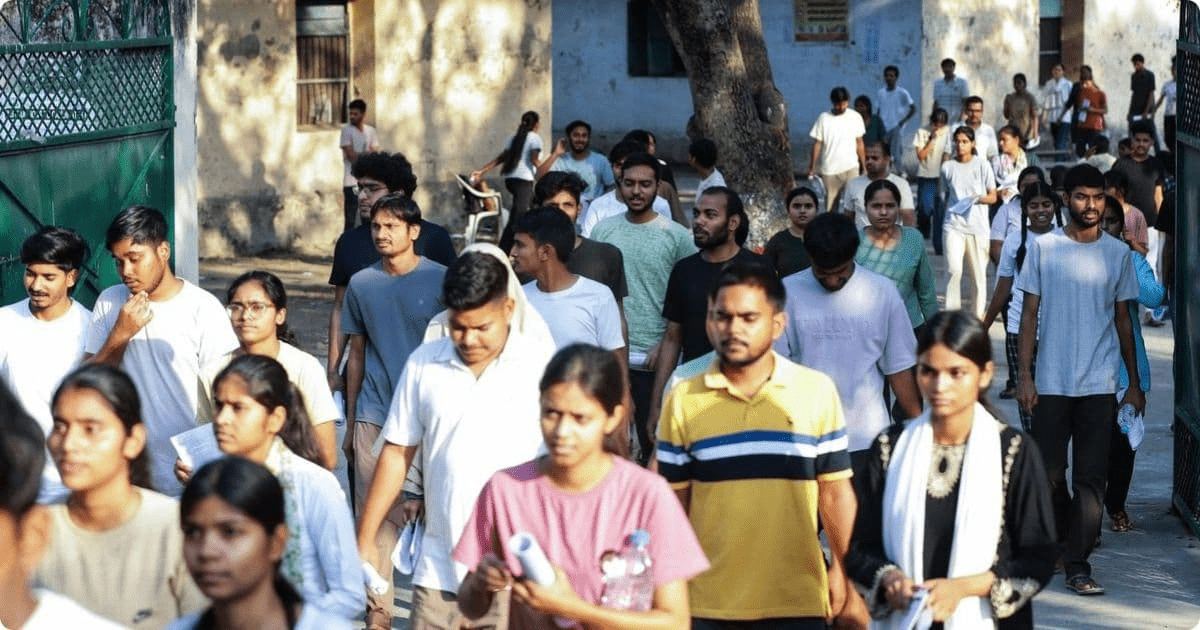
Now the operational roadmap for India’s largest medical entrance gateway has been officially clarified. Following the high-profile cancellation of the initial test over alleged irregularities and paper leaks affecting 22 lakh students, the National Testing Agency (NTA) has structured the guidelines for the NEET-UG 2026 re-examination on Sunday, June 21. Therefore, candidates must act swiftly to adjust to the revised logistical schedules released by the central agency. Meanwhile, an active correction window allows students to change their preferred examination cities to align with their current physical addresses. Following the latest ministerial briefings, this pen-and-paper session will serve as the final offline milestone before the entire infrastructure permanently transitions to an online computer-based format next year.
Also Read | Imran Khan and Bushra Bibi Sentenced to 17 Years in Jail
The City Selection Window: How to Change Your Center Preference
Now the NTA has introduced a flexible layout for candidates who had to relocate following the initial exam disruption. Candidates who wish to modify their preferred city of examination due to a shift in their present address can do so immediately. Therefore, the portal will remain open for these specific structural edits between May 15 and May 21, 2026.
First, candidates are permitted to select both a first and second choice for their preferred examination cities. Next, those who do not actively opt to alter this facility will have their existing city preferences automatically retained by the system. Thus, reviewing your portal login dashboard is highly recommended to avoid unexpected long-distance travel.
So the process must be completed online via the official neet.nta.nic.in domain before the lock date. Meanwhile, local administrative centers are being fortified to handle the redistributed capacity. Therefore, utilizing this window effectively is a mechanical necessity for student comfort.
Strict Correction Limits: Why Only Addresses Can Be Modified
Now the NTA has drawn a very firm line regarding what data can be altered during this brief window. Unlike standard correction periods, the agency is enforcing absolute rigidity to protect data integrity. Therefore, no correction of personal particulars will be allowed except for the present address and choice of examination city.
First, fields such as category, spelling of names, and educational signatures are entirely locked from editing. Next, the agency has clearly stated that absolutely no requests for changes will be entertained after the May 21 deadline. Thus, any typographical errors made during initial registrations must remain as they are for this session.
So this narrow focus ensures that the NTA can compile the city intimation slips without dealing with fluctuating candidate profiles. Meanwhile, the legal unit is auditing the backend database to prevent unauthorized identity switches. Therefore, the restriction remains an unyielding rule for the 2026 cycle.
Financial Relief: Understanding the Automated Fee Refund Protocol
Now amid the immense psychological stress faced by the student community, the government has offered a major financial concession. The examination fee paid by the candidates for the earlier cancelled test will be fully refunded to the original accounts. Therefore, the financial burden of administrative lapses will not fall on the families of aspirants.
First, the NTA has clarified that no additional or hidden fee will be charged for sitting the June 21 re-examination. Next, the refund process is being handled via automated banking channels to ensure zero paperwork for applicants. Thus, the system treats the re-test as a completely pre-funded state responsibility.
So students do not need to file separate applications to recover their initial investment. Meanwhile, the Ministry of Finance has fast-tracked the necessary clearance to execute these bulk reversals smoothly. Therefore, the zero-cost structure provides a small but necessary bit of relief to lakhs of households.
Also Read | Imran Khan and Bushra Bibi Sentenced to 17 Years in Jail
The 15-Minute Buffer: Navigating the New 2:00 PM to 5:15 PM Window
Now the daily timing of the examination contains an important structural update designed to ease exam-day anxiety. The test will formally be conducted from 2:00 PM to 5:15 PM across all national centers. Therefore, candidates will receive an additional 15 minutes specifically allocated for completing initial examination formalities.
The Exam Day Timeline:
-
Reporting Cutoff: To be specified on individual admit cards.
-
Core Test Starts: 2:00 PM Sharp.
-
Formalities Buffer: Integrated into the expanded 3-hour and 15-minute slot.
-
Test Concludes: 5:15 PM.
First, this extra time allows invigilators to conduct thorough biometric verification without eating into the writing time. Next, it gives students a moment to settle down and verify their physical question booklets calmly. Thus, the expanded window is a direct response to complaints regarding rushed check-ins during past sessions.
Vernacular Testing: The 13 Permitted Languages for the Offline Exam
Now despite the administrative changes, the linguistic inclusivity of the test remains entirely intact. The re-examination will be carried out across 13 distinct regional languages to ensure absolute parity for students from diverse mediums. Therefore, your choice of medium will match your original application parameters perfectly.
-
Languages Provided: Assamese, Bengali, English, Gujarati, Hindi, Kannada, Malayalam, Marathi, Odia, Punjabi, Tamil, Telugu, and Urdu.
First, the bilingual question booklets will feature your selected regional tongue alongside English translation scripts. Next, the distribution matrices are being synchronized so that specialized language papers reach the corresponding regional centers without delay. Thus, linguistic parity is fully preserved for the June session.
Timeline to June 21: Tracking Admit Cards and Intimation Slips
Now as the countdown continues, the NTA has provided a tentative timeline for the release of crucial transit documents. The formal announcement of city intimation slips, which reveal the allocated town before the actual center name, will happen next month. Therefore, students can expect these files to go live by June 14, 2026.
First, the city slip allows for early train or bus bookings to be made safely. Next, the actual admit cards, containing the exact room and center addresses, will follow within 48 hours of the intimation release. Thus, the staggered rollout acts as a mechanical necessity to keep the web servers from crashing under extreme load.
So the date for the final declaration of the re-examination results will be decided only after evaluating the post-exam data. Meanwhile, candidates are strictly warned to ignore all unofficial date sheets floating on messaging apps. Therefore, checking the official portals periodically remains the safest approach.
Also Read | Imran Khan and Bushra Bibi Sentenced to 17 Years in Jail
The Final OMR Session: Looking Ahead to the 2027 CBT Shift
Now this upcoming June session holds historic weight as it marks the official end of an era for medical entrances. Following explicit confirmations by Union Minister Dharmendra Pradhan, this is the final time NEET-UG will be held using traditional pen-and-paper OMR sheets. Therefore, the 2027 cycle will step fully into the digital space.
First, the transition to a Computer-Based Test (CBT) mode next year is intended to permanently eliminate the physical logistics that allow paper leaks to occur. Next, the digital infrastructure will feature real-time encryption and randomized question delivery per terminal. Thus, the June 21 session is the ultimate swan song for manual testing in this domain.
So while current students must still practice their bubble-darkening techniques, future batches will pivot entirely to digital terminals. Meanwhile, the NTA is using the lessons from this year’s crisis to design a bulletproof software framework for 2027. Therefore, the upcoming test is a critical bridge between legacy methods and modern technical excellence.
FAQ: Critical Questions Answered for NEET UG 2026 Aspirants
1. When is the official date for the NEET UG 2026 re-exam? Now, the re-examination is officially scheduled to take place on Sunday, June 21, 2026.
2. Can I change my exam city for the June re-test? First, yes. You can update your present address and select your first and second city preferences on the official portal between May 15 and May 21, 2026.
3. Do I need to pay an additional fee for the re-examination? So, no. The earlier fee will be refunded, and no additional fee will be charged to candidates for appearing in this re-test.
4. How much extra time are students getting on June 21? Next, candidates will receive an additional 15 minutes for exam formalities, making the total timing 2:00 PM to 5:15 PM.
5. What should I do if I encounter an issue on the portal? Now, you should immediately contact the official NTA helpline numbers at 011-40759000 / 011-69227700 or email them at [email protected].
6. Is this exam going to be online or offline? Finally, the June 21 re-exam will be held in offline pen-and-paper mode. The permanent switch to online Computer-Based Testing (CBT) starts from next year (2027).
Also Read | Imran Khan and Bushra Bibi Sentenced to 17 Years in Jail
End…

